Choosing reliable suppliers for pipe fittings valves requires more than comparing prices or browsing polished product catalogs. These components control flow, pressure, temperature, and safety across water systems, oil and gas facilities, chemical plants, HVAC networks, and industrial manufacturing lines. A small material mismatch can cause leakage, corrosion, downtime, or expensive maintenance.
This guide examines ten respected pipe fittings valves suppliers worldwide through practical purchasing criteria. We consider product range, material quality, dimensional accuracy, pressure ratings, certifications, manufacturing capacity, delivery performance, and technical support. Stainless steel, carbon steel, brass, plastic, forged, cast, threaded, welded, and flanged options each serve different conditions. The best supplier is not always the largest one. It must match the project’s media, temperature, pressure, connection method, and operating environment.
Details matter.
Supplier claims also require careful verification. Factory audits, traceable test reports, clear warranty terms, and responsive engineering teams can reveal more than advertising language. Customer experience matters too, although published reviews may not show every weakness. Some companies offer excellent customization but longer lead times. Others deliver quickly but provide limited documentation. That trade-off deserves honest attention.
The companies featured here represent different strengths rather than one universal ranking. Their capabilities, certifications, regional service, and market focus may change over time. Buyers should confirm current specifications directly before placing orders. This comparison aims to support informed decisions, not replace professional engineering review. A dependable supplier should help customers select safe, compatible products and explain limitations clearly. Even strong vendors make occasional mistakes. The real test is how transparently they correct them.
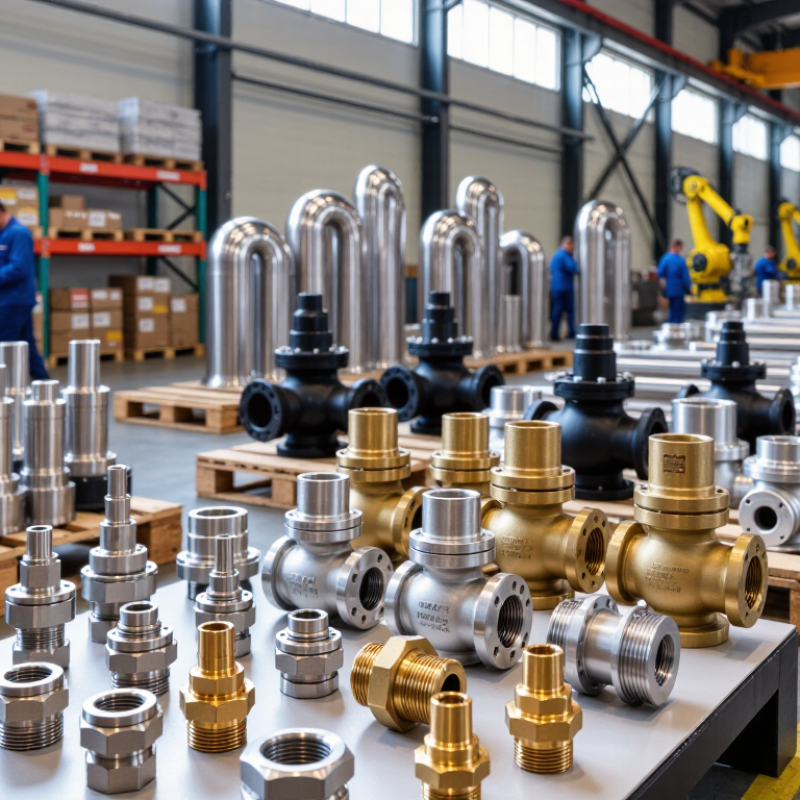
What Pipe Fittings and Valves Suppliers Provide
Reliable suppliers provide more than threaded elbows, flanges, and isolation valves. They match component materials to pressure, temperature, fluid chemistry, and installation conditions. Carbon steel may suit steam lines, while stainless steel often serves corrosive water systems. Experienced suppliers also clarify dimensions, end connections, pressure classes, and operating cycles before quoting.
MarketsandMarkets estimates that the global industrial valves market could grow from about USD 78 billion in 2024 to over USD 100 billion by 2029. This expansion increases demand for documented quality, not merely fast delivery. Suppliers should provide material certificates, pressure-test records, dimensional reports, and traceable batch numbers. Products designed around ASME B16.5, ASME B16.9, API 598, or ISO 5208 requirements are easier to inspect and approve.
Documentation matters.
Strong suppliers may also offer welding procedures, coating options, replacement seals, technical drawings, and installation guidance. On a real project, a small gasket mismatch can delay an entire piping section. That practical risk is often underestimated. A supplier’s technical team should review drawings and identify incompatible materials before shipment. However, no catalogue can replace site verification. Pipe schedules, valve orientation, actuator torque, and actual fluid conditions still require checking. Grand View Research reports continued growth in industrial piping demand, but market growth does not guarantee consistent workmanship. Buyers should assess factory audits, independent testing, response times, and after-sales support. The cheapest fitting may become the most expensive item after repeated leakage or premature failure.
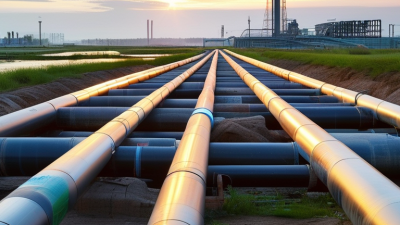
Global sourcing of pipe fittings and valves depends less on catalog size than on standards discipline. The 2024 World Steel Association report recorded about 1.89 billion tonnes of crude steel production in 2023. That scale explains material diversity, but it also increases traceability risks. Reliable suppliers should identify chemistry, heat numbers, pressure ratings, and manufacturing routes clearly.
Common specifications include ASME B16.5 for flanges, ASME B16.9 for butt-weld fittings, and API 6D for pipeline valves. ISO 5211 helps standardize actuator mounting. ASTM A105 suits many forged carbon-steel components, while ASTM A182 covers stainless and alloy-steel forgings. Duplex stainless steel can improve resistance in chloride environments. For sour service, NACE MR0175/ISO 15156 remains an important selection reference. Small details matter.
The 2024 industrial valve market outlook from Grand View Research places the global market at tens of billions of dollars, with continued growth linked to water, energy, and process industries. Buyers should request EN 10204 3.1 certificates, pressure-test records, coating data, and dimensional reports. A supplier audit should examine calibration labels, weld maps, storage conditions, and packing methods. A certificate is useful. It is not proof of flawless production. Even experienced teams can overlook gasket compatibility or incorrect bolt materials. Verification must continue from quotation to installation.
Choosing among the world’s leading pipe fittings and valve suppliers requires more than comparing catalog prices. A reliable evaluation begins with documented manufacturing experience, clear material specifications, and traceable production records. Ask for heat numbers, inspection reports, pressure-test results, and certificates from recognized laboratories. These documents should match the actual shipment, not a generic sample file. Technical staff should also explain pressure ratings, temperature limits, corrosion resistance, and installation requirements in plain language.
Factory capability matters. Review machining equipment, welding controls, surface treatment, and final inspection procedures. A useful audit checks whether gauges are calibrated and whether rejected parts are physically separated. Request production samples when tolerances are critical. Small dimensional errors can cause leakage after installation. Strong suppliers provide realistic lead times, packaging details, spare-part support, and responsive answers when specifications change. Their references should include projects with similar fluids, pressures, and operating environments.
Price still matters, but the lowest quotation may conceal testing gaps, inconsistent alloys, or expensive delays. Compare total ownership cost instead. Include freight, inspection, maintenance, and replacement risks. A polished catalogue can mislead. I have found that supplier evaluation is never perfectly objective; personal assumptions can influence scoring. Use a written checklist, independent verification, and several qualified bidders. Pay attention to uncomfortable questions. A dependable supplier will answer them without rushing the decision.
A practical, company-neutral evaluation framework for comparing international pipe fittings and valve suppliers. The weighting reflects common industrial procurement priorities, including standards compliance, quality assurance, delivery reliability, technical capability, traceability, regulatory compliance, and sustainability.
Product conformity and quality systems receive the highest weights because dimensional accuracy, pressure performance, material integrity, and documented quality controls directly affect safety and service life. Buyers can use this 100-point model to score shortlisted suppliers consistently without relying only on price.
Selecting reliable pipe fittings and valve suppliers requires more than comparing prices. Material traceability, pressure ratings, machining accuracy, and delivery consistency deserve equal attention. The following profiles reflect practical purchasing concerns across industrial projects.
serves large water infrastructure projects with ductile iron fittings and clear testing records. Its strength is dependable documentation, although delivery times may extend during peak demand.
specializes in stainless steel valves for food processing systems. Its polished surfaces support hygiene requirements, but buyers should confirm the exact alloy grade.
produces compact brass fittings for building services and heating installations. It offers flexible batch sizes, though some technical sheets need clearer dimensional drawings.
focuses on high-pressure forged components for energy facilities. Strong inspection procedures add confidence, yet its products may exceed smaller project budgets.
supplies plastic fittings for chemical and wastewater applications. Corrosion resistance is valuable here, but temperature limits require careful review.
combines automated machining with manual inspection. This balance can improve consistency, though occasional finishing defects still deserve attention.
supports agricultural irrigation projects with lightweight valves and connectors. Simple maintenance is a benefit, but spare-part availability should be checked before purchasing.
manufactures large-diameter fittings for municipal pipelines. Its engineering support is useful when layouts change, although communication can slow across regions.
offers custom valve assemblies for process equipment. It handles unusual specifications well, but customization usually increases lead time.
provides general-purpose fittings for contractors and distributors. Broad inventory is convenient, yet product quality can vary between production batches. Records, samples, and field feedback remain essential.
10 Best Pipe Fittings and Valves Suppliers Worldwide
Selecting a supplier starts with your project conditions, not a glossy catalogue. Define fluid type, pressure, temperature, size, material, and applicable standards. A supplier should provide mill certificates, dimensional reports, pressure-test records, and traceable batch numbers. ISO’s 2023 Survey recorded more than one million valid ISO 9001 certificates worldwide, but certification alone cannot prove product quality. Ask how audits are performed and how failed batches are handled.
Water, energy, chemical, and construction projects need different evidence. The 2024 UN World Water Development Report states that agriculture uses about 70% of global freshwater withdrawals. That figure makes leakage control and corrosion resistance practical priorities, not marketing phrases. Request samples when possible. Check sealing surfaces under bright light. Review delivery capacity, spare-part support, packaging, and export documentation before signing. A low unit price may hide testing, freight, or replacement costs.
Supplier resilience also deserves attention. Ask for a second manufacturing location, raw-material contingency, and realistic lead-time data. Verify production capacity through an audit or live video inspection. I have seen checklists miss small details, especially gasket compatibility and actuator settings. That is worth admitting. Include these items in the technical schedule. Require written approval for substitutions, even when dimensions appear identical. Compare suppliers using weighted criteria: compliance, traceability, lifecycle cost, service response, and delivery reliability. Keep every promise in the purchase contract.
| No. | Evaluation Dimension | Recommended Requirement | Relevant Standard or Document | Why It Matters | Priority |
|---|---|---|---|---|---|
| 1 | Product Scope | Confirm the supplier can provide the required combination of butt-weld fittings, forged fittings, flanges, strainers, ball valves, gate valves, globe valves, check valves, or butterfly valves. | Approved product list, technical catalogue, dimensional drawings, and material specifications. | A broad and compatible product range can reduce interface risks, procurement time, and the number of separate vendors. | Critical |
| 2 | Pressure and Temperature Rating | Verify that pressure classes, wall thicknesses, end connections, and temperature limits match the design conditions and operating envelope. | ASME B16.5, ASME B16.34, ASME B16.47, API 6D, and applicable project specifications. | Incorrect pressure or temperature selection may cause leakage, premature failure, or unsafe operation. | Critical |
| 3 | Dimensional Compatibility | Require accurate face-to-face dimensions, outside diameters, wall thicknesses, bore dimensions, bolt patterns, and end preparations. | ASME B16.9, ASME B16.10, ASME B16.11, ASME B16.47, ISO 5752, and EN 558 where applicable. | Correct dimensions ensure reliable installation and prevent field modification or alignment problems. | Critical |
| 4 | Material Traceability | Require heat numbers, positive material identification when specified, material certificates, and traceability from raw material to finished product. | EN 10204 Type 3.1 or Type 3.2 inspection certificates; ASTM, ASME, or EN material specifications. | Traceability confirms that the supplied components meet the specified chemical, mechanical, and metallurgical requirements. | Critical |
| 5 | Quality Management | Prefer a documented quality management system with controlled procedures for purchasing, production, inspection, calibration, nonconformance, and corrective action. | ISO 9001 certification and a project-specific inspection and test plan. | A controlled quality system improves consistency and provides evidence that manufacturing processes are monitored. | High |
| 6 | Inspection and Testing | Confirm access to dimensional inspection, hydrostatic testing, pneumatic testing where permitted, functional testing, hardness testing, and non-destructive examination. | API 598, API 6D, ASME Section V, ISO 5208, ASTM E709, ASTM E1444, and project requirements. | Independent or witnessed testing helps identify casting, welding, sealing, machining, and pressure-boundary defects before shipment. | Critical |
| 7 | Corrosion and Service Compatibility | Match body, trim, gasket, bolting, coating, and elastomer materials to the fluid composition, chloride content, temperature, pressure, and sour-service conditions. | NACE MR0175/ISO 15156 for applicable sour-service environments; project coating and material specifications. | Material incompatibility can lead to corrosion, stress cracking, erosion, swelling, or loss of sealing performance. | Critical |
| 8 | Actuation and Automation | For automated valves, verify actuator torque, fail position, power supply, control signals, mounting interface, accessories, and emergency operating requirements. | ISO 5211, IEC 60534 where applicable, actuator sizing calculations, and the project control philosophy. | Correct actuator sizing and configuration are essential for dependable opening, closing, isolation, and process control. | High |
| 9 | Delivery and Supply-Capacity Reliability | Evaluate manufacturing capacity, realistic lead time, stock availability, production scheduling, packaging, export documentation, and contingency planning. | Manufacturing schedule, confirmed delivery plan, packing list, commercial invoice, certificate of origin, and shipping records. | Delivery reliability directly affects construction milestones, commissioning dates, and project cash flow. | High |
| 10 | Technical Support and After-Sales Service | Assess engineering response time, drawing review, material substitution control, installation guidance, spare-parts support, warranty terms, and nonconformance response. | Technical submittal procedure, warranty statement, spare-parts list, repair instructions, and service-level agreement. | Responsive technical support reduces the impact of design changes, installation issues, warranty claims, and operational interruptions. | High |