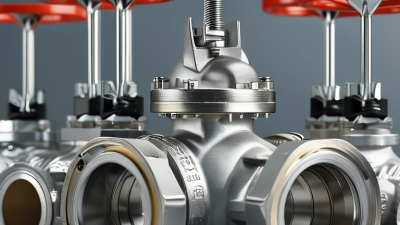
China’s fittings and valves manufacturers now serve energy, chemical processing, water treatment, construction, and advanced manufacturing markets worldwide. Their products include forged fittings, cast valves, ball valves, gate valves, check valves, and precision instrumentation connections. Selection cannot rely on price alone. Material traceability, pressure testing, dimensional control, and certification remain decisive.
Grand View Research valued the global industrial valves market at approximately USD 79.4 billion in 2023. Its report projects continued growth through 2030, supported by infrastructure renewal, process automation, and energy investment. The global pipe fittings market is also expanding, although estimates vary between research firms. These differences deserve attention. Market data is useful, but never perfect.
Valve engineer and author Richard W. Greene wrote, “The valve is the most important component in a fluid system.” This practical observation explains why manufacturing details matter. A small machining error can cause leakage, vibration, or costly shutdowns. Reliable Chinese suppliers increasingly support quality control with ISO-certified systems, API standards, PMI testing, hydrostatic testing, and documented inspection records. However, certificates alone do not prove consistent performance. Buyers should examine factory experience, testing equipment, export history, and after-sales responsiveness.
This guide reviews China’s top fittings and valves manufacturers through those measurable factors. It considers product range, technical capability, industries served, certifications, and customization support. Some rankings may remain debatable. That is unavoidable. Supplier quality can change over time, so independent verification remains essential before procurement.
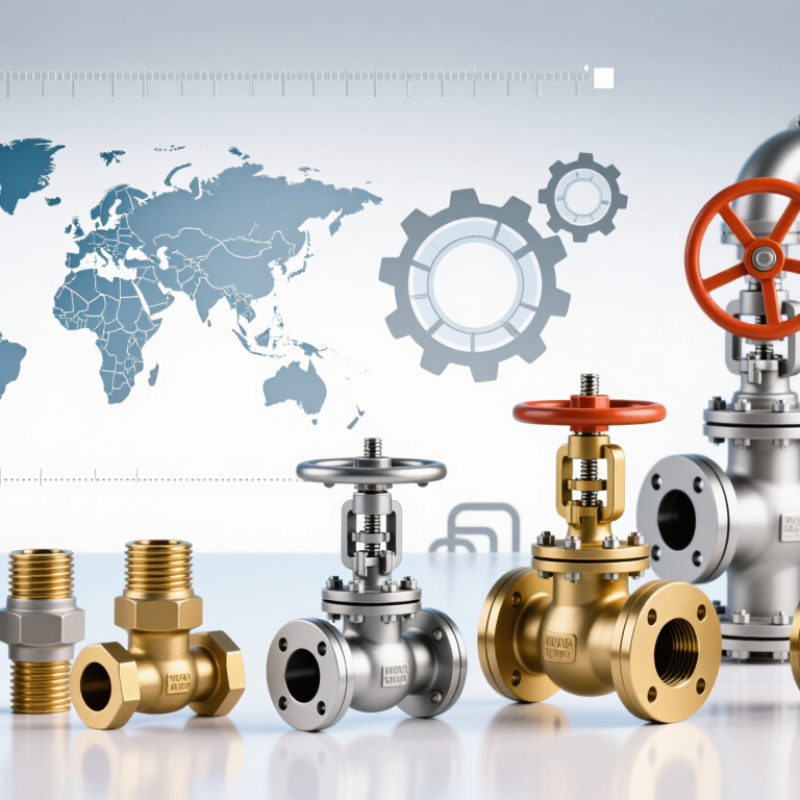
China’s valve industry has become one of the world’s largest manufacturing bases. Its output covers ball, gate, globe, butterfly, check, and control valves. Production serves water treatment, power generation, chemicals, construction, and energy projects. Large industrial zones support casting, machining, testing, and assembly within short supply chains. This structure helps manufacturers deliver high volumes at competitive prices.
Export activity remains a major part of the industry. Chinese valves reach markets across Asia, Europe, North America, Africa, and the Middle East. Customs data can be difficult to compare because valve categories overlap with fittings and pipeline equipment. Still, China holds a substantial share of global valve exports by volume. Export value varies with material costs, project demand, exchange rates, and product complexity.
Volume is not the whole story.
High-pressure, cryogenic, corrosion-resistant, and automated valves require stronger engineering controls. Experienced buyers should review pressure ratings, material certificates, leakage tests, factory inspections, and after-sales support. Documentation matters.
The picture is not perfectly clean. Some suppliers compete mainly through low prices, while quality consistency may differ between batches. China’s industry is improving its testing and digital production systems, but international buyers should verify performance independently. Market share figures also need careful reading, since shipment volume does not always represent technical leadership.

Valve and fitting selection begins with size, pressure, and service conditions. The DN15–DN2000 range covers small instrument branches, process lines, and large water or energy pipelines. Class 150–2500 ratings support applications from moderate pressure to severe high-pressure duty. ASME B16.34 links pressure-temperature limits to materials, design, and testing. A rating alone never proves suitability.
Industry data shows why this range matters. Grand View Research valued the global industrial valves market at approximately USD 78 billion in 2023, with energy, water, and chemical processing among major demand sectors. MarketsandMarkets projects continued growth through 2028, driven by infrastructure renewal and process automation. These figures suggest stronger demand for traceable specifications, not simply larger catalogues. Every DN2000 body needs careful transport planning, welding control, and field alignment.
Technical review should verify face-to-face dimensions, flange standards, trim materials, leakage class, and operating temperature. For Class 150–600 systems, corrosion resistance may dominate lifecycle cost. Class 900–2500 services require stricter wall-thickness checks and pressure testing. Field teams often discover mismatched gaskets or unclear flow arrows. Small errors matter. A catalogue can mislead when media chemistry is missing. Manufacturers should provide material certificates, inspection records, and test documentation. Yet documentation is not enough; independent inspection and practical installation feedback remain necessary.
China Top Fittings and Valves Manufacturers
Qualification matters more than a polished catalogue. ISO Survey 2022 recorded over 1.26 million ISO 9001 certificates worldwide. This figure shows its broad adoption, but not automatic product quality. A reliable manufacturer should connect certification with factory practice, inspection records, and corrective actions.
API 6D supports pipeline valve design, manufacturing, testing, and documentation. API 607 verifies fire-safe performance through controlled testing. CE compliance requires applicable European conformity procedures, technical files, and a valid declaration. It is not simply a logo. Buyers should check certificate scope, expiry dates, product models, and testing laboratories.
Details reveal competence. Ask for heat-number traceability, material certificates, pressure-test charts, and final inspection records. A 2024 MarketsandMarkets outlook places the industrial valves market on a steady growth path through 2029, increasing pressure on suppliers to prove consistency. Production volume alone is weak evidence. Sample a shipment. Review nonconformance records. Audit calibration controls.
Small gaps matter.
An ISO 9001 certificate cannot guarantee every valve. API compliance may cover only defined products or facilities. CE documentation can also be incomplete when specifications change. Manufacturers should welcome these questions and explain limitations clearly. That honesty is sometimes more valuable than another certificate.
| Qualification / Standard | Primary Scope | What It Demonstrates | Key Evidence to Request | Applicability to Valves and Fittings | Qualification Review Point |
|---|---|---|---|---|---|
| ISO 9001:2015 | Quality management systems | The manufacturer operates a documented quality management system covering processes such as design, purchasing, production, inspection, nonconformity control, and continual improvement. | Valid certificate; certification-body details; certified site address; stated scope; issue and expiry dates; recent surveillance or recertification information. | Generally relevant to manufacturers of industrial valves, pipe fittings, forged components, castings, and related services. | Confirm that the certificate scope covers the actual manufacturing site and the supplied product category. ISO 9001 certification alone does not prove product compliance. |
| API Specification 6D | Pipeline and piping valves | Product conformity with applicable requirements for pipeline valves, including design, materials, pressure testing, functional performance, marking, and documentation. | Current API license information where API Monogram use is claimed; licensed product scope; size and pressure-class range; qualification records; inspection and pressure-test procedures. | Commonly relevant to pipeline gate, ball, plug, and check valves manufactured for oil, gas, petrochemical, and transmission applications. | Check that the license or claimed compliance covers the exact valve design, nominal size range, pressure rating, materials, and manufacturing location. |
| API Standard 607 | Fire testing of quarter-turn valves and valves equipped with nonmetallic seats | Resistance of the valve assembly to fire exposure, including external leakage and, where specified by the test procedure, internal leakage and operability after the test. | Fire-test report; tested valve size, pressure class, design, materials, seat construction, actuator configuration, test conditions, acceptance results, and laboratory identification. | Relevant to many soft-seated or nonmetallic-seated quarter-turn valves used in hydrocarbon and process service. | A fire-test report should match the proposed valve design. A report for one configuration should not automatically be treated as qualification for every size, seat, material, or actuator arrangement. |
| CE Compliance under EU PED 2014/68/EU | Pressure equipment and assemblies placed on the European Union market | The product has been assessed against applicable essential safety requirements of the Pressure Equipment Directive, when the directive applies. | EU Declaration of Conformity; technical documentation; conformity-assessment route; notified-body details where required; product nameplate and marking information. | May apply to pressure-containing valves and fittings depending on maximum allowable pressure, nominal size, fluid group, equipment type, and applicable PED tables. | CE marking is not a universal quality certificate. Confirm whether the product is within PED scope and whether the selected conformity-assessment procedure is appropriate. |
| Material Traceability | Raw materials and pressure-retaining components | Traceability from the finished product back to the material heat, purchase documentation, chemical composition, and mechanical properties. | EN 10204 Type 3.1 inspection certificate or an equivalent project-specified material certificate; heat number; positive material identification records when required. | Important for bodies, bonnets, stems, flanges, forged fittings, castings, bolting, and other pressure-retaining parts. | Verify that heat numbers on material certificates correspond with markings and manufacturing records for the supplied items. |
| Pressure and Functional Testing | Factory acceptance and product release | Confirmation that the completed valve or fitting meets specified shell, body, seat, dimensional, and operating requirements. | Approved test procedure; calibrated gauges; test records; acceptance criteria based on the applicable product standard, API 598, ISO 5208, or project specification. | Applicable to industrial valves and, where specified, pressure-tested fittings and fabricated assemblies. | Review test pressure, duration, leakage criteria, medium, instrument calibration, test date, inspector authorization, and product identification. |
| Inspection and Non-Destructive Examination | Detection of surface and internal discontinuities | Evidence that specified castings, forgings, welds, and pressure-containing parts have undergone the required inspection. | NDE procedures and reports for visual, liquid penetrant, magnetic particle, ultrasonic, or radiographic examination, as applicable; personnel qualification records where required. | Typically determined by material type, manufacturing process, pressure class, service severity, and project specifications. | Ensure the examination method, sampling level, acceptance criteria, and report traceability match the purchase order and applicable standard. |
| Technical Documentation and Marking | Product identification and compliance records | The supplied product can be identified, verified, installed, maintained, and audited throughout its service life. | Datasheet; dimensional drawing; installation and maintenance instructions; nameplate details; certificate pack; packing list; inspection release note. | Relevant to all valves, fittings, assemblies, and spare parts supplied for regulated or critical service. | Confirm consistency among purchase order, drawing, nameplate, material certificates, test reports, and final inspection documents. |
China’s experienced fittings and valve manufacturers support demanding temperature services from −196°C to 600°C. This range covers LNG lines, chemical processing, power plants, and high-temperature steam systems. The same component cannot safely serve every condition. Material selection must match pressure, media, cycling, and installation details.
For cryogenic service, stainless steel and nickel-based alloys help maintain toughness below −196°C. Manufacturers commonly verify impact performance, dimensional accuracy, and helium leak tightness.
At 600°C, heat-resistant alloys, suitable packing, and controlled thermal expansion become essential. Testing may include positive material identification, pressure testing, radiography, and documented traceability.
Reliable suppliers provide drawings, heat numbers, inspection reports, and calibration evidence. They should also explain applicable ASME, API, or EN requirements without hiding behind certificates. However, factory capability does not guarantee field performance. Improper welding, rapid temperature changes, or incorrect bolt loading can still cause failure.
A careful supplier reviews operating data and installation risks before production. That step is sometimes rushed. It should not be. Site feedback, maintenance history, and witnessed testing offer valuable evidence when selecting fittings and valves for critical applications.
China Top Fittings and Valves Manufacturers
A reliable supplier must prove delivery performance, not merely promise it. The World Bank’s 2023 Logistics Performance Index evaluates timeliness, tracking, and customs efficiency across international supply chains. Buyers should request shipment records, production milestones, and delay explanations for comparable orders.
Hydrostatic testing needs equal attention. ISO 5208 and API 598 define pressure-testing practices for industrial valves, including test duration, leakage observation, and acceptance criteria. A qualified factory should provide traceable test certificates, calibrated gauges, and photographs showing the test setup. Ask for body and seat test results separately. Small details matter.
The <1% defect target should be measurable. It should cover dimensional errors, casting flaws, thread damage, coating failures, and failed pressure tests. A supplier can report first-pass yield, corrective actions, and inspection results by batch. The 2023 ASQ Quality 4.0 research emphasizes connected quality data and faster root-cause analysis, but digital records do not replace skilled inspectors. I have seen attractive reports hide weak sampling plans. That deserves scrutiny.
Use independent pre-shipment inspection for critical orders. Require random sampling based on an agreed AQL, while treating safety-related defects as zero-tolerance failures. Delivery dates should include buffer time for retesting, packing, and port disruption. A cheaper quote may become expensive after rework, claims, and lost production.
The chart presents procurement screening thresholds rather than company or brand performance data: at least 95% on-time delivery, at least 99% first-pass hydrostatic test acceptance, and a defect rate below 1%. Delivery and test acceptance are higher-is-better indicators; the defect-rate threshold is lower-is-better.