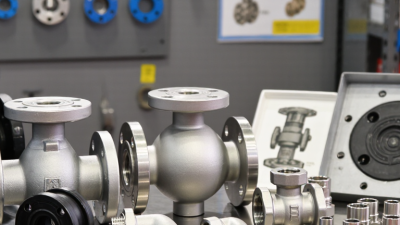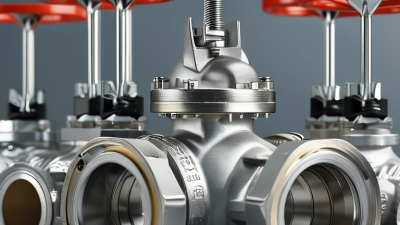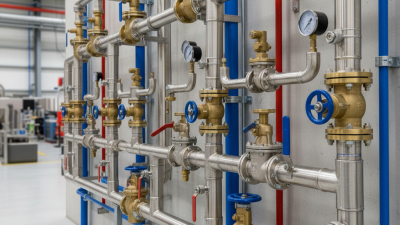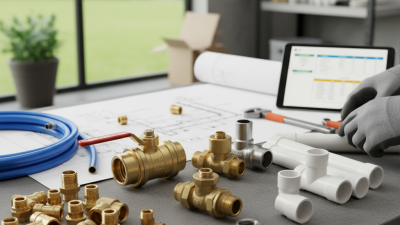
Buying pipe valves for international projects requires more than comparing prices on a supplier’s website. A valve may look suitable in a photograph, yet fail under high pressure, corrosive media, or repeated cycling. Global buyers must connect technical requirements with field conditions. This means checking valve type, body material, pressure class, temperature range, end connections, and operating method. Small details matter. A mismatched flange can delay installation for days.
Reliable purchasing begins with a clear specification sheet. Describe the fluid, flow direction, pipe size, pressure, temperature, and service environment. Ask suppliers for dimensional drawings, material certificates, pressure-test records, and traceable inspection documents. Independent testing can add confidence when the application is critical. However, certificates alone do not prove consistent manufacturing quality. Factory audits, sample inspections, and production photographs may reveal practical issues, such as poor casting surfaces or unprotected sealing faces.
Cost deserves careful attention, but the lowest quotation may create higher expenses later. Consider delivery time, spare parts, warranty support, packaging, and maintenance access. A technically correct valve is still a poor choice if replacement parts take months to arrive. Communication also matters across languages and time zones. Confirm every revision in writing.
A checklist helps. It is not foolproof. Experienced buyers still revisit assumptions after reviewing drawings and operating data. The following ten pipe valves buying tips provide a practical framework for comparing suppliers, reducing avoidable risks, and selecting equipment that performs reliably across borders. Perfect decisions are rare. Better questions usually produce better valves.
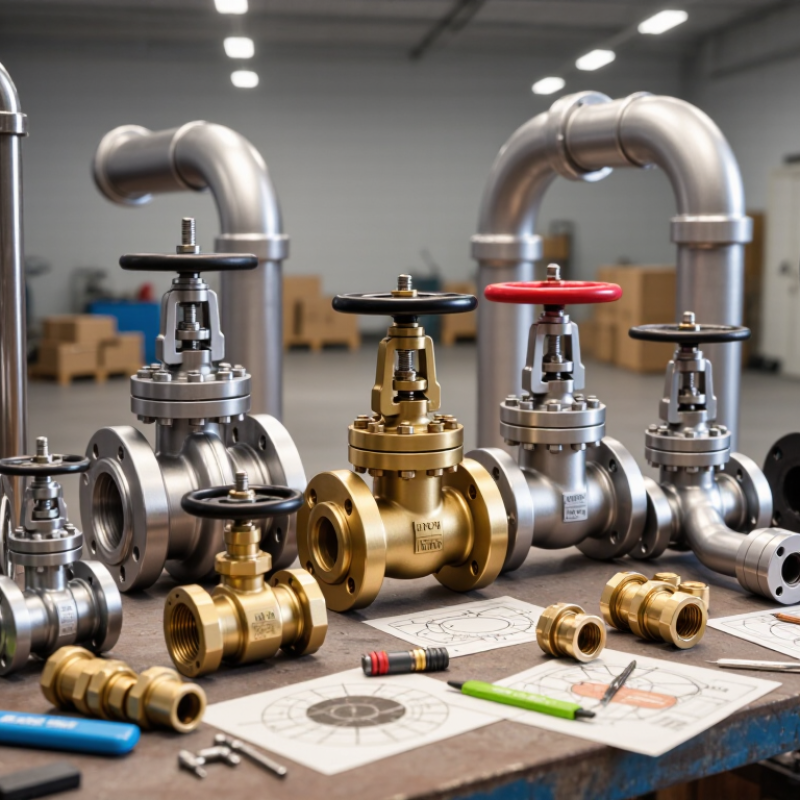
Choosing the correct valve starts with three linked decisions: type, size, and pressure class. ASME B16.34 covers pressure-temperature ratings for valves in Classes 150, 300, 600, 900, 1500, and 2500. These classes are not direct psi values. Ratings change with body material and operating temperature. A Class 600 valve may lose allowable pressure at elevated temperature, so a room-temperature comparison can mislead buyers.
Size should follow flow requirements, not simply the existing pipe diameter. Check media, flow rate, velocity, pressure drop, connection standard, and actuator torque. In field purchasing, I have seen oversized valves create unstable control and extra cost. Undersized valves may cause erosion, noise, or excessive pressure loss. A 2024 Grand View Research analysis valued the global industrial valves market at approximately USD 78 billion in 2023, showing the scale of this supply chain, but market growth does not replace engineering verification.
Tip: Ask suppliers for the ASME B16.34 rating table, material specification, test records, and temperature limits. Compare the actual design pressure and temperature together. Also confirm whether the selected valve matches ASME B16.5 flanges or another piping standard. Small gaps matter. A neat spreadsheet can still hide a poor specification. Recheck corrosion allowance, shutoff duty, and emergency conditions before approving the purchase. Industry guidance from ASME B16.34 and ISO 5208 supports documented rating and pressure-testing decisions.
When buying a pipe valve for H₂S service, do not select materials by pressure rating alone. Sour gas can attack wetted surfaces and trigger sulfide stress cracking. ISO 15156 provides material requirements for oil and gas production environments containing hydrogen sulfide. It considers partial pressure, chloride content, acidity, temperature, and exposure conditions. Details matter. A valve suitable for clean gas may perform poorly in wet, sour service.
Check every pressure-containing and wetted component, including the body, ball, stem, springs, fasteners, and welds. Material selection must match the actual media, not a generic “corrosion-resistant” label. Austenitic stainless steels, nickel alloys, carbon steels, and low-alloy steels have different limits. Hardness and heat treatment can be decisive for carbon and low-alloy steel parts. Ask for material certificates, hardness records, heat-treatment data, and sour-service compliance evidence. Do not guess.
Temperature changes the risk profile. A material acceptable at moderate temperature may lose resistance during cooling, heating, or pressure cycling. Confirm minimum and maximum operating temperatures, H₂S partial pressure, water presence, pH, and chloride level with the supplier. Also verify whether ISO 15156 applies to the complete valve or only selected components. That distinction is easy to miss. Procurement teams often focus on the valve body and overlook small, highly stressed parts. A component-by-component review is worth the extra time. Keep service data traceable from the process sheet to final inspection records.
| Tip | Buying Dimension | Verified Technical Consideration | Typical Material or Data Point | Buyer Action |
|---|---|---|---|---|
| 1 | Identify the process medium | Valve materials must be selected for the actual fluid, including water content, chlorides, oxygen, carbon dioxide, solids and additives. “Water service” and “wet sour gas service” are not equivalent conditions. | Record the fluid phase, composition, concentration, pH, chloride level and expected contaminants. | Request a process datasheet before approving the body, trim, seat and stem materials. |
| 2 | Screen for H₂S service | ISO 15156 addresses material selection and qualification for resistance to cracking in H₂S-containing oil and gas production environments. It is not a general corrosion standard for every industrial application. | Use ISO 15156-1 for general principles, ISO 15156-2 for carbon and low-alloy steels, and ISO 15156-3 for corrosion-resistant alloys. | State the H₂S partial pressure, temperature, pH, chloride content and exposure condition in the purchase specification. |
| 3 | Control hardness and heat treatment | Carbon and low-alloy steels used in sour service can be vulnerable to sulfide stress cracking when hardness, tensile stress and environmental conditions are unfavorable. | For many sour-service carbon and low-alloy steel applications, a maximum hardness of 22 HRC is commonly specified, but the applicable ISO 15156 requirements must be checked for the exact material and condition. | Ask for material certificates, heat-treatment records and hardness-test results; do not accept a generic “sour service” statement alone. |
| 4 | Match the valve to temperature | Temperature affects pressure rating, seal performance, corrosion rate, thermal expansion and material toughness. The allowable temperature is limited by the valve design, not only by the metal grade. | Specify minimum, normal and maximum operating temperatures, plus start-up, shutdown and upset temperatures. | Check the manufacturer’s pressure–temperature rating and the lowest-temperature impact-toughness requirements for the selected body material. |
| 5 | Separate body, trim and seal selection | The body may be suitable while the stem, ball, gate, fasteners or soft seat is not. Elastomers can lose resilience at high temperature or swell when exposed to hydrocarbons. | Evaluate metallic wetted parts and non-metallic parts independently. Consider PTFE, reinforced PTFE, elastomers or graphite only after checking temperature and chemical compatibility. | Request a complete wetted-parts list, including seat, stem seal, gasket, bolting and internal coatings. |
| 6 | Check corrosion mechanisms beyond H₂S | Carbon dioxide can cause carbonic-acid corrosion, while chlorides can promote pitting and chloride stress-corrosion cracking in susceptible stainless steels. Erosion may occur where solids or high velocity are present. | Include CO₂ level, chloride concentration, flow velocity, sand content and expected corrosion allowance in the design review. | Do not select a material solely from the H₂S concentration; evaluate the complete operating envelope. |
| 7 | Verify pressure class and design pressure | Nominal size alone does not determine safe service. Pressure rating depends on design standard, material group, temperature and end-connection configuration. | Specify nominal size, pressure class or design pressure, design temperature, end connection and required leakage class. | Confirm that the valve rating remains adequate at the maximum design temperature, not only at ambient temperature. |
| 8 | Choose the correct valve design | Isolation, throttling and emergency shutdown duties impose different requirements. A valve designed mainly for isolation may suffer premature damage if used for continuous throttling. | Specify service duty: on/off isolation, control, non-return, emergency shutdown, blowdown or drain service. | Check allowable pressure drop, cavitation or flashing risk, actuator torque, operating frequency and fail position. |
| 9 | Confirm testing and documentation | Production testing should demonstrate pressure integrity, seat tightness and functional performance. Sour-service compliance also depends on traceability and manufacturing controls. | Common purchase-document requirements include hydrostatic shell testing, seat leakage testing, material certificates, positive material identification and hardness records where applicable. | Define the inspection and test plan, applicable valve standard, acceptance criteria and document package before placing the order. |
| 10 | Plan for installation and maintenance | Incorrect orientation, unsupported piping, contamination, thermal cycling and unsuitable repair materials can reduce service life even when the original valve selection was correct. | Review flow direction, drain and vent needs, accessibility, actuator position, spare seals, replacement procedures and storage conditions. | Include installation instructions, preservation requirements, spare-part identification and a field inspection schedule in the procurement package. |
Technical note: ISO 15156 is intended for materials used in H₂S-containing environments in oil and gas production. Final material acceptance must be based on the complete service conditions, the applicable edition of the standard, project specifications and the valve design standard.
When buying a pipe valve internationally, verify Kv or Cv before comparing prices. These ratings describe flow capacity under defined pressure conditions. Kv usually means cubic meters per hour with a 1 bar pressure drop. Cv commonly uses US gallons per minute with a 1 psi pressure drop. The numbers are not interchangeable without conversion.
For clean liquids, estimate required Kv with Kv = Q × √(SG ÷ ΔP). Here, Q is flow in cubic meters per hour, SG is specific gravity, and ΔP is the planned valve pressure loss. For example, 20 m³/h of water through a valve losing 0.25 bar requires about 40 Kv. That value is only a starting point. Pipe friction, fittings, elevation, and pump behavior still affect the real operating point.
Do not select the largest valve automatically. An oversized valve may operate nearly closed, reducing control accuracy and causing unstable flow. A valve that is too small can create excessive noise, cavitation, or pump overload. Gas and steam require different calculations because density changes with pressure and temperature. Choked flow may also limit capacity. Request test conditions, flow direction, fluid temperature, and allowable pressure loss from the supplier. Check every unit twice. A spreadsheet can look convincing and still be wrong. One practical mistake is using water-based data for viscous liquid service. That shortcut deserves review before approval.
For global pipe valve buyers, sealing performance deserves more attention than surface finish. ISO 5208:2015 defines industrial valve leakage rates through controlled pressure tests. Its rates range from Rate A, the strictest level, to categories allowing higher leakage. The selected rate must match the service risk.
Ask for the complete test record. It should identify the test medium, pressure, duration, temperature, seat direction, and measured leakage. A factory certificate without these details is weak evidence. Check whether the valve was tested with water, air, or another medium. Results can differ significantly. Small details matter.
The U.S. Department of Energy’s Improving Compressed Air System Performance sourcebook reports that leakage can waste 20–30% of compressor output in poorly maintained systems. A leaking isolation valve may therefore increase energy use, pressure instability, and maintenance visits. Look for traceable serial numbers and independent inspection when the application is critical. A perfect document trail still does not guarantee perfect field performance. That gap deserves reflection. Assemblers can damage soft seats during installation, even when the valve passed ISO 5208 testing. Include post-installation checks, torque controls, and accessible leak testing in the purchase specification.
For global pipe valve buyers, certification checks should begin before price comparisons. API 6D confirms requirements for pipeline valves, including design, testing, documentation, and marking. Ask for the certificate, its scope, validity dates, and the certified manufacturing location. The document should match the valve’s size, pressure class, end connection, and stated service. Do not accept a generic certificate. In practice, a certificate scan is not enough. Request test records, material certificates, hydrostatic results, and identification numbers linked to each valve. An independent inspection can verify markings and records before shipment.
ISO 9001 is different. It evaluates the supplier’s quality management system, not every individual valve. Check the certificate issuer, accreditation, scope, and expiry date. The scope should cover valve design, manufacturing, testing, or trading, as applicable. A supplier may hold ISO 9001 while outsourcing critical processes, so ask how subcontractors are controlled. Global delivery also depends on practical documentation. Confirm packing standards, corrosion protection, commercial invoices, packing lists, certificates of origin, and inspection release notes. Clarify delivery terms, port responsibilities, and document language before production begins. I allow extra time for corrections. A missing revision or stamp can delay customs clearance and site acceptance. That small risk deserves attention.
API 6D pipeline valves are commonly specified by ASME pressure classes from 150 to 2500. These class values are nominal designations, not universal operating pressures; the allowable pressure depends on valve materials, temperature, size, and applicable design tables. Buyers should also verify a valid ISO 9001 quality management certificate, API 6D compliance evidence, inspection records, traceability documents, and delivery capability before placing an international order.