For global buyers, choosing pipe valves and fittings in 2026 requires more than comparing prices. Each component must match the medium, pressure, temperature, connection method, and installation environment. A stainless-steel ball valve may suit clean water, yet fail prematurely in abrasive slurry. A carbon-steel fitting may look economical, but corrosion can increase maintenance costs within months.
Richard W. Greene, author of Valve Selection Handbook, emphasized that “valve selection is a compromise between performance, reliability, and cost.” That principle still matters. Buyers should examine material certificates, pressure ratings, dimensional standards, seat compatibility, actuator requirements, and factory testing records. They should also confirm whether products align with recognized standards, such as ASME, API, ISO, or EN requirements. Certification alone is not enough.
Details matter. Thread quality, flange faces, gasket surfaces, and protective packaging can decide whether a shipment installs smoothly. Suppliers should explain traceability, inspection procedures, delivery capacity, and after-sales support. Serious manufacturers can provide drawings, test reports, and clear product identification.
Some choices remain imperfect.
A low-cost valve can be attractive today. It may become expensive after repeated shutdowns, leakage, or difficult replacement. Global buyers should compare total ownership costs, not only purchase prices. They should also question vague claims, especially “universal” compatibility and unverified pressure ratings. This 2026 guide examines practical pipe valves and fittings for water, oil and gas, chemical processing, construction, and industrial applications. The goal is not to name one universal winner. It is to help buyers make safer, better-documented, and more realistic decisions.
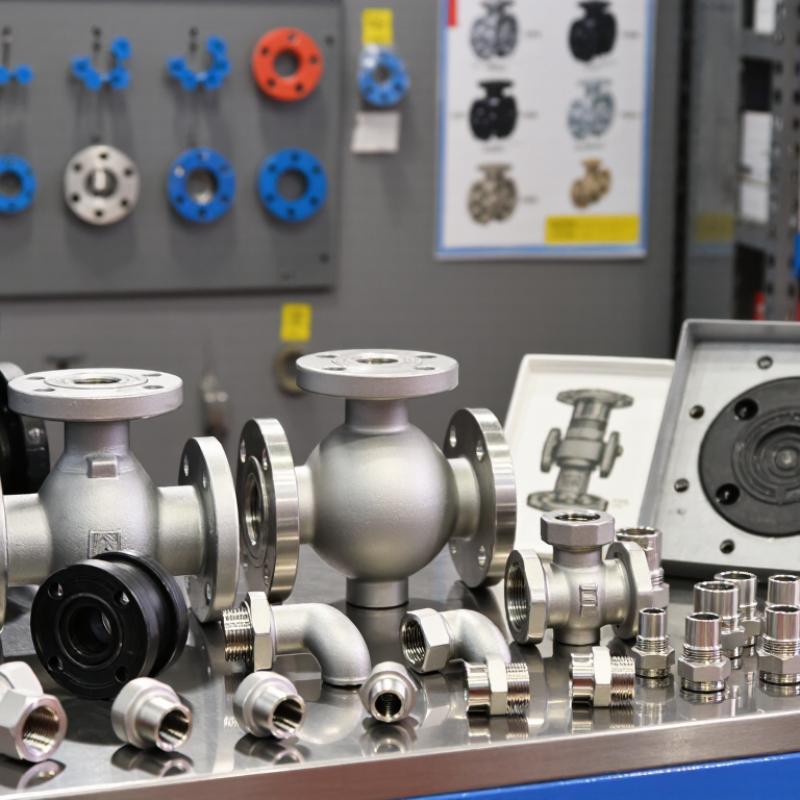
Pipe valves and fittings control, redirect, join, and protect fluid systems. Gate valves suit full-open or full-closed service. Globe valves provide better throttling. Ball valves offer fast shutoff with low pressure loss. Check valves stop reverse flow without an operator. Butterfly valves save space on large water lines. Fittings, including elbows, tees, reducers, and flanges, shape the route and manage size changes.
Applications vary widely. Stainless steel fittings resist corrosion in chemical and food processing lines. Carbon steel valves handle many industrial utilities. Ductile iron remains common in municipal water networks. Grand View Research reported that the global industrial valves market reached about USD 77 billion in 2023, with continued growth expected through 2030. Market estimates differ, so buyers should verify scope, region, and product definitions. Standards such as ASME B16.34, ISO 5208, and ASTM material specifications support safer comparisons. Yet a certificate alone does not prove field performance.
Tips: Match pressure, temperature, media, and flow rate before selecting materials. Check face-to-face dimensions and actuator space. Request pressure-test records and traceable material certificates. For corrosive service, do not rely on appearance. Review gasket compatibility, end connections, maintenance access, and spare-part availability. A perfect selection rarely exists. A small installation mistake, such as reversing a check valve, can stop an entire line. Dawning realization often comes late: the cheapest fitting may create higher lifetime costs through leakage, downtime, or difficult replacement.
For global pipe component buyers, material and standard matching matters more than a low purchase price. MarketsandMarkets projects the industrial valves market to reach about USD 106 billion by 2029. That growth increases supplier variety and quality risk. Carbon steel, stainless steel, ductile iron, and alloy steel each suit different service conditions. Stainless steel grades such as ASTM A351 CF8M resist many corrosive fluids. Carbon steel grades such as ASTM A216 WCB often serve water, oil, and moderate-temperature systems. The choice still depends on chloride levels, pressure, temperature, and flow speed.
Standards create a common technical language. ASME B16.5 controls many flange dimensions and pressure classes. ASME B16.9 covers factory-made butt-welding fittings. ISO 5208 defines valve pressure-testing procedures. API 6D supports pipeline valve requirements, while EN 10204 3.1 certificates help verify material chemistry and mechanical results. The World Steel Association reported global crude steel production near 1.9 billion tonnes in 2024. However, steel availability does not guarantee traceability or suitability. In field inspections, documentation gaps often appear before visible defects. A certificate may be valid, yet the delivered heat number may not match.
Tips: Request chemical analysis, pressure-test records, coating details, and dimensional drawings before shipment. Confirm the standard edition and pressure class in writing. Do not assume “stainless” means corrosion-proof. That assumption fails in warm chloride service. A small review by a qualified engineer can prevent a costly mismatch. Some projects still specify standards without defining inspection levels. That is an avoidable weakness.
Representative minimum tensile-strength requirements for widely used valve and fitting materials. Values are shown in MPa and are based on commonly specified ASTM material standards; actual suitability also depends on pressure, temperature, corrosion, and design conditions.
ASTM A216 WCB and ASTM A105 carbon-steel grades are commonly selected for industrial valves and forged fittings. ASTM A351 CF8M provides stainless-steel corrosion resistance, while ASTM A536 ductile iron is widely used for lower-cost valve and fitting bodies. Always verify the complete product standard and applicable pressure-temperature rating before procurement.
Selecting valves and fittings starts with the piping service, not the catalog photo. Identify the fluid, temperature, pressure, flow direction, and maintenance access. Water lines may use corrosion-resistant alloys or engineered polymers, while abrasive slurry needs tougher internal surfaces. For steam, check pressure-temperature ratings carefully. A fitting matching the pipe size may still be unsuitable. It can restrict flow or fail at a joint. Keep it simple.
Valve choice should follow the control task. Isolation valves need dependable shutoff and low pressure loss. Control valves require stable modulation across the expected flow range. Check valve orientation matters in pump discharge lines, where reverse flow can damage equipment. In gas, chemical, or high-purity systems, seal materials must tolerate the medium without contamination or swelling. Threaded fittings suit some low-risk services, but welded or flanged connections often provide better integrity for demanding duty.
Before ordering, verify dimensions, pressure class, end connections, materials, and test records. Ask for traceable certificates when the project requires them. On site, inspect threads, flange faces, gaskets, and valve travel before assembly. Misalignment is common. Do not force it. Field experience shows that drawings can hide awkward access, especially near pumps and walls. A short review may prevent a long repair. Selection is rarely perfect on paper; operating data can be incomplete, and assumptions deserve another check. Experienced engineers compare calculations with actual service conditions.
| Piping System / Service | Recommended Valve Types | Suitable Fittings | Common Materials | Typical Pressure and Temperature Range | Connection Selection | Key Standards and Checks | Best Selection Practice |
|---|---|---|---|---|---|---|---|
| Potable water and general water distribution Cold water, treated water and utility lines |
Resilient-seated gate valves for isolation; butterfly valves for larger diameters; full-port ball valves for small branches | Threaded, grooved, flanged or push-fit fittings; long-radius elbows; reducing tees; dismantling joints | Ductile iron, stainless steel, copper, brass, PVC-U, CPVC, PE100 or PP-R, subject to local approval | Commonly PN10–PN16 systems; many plastic systems are rated around 20°C and require pressure derating at higher temperatures | Use flanges for maintenance access and larger sizes; use approved threaded or fusion joints for smaller plastic or metallic lines | Check EN 1074, EN 1092-2, ISO 16134, ISO 4427, NSF/ANSI/CAN 61 or the applicable national potable-water approval | Confirm media compatibility, internal coating, drinking-water certification, operating torque and the required shut-off direction |
| Wastewater and sewage Raw sewage, sludge and suspended solids |
Knife gate valves for slurry or solids; eccentric plug valves; resilient-seated butterfly valves for isolation | Flanged elbows, tees, clean-out fittings, dismantling joints and corrosion-resistant fasteners | Ductile iron with suitable lining, stainless steel, epoxy-coated carbon steel and abrasion-resistant elastomers | Often PN10–PN16 and generally near ambient temperature; abrasive or corrosive duty may reduce service life | Prefer flanged ends for equipment removal; use full-bore or self-cleaning geometries where solids can settle | Check EN 1074, EN 1092, ISO 5752 face-to-face dimensions and the valve’s solids-handling capability | Specify abrasion resistance, anti-clogging clearance, shaft sealing and the expected number of operating cycles |
| Steam and condensate Boiler, process steam and return lines |
Globe valves for throttling; gate valves for isolation; check valves for condensate and reverse-flow prevention; steam traps for automatic drainage | Butt-weld, socket-weld or flanged fittings; long-radius elbows; strainers and drip-leg assemblies | Carbon steel, alloy steel and stainless steel selected according to temperature, pressure and corrosion conditions | Common industrial ranges include approximately 10–40 bar and 180–400°C; exact limits depend on material and pressure class | Use welded joints for high-temperature or high-cycle service when permitted; flanges are useful where inspection or replacement is required | Check ASME B16.5, ASME B16.9, ASME B16.11, ASME B16.34, EN 12516 and relevant pressure-equipment regulations | Select by saturated or superheated steam tables, allowable stress, thermal expansion, gasket rating and correct flow direction |
| Compressed air and industrial gas Plant air, nitrogen and instrument air |
Full-port ball valves for isolation; butterfly valves for larger lines; needle or globe valves for precise low-flow adjustment | Compression, threaded, press-connect, push-in or flanged fittings; condensate drains and coalescing-filter connections | Brass, stainless steel, aluminum, carbon steel, PA, PU or approved engineering plastics | Common plant systems operate around 7–10 bar(g); many components are rated above this, but temperature and gas compatibility must be checked | Choose low-leakage threaded or compression connections; minimize unnecessary reductions to control pressure loss | Check ISO 4414, ISO 8573, ISO 5211 where actuated, leakage class and the applicable national pressure-equipment rules | Verify Cv/Kv flow coefficient, seal material, clean-service requirements, pressure drop and safe venting during maintenance |
| Oil, fuel and hydrocarbon service Fuel oil, lubricating oil and process hydrocarbons |
Floating or trunnion ball valves for tight shut-off; gate valves for line isolation; globe valves for controlled flow | Butt-weld or flanged fittings; eccentric reducers; insulating kits where galvanic corrosion is a concern | Carbon steel, low-temperature carbon steel, stainless steel and hydrocarbon-compatible elastomers | Typical process conditions vary widely, from ambient service to approximately 200°C and from low pressure to ASME Class 600 or higher | Use welded connections for permanent high-integrity pipelines; use flanges around pumps, strainers and removable equipment | Check API 6D, API 608, ASME B16.34, ASME B16.5, fire-safe requirements and applicable fugitive-emission rules | Confirm fire-safe design, anti-static continuity, cavity relief, soft-seat compatibility, material traceability and pressure testing |
| Corrosive chemical processing Acids, alkalis, oxidizers and aggressive process fluids |
Diaphragm, lined butterfly, lined ball, pinch or PTFE-lined plug valves, depending on solids and chemical concentration | Fluoropolymer-lined, thermoplastic, butt-fusion, socket-fusion or corrosion-resistant alloy fittings | PTFE, PVDF, PP, PVC-C, FRP, duplex stainless steel, nickel alloys or other materials verified by chemical compatibility data | Temperature and pressure are highly concentration-dependent; plastic pressure ratings commonly require significant derating above 20°C | Select welded thermoplastic joints for leak reduction; use lined flanges where disassembly is necessary | Check ISO 9393, ASTM D1784 where applicable, lining standards, permeation data and chemical-resistance tables | Evaluate concentration, temperature, permeation, erosion, dead space, gasket swelling and the consequences of leakage |
| Food, beverage and hygienic processing Product, cleaning and utility circuits |
Sanitary butterfly, diaphragm, single-seat or mix-proof valves; sanitary check valves where reverse flow must be controlled | Tri-clamp, orbital-weld, hygienic elbows, tees, reducers and drainable hose connections | 316L stainless steel with documented surface finish; EPDM, PTFE, FKM or other approved elastomers | Often approximately 0–10 bar(g) and up to 120–150°C for cleaning cycles, subject to the component design | Use hygienic clamp connections for frequent dismantling; use orbital welding for permanent, low-crevice process lines | Check 3-A, EHEDG principles, ASME BPE, ISO 2852 and applicable food-contact regulations | Specify drainability, internal surface roughness, elastomer compatibility, clean-in-place velocity and hygienic dead-leg limits |
| HVAC chilled water and hot water Cooling, heating and building-service loops |
Butterfly valves for large isolation duties; ball valves for terminal units; characterized control valves for modulating flow | Grooved, flanged, press-connect or threaded fittings; balancing valves, strainers and flexible connectors | Ductile iron, carbon steel, stainless steel, copper, brass, PP-R or multilayer pipe systems | Commonly PN10–PN16; chilled water is often 5–15°C and heating water may range from 60–120°C | Use grooved or flanged joints for plant rooms; use press or threaded connections for accessible terminal branches | Check EN 1074, EN 1092, ISO 5208, actuator sizing requirements and local building-mechanical codes | Size control valves by required flow and differential pressure; insulate cold surfaces and prevent condensation at valve stems |
| Fire protection systems Sprinkler, hydrant and fire-water networks |
Indicating butterfly or gate valves for isolation; alarm check valves; deluge and pre-action valves where required by system design | Grooved, flanged or listed threaded fittings; tees, reducers, flexible couplings and test-and-drain assemblies | Ductile iron, carbon steel, stainless steel and approved fire-protection pipe materials | Frequently 10–16 bar systems, although the design pressure is determined by the hydraulic calculation and local code | Use only approved and listed connection systems; provide accessible, supervised isolation valves | Check NFPA 13, NFPA 20, NFPA 24, EN 12845 or the governing local fire-protection standard | Verify listing, flow-test requirements, tamper supervision, hydraulic loss, corrosion protection and inspection access |
| High-purity water and semiconductor utilities Ultrapure water, clean chemicals and specialty gases |
Diaphragm valves, bellows-sealed valves, high-purity ball valves and pneumatically actuated sanitary valves | PFA, PTFE, PVDF or high-purity stainless-steel tubing; orbital-weld fittings and controlled-environment connections | Electropolished 316L stainless steel, PFA, PTFE, PVDF and other validated high-purity materials | Often low to moderate pressure, approximately 3–16 bar(g), with temperature limits determined by polymer and cleaning chemistry | Prefer orbital-weld or high-purity face-seal connections; avoid elastomeric joints where contamination is unacceptable | Check SEMI standards, ASME BPE, surface-finish documentation, particle control and cleanroom packaging requirements | Specify surface finish, extractables, dead volume, particle generation, helium-leak testing and material certificates |

By 2026, global valve buying will focus on efficiency, traceability, and lifecycle cost. Grand View Research estimated the industrial valves market at USD 78.5 billion in 2023. It also forecasts a 4.8% compound annual growth rate through 2030.
Energy, water treatment, chemical processing, and building infrastructure remain strong demand centers. Smart monitoring is expanding, but many projects still prioritize durable manual valves.
Leading categories include ball, gate, butterfly, check, and globe valves.
Ball valves suit compact isolation points and frequent operation.
Butterfly valves reduce weight in large-diameter water lines.
Gate valves remain practical for low-pressure-loss isolation.
Check valves protect pumps from reverse flow.
Fittings are also changing. MarketsandMarkets projects the pipe fittings market to grow from approximately USD 15.2 billion in 2023 to USD 20.7 billion by 2028.
Stainless steel, ductile iron, carbon steel, HDPE, and corrosion-resistant alloys serve different environments.
Material choice should follow fluid chemistry, temperature, pressure, and installation conditions.
A coastal water project may need better corrosion resistance than its initial budget allows. Buyers should verify pressure ratings, dimensions, test records, and replacement availability. ISO 5208 and related testing practices can improve procurement reliability.
However, forecasts are not field measurements. Some reported growth figures vary widely between research firms. That is a warning. I would compare at least two datasets before fixing quantities, especially when freight costs and regional standards can change the final purchase decision.
2026 Best Pipe Valves and Fittings for Global Buyers?
Global buyers need more than a low unit price. A valve must match the fluid, pressure class, temperature, actuation method, and local standard. ISO 5208 defines pressure-testing principles, while ASME B16.5 controls key flange dimensions. For pipeline service, API 6D requirements can guide design, testing, and documentation. Ask for material certificates, heat numbers, test records, and corrosion allowances before shipment. Traceability is practical protection.
Water scarcity makes selection less theoretical. The UN World Water Development Report 2024 states that agriculture represents about 70% of global freshwater withdrawals. For water projects, resilient fittings should tolerate pressure cycling, disinfectants, and buried-soil conditions. Check gasket compatibility, bolt material, coating thickness, and drainability. The IEA World Energy Investment 2024 reports more than USD 3 trillion in global energy investment. About USD 2 trillion targets clean energy. That scale increases demand for reliable piping systems. Yet procurement teams still underestimate spare valves and commissioning time. Not always.
Installation quality decides whether specifications survive reality. Keep flange faces clean, support heavy valves, and prevent actuator loads from reaching the pipe. Use calibrated torque tools and record bolt sequences. During commissioning, test isolation, leakage, stroke time, and fail-safe position. Maintenance plans should define inspection intervals by service severity, not habit. Inspect seals after abnormal pressure events. One honest limitation remains: published standards cannot replace site-specific engineering. Confirm climate, water chemistry, seismic exposure, and operator training before approval.