Choosing a water totalizer is a measurement decision, not merely a purchasing task. It affects billing, leak detection, process control, and maintenance planning. The WHO/UNICEF Joint Monitoring Programme reported that 2.2 billion people lacked safely managed drinking water services in 2022. That figure makes reliable water accounting more than an engineering preference.
Water demand is also substantial across industry and agriculture. The UNESCO World Water Development Report 2023 states that agriculture represents roughly 70% of global freshwater withdrawals. Therefore, even small measurement errors can become significant across large pipelines, irrigation networks, or factory shifts. A suitable water totalizer should match the fluid quality, pipe diameter, expected flow range, pressure, temperature, and installation environment. It should also provide clear cumulative readings and compatible pulse, analog, or digital outputs.
Look beyond the display.
Technical references such as ISO 4064 and OIML R49 provide useful foundations for water meter performance and verification. However, these standards do not automatically make every device suitable for every application. A compact mechanical unit may work well on clean, steady-flow water. It may struggle with suspended solids, pulsating flow, or very low flow rates. Ultrasonic models can reduce pressure loss, yet they may require careful installation and stable signal conditions.
The uncomfortable part is simple: no water totalizer is perfect. Product brochures often emphasize peak accuracy, while real sites contain air pockets, vibration, scale, and changing temperatures. This guide compares those practical limitations, helping buyers select equipment that remains credible after installation, inspection, and daily use.
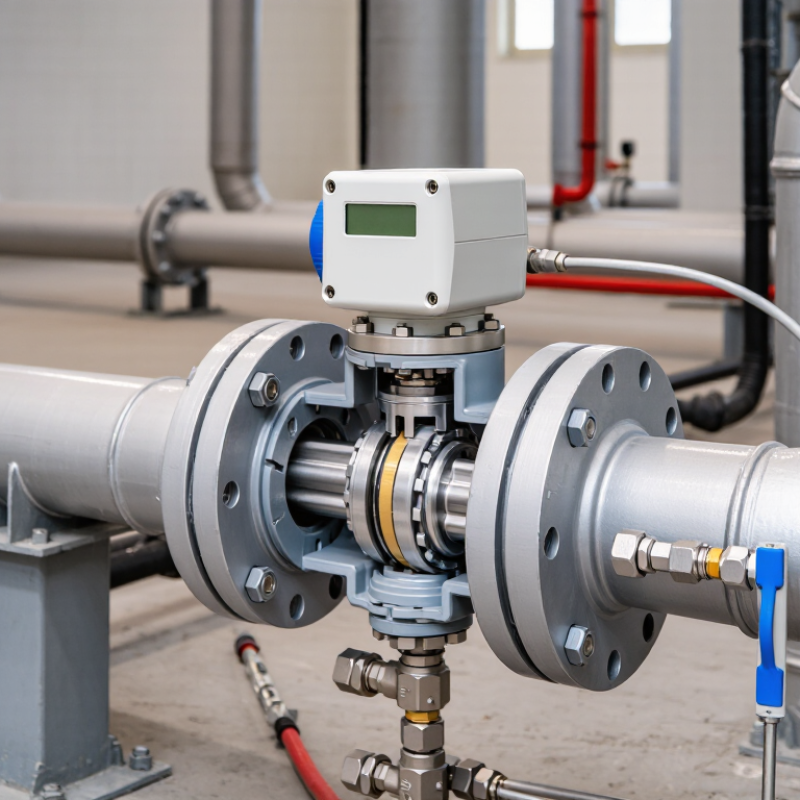
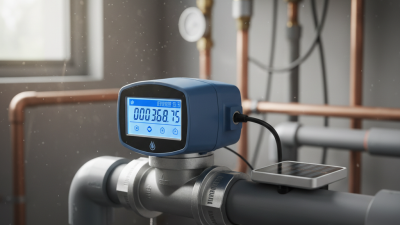
A water totalizer records cumulative volume, usually in cubic metres, litres, or gallons. It does not simply show how fast water moves. A meter senses flow, then adds measured volume over time. Some displays keep a running total; others allow a batch total to be reset. Check which value the screen shows before comparing readings. That matters.
Measurement depends on the meter’s design. Turbine meters infer flow from a rotor’s speed, while positive-displacement meters count known volumes in chambers. Electromagnetic meters detect voltage induced as conductive water passes through a magnetic field. Ultrasonic meters compare sound travel times through the pipe. The USGS report Estimated Use of Water in the United States in 2015 estimated withdrawals at about 322 billion gallons per day. That scale makes reliable measurement useful, but the national figure does not tell you which meter suits a small pipe. Not magic. Sediment, air bubbles, low flow, and poor installation can distort readings. A clean display can still be wrong. Match the measurement principle to water quality, pipe size, expected flow range, and required accuracy; then check the manufacturer’s stated operating limits and calibration details.
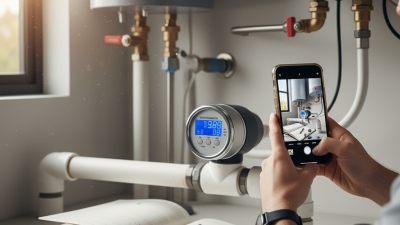
Identify the actual water flow before comparing totalizers. Record the lowest, normal, and highest flow rates during daily operation. A meter sized only for peak flow may read poorly during quiet periods. Check whether the totalizer measures gallons, liters, or another required unit. Confirm the display resolution and reset method before installation.
Volume requirements also matter. A small irrigation line may need simple cumulative readings, while a treatment system may require batch totals and remote data output. Review the expected daily volume and the maximum accumulated value. Some devices have limited display capacity. That detail is easy to miss.
Installation conditions can change the selection. Measure pipe diameter, available straight-run length, connection type, and mounting space. Note water temperature, pressure, suspended particles, and possible air pockets. Mechanical meters may need strainers, while electronic units may require a stable power source. Follow the manufacturer’s installation limits and local measurement rules. In practical checks, pipe alignment often causes more trouble than expected. It looks minor. It is not.
A useful specification sheet should answer one question: will this totalizer remain accurate in the real pipe system? Test the expected flow range, inspect access for maintenance, and leave room to read the display. A cheaper choice can become expensive when removal requires shutting down the entire line. No selection is perfect, and field conditions are sometimes recorded poorly. Recheck them before ordering.
A water totalizer records cumulative volume, but its reliability depends on the meter and installation. Mechanical meters count flow through moving parts, making their operation easy to understand. They can suit clean water and straightforward systems. Sediment, wear, or very low flow may affect readings over time. Simple, but not maintenance-free.
Turbine meters use a rotor, so they often work well where flow is steady and water is relatively clean. Electromagnetic meters measure flow using the electrical properties of conductive water; they have no moving parts, but need a full pipe and suitable water conductivity. Ultrasonic meters estimate flow from sound signals. Clamp-on models avoid cutting the pipe, though pipe material, lining, and air bubbles can influence results. No option is perfect.
Compare more than the display. Check the meter’s flow range, accuracy at low flow, pressure and temperature limits, and whether the totalizer can reset or store readings. A pulse output can connect readings to a controller, while a large, clear screen helps during routine checks. Match the technology to the actual water and pipe conditions, not just the catalog rating. In practice, installation is easy to underestimate; a poorly placed meter can disappoint even when its specifications look right.
| Totalizer / Meter Type | Measurement Technology | How Volume Is Totalized | Typical Strengths | Limitations and Installation Considerations | Common Applications | Power and Outputs |
|---|---|---|---|---|---|---|
| Multi-jet mechanical | A stream of water turns an impeller through multiple inlet jets; gearing converts rotation into a volume reading. | A mechanical register accumulates the measured volume, commonly displaying it in cubic metres or litres. | Simple construction, self-powered operation, and a clear local reading. Often suitable for smaller service connections. | Moving parts can wear; water quality and suspended particles may affect performance. Check installation orientation, strainer requirements, and the meter’s specified flow range. | Building services, small commercial supplies, and other applications where a direct mechanical register is appropriate. | Usually needs no external power for the register. Pulse or remote-reading options are model-dependent. |
| Woltmann (turbine) | Water flow rotates a turbine rotor aligned with the main flow path; rotor speed is related to flow rate. | A mechanical or electronic register integrates the measured flow over time. | Designed for larger pipe sizes and comparatively high, steady flow rates; generally has a relatively unobstructed flow path. | Performance can be affected by flow-profile disturbance, low-flow operation, and wear. Follow the manufacturer’s straight-pipe and installation requirements. | Large building inlets, irrigation systems, and distribution or process lines with sustained flow. | Mechanical registers can be self-powered. Remote pulse or electronic options depend on the selected model. |
| Positive-displacement piston | Water repeatedly fills and empties a measuring chamber, moving a piston through a known displacement per cycle. | Each chamber cycle represents a defined volume that is accumulated by a register. | Measures discrete volumes and can perform well at relatively low flow rates when correctly selected and maintained. | Moving parts and narrow passages can be affected by debris; pressure loss may be greater than with some full-bore designs. Confirm suitability for the water and flow conditions. | Smaller water services and applications where low-flow measurement is important. | Often available with a mechanical register; electronic counting or remote outputs are model-dependent. |
| Electromagnetic | Uses Faraday’s law of electromagnetic induction: conductive water moving through a magnetic field generates a voltage proportional to flow velocity. | An electronic transmitter calculates flow rate and integrates it into a cumulative volume total. | No moving measuring parts; suitable for many conductive-water applications and can provide flow and total-volume signals. | The liquid must meet the meter’s minimum conductivity requirement. The pipe generally needs to remain full, and installation, grounding, and electrical power requirements must be considered. | Water and wastewater treatment, process lines, and other applications with sufficiently conductive liquids. | Requires electrical power. Display, pulse, and communication outputs vary by transmitter. |
| Ultrasonic transit-time | Measures the difference in ultrasonic travel time upstream and downstream; the difference is used to determine flow velocity. | An electronic unit calculates flow and accumulates the volume over time. | No moving parts or flow obstruction in the measuring path. Inline and clamp-on configurations are available, depending on the design. | Transit-time designs generally require a full pipe and suitable acoustic conditions. Accuracy can depend on pipe dimensions, material, lining, fluid condition, and correct sensor placement. | Building monitoring, water distribution, and process measurement where non-invasive installation or low maintenance is valued. | Requires electrical power. Totalizer display, pulse, and digital communication options depend on the model. |
Selection note: Compare the required flow range, pipe size, water quality, installation conditions, power availability, totalizer display units, and output requirements. Accuracy and approved-use limits are model-specific; check the manufacturer’s specifications and applicable local metrology requirements.
How to Choose a Water Totalizer?
Evaluate accuracy across the flow range you actually use. A meter may perform well at steady flow but miss brief, low-volume events. Check its stated measurement range, allowable error, and performance at minimum flow. ISO 4064 and OIML R 49 provide recognized requirements for water-meter performance and testing. Match the instrument’s rated capacity to peak demand without running it continuously near its limit. Oversizing can also reduce sensitivity at low flow. Small leaks matter. The U.S. Environmental Protection Agency has cited an estimated 6 billion gallons of water lost daily in the United States through leaks, based on a 2013 agency report. That figure is an estimate, not a universal benchmark, but it shows why dependable low-flow measurement deserves attention.
Durability depends on the installation, not just the housing. Consider water temperature, pressure fluctuations, suspended grit, vibration, and outdoor exposure. A totalizer in a dusty pump room needs different protection from one fitted to a clean indoor line. Ask how often seals, strainers, batteries, or moving parts require inspection, and whether readings remain accessible after installation. Check the manufacturer’s service guidance against your staffing and downtime limits. Less maintenance is not always better. A sealed unit can be difficult to inspect, while an easy-to-open unit may need more frequent checks. Keep a simple log of readings and service dates; it can reveal drift before it becomes costly. I would still verify readings against a known volume during commissioning—specifications alone do not prove accuracy in your pipework.
Suggested evaluation weights for comparing water totalizers. These percentages are a practical starting point, not universal specifications; adjust them to your flow range, water quality, installation, and service requirements.
Select a totalizer that matches your system’s actual flow, not just the pipe diameter. Check the expected minimum and peak flow rates, water temperature, pressure, and whether the water carries sediment. A meter sized too large may miss low flows; one sized too small can create excess pressure loss. Confirm the display units and total capacity suit your records and operating schedule. Simple details matter.
Before installation, compare the meter’s connection size and material with the existing pipework. Follow its flow-direction arrow and the manufacturer’s requirements for straight pipe before and after the meter. These distances vary by design. Keep the meter accessible for reading and maintenance, and support nearby pipes so their weight does not strain the connections. Install isolation valves where practical. A neat-looking installation is not always a good one.
Flush the line before fitting the meter; grit can affect moving parts or readings. Keep the pipe full during operation, and avoid placing the unit where vibration or water hammer is common. After installation, open the valves gradually, check for leaks, and compare the totalizer reading with a known volume or reference instrument. Record the starting value and any setup settings. If readings seem inconsistent, check the flow conditions and installation first. It is easy to blame the meter too soon.