
What Is a Non Cartridge Mechanical Seal?

A Non Cartridge Mechanical Seal is a component-style sealing assembly installed piece by piece on rotating equipment. Unlike a cartridge seal, it does not arrive as one preassembled unit. The installer positions the stationary seat, rotating face, springs, gland, and related parts directly on the pump shaft. This design appears in water pumps, chemical-process equipment, mixers, and general industrial machinery. Its simpler structure can reduce purchase costs and fit older equipment. However, it demands careful measurement and disciplined installation.

Small details matter. A scratched seal face can create leakage within hours. Incorrect spring compression may cause overheating, while a misaligned shaft can damage the elastomer. Experienced technicians usually inspect shaft runout, check the stuffing-box dimensions, and clean every contact surface before assembly. They also confirm material compatibility with the pumped fluid, temperature, pressure, and speed. Manufacturer instructions remain essential because dimensions and setting procedures vary between models.

Not always easy.

This article explains how a Non Cartridge Mechanical Seal works, where it performs well, and why installation quality affects service life. It also compares component seals with cartridge designs, including maintenance demands, operating risks, and typical failure clues. Some recommendations may seem obvious, but real maintenance work often exposes overlooked problems. A seal can look correctly installed and still fail because of dry running, vibration, or poor flushing. Reliable selection therefore combines equipment records, field experience, technical data, and honest review of previous failures. This practical approach supports safer decisions and more predictable pump performance.
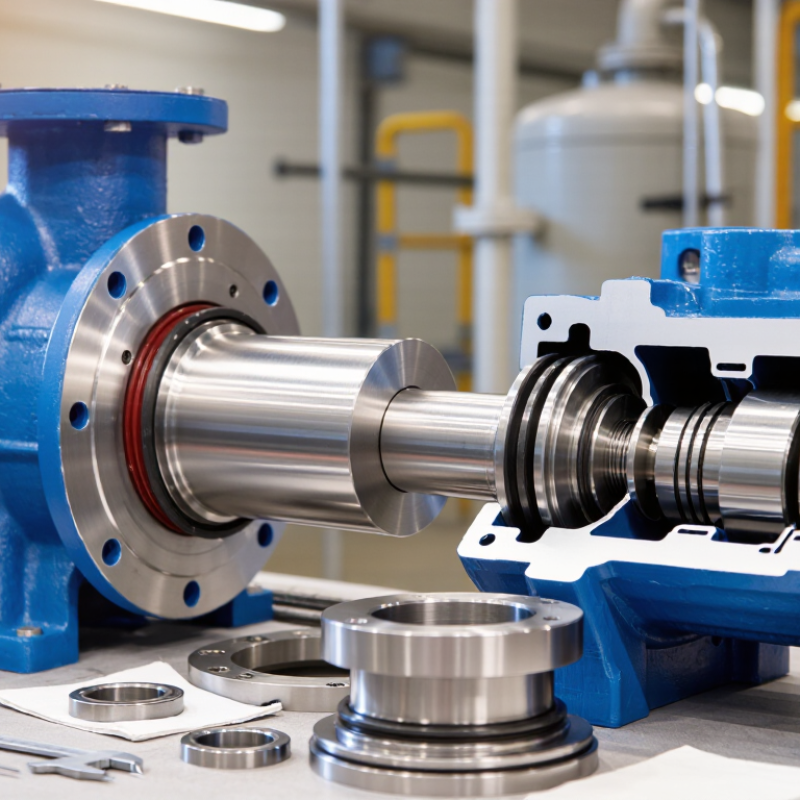
What Is a Non Cartridge Mechanical Seal?

Definition and Core Purpose of a Non-Cartridge Mechanical Seal

What Is a Non-Cartridge Mechanical Seal?

A non-cartridge mechanical seal is a shaft-sealing assembly installed piece by piece inside rotating equipment. Its main parts include a stationary face, rotating face, springs, elastomers, and a gland. Unlike a cartridge seal, these components are not preassembled on a sleeve. Technicians must position and adjust each part directly on the pump shaft.

Its core purpose is simple: control fluid leakage where a rotating shaft passes through a pump casing. The two polished seal faces press together with carefully controlled force. A thin liquid film forms between them, reducing friction while limiting leakage. The seal also helps protect bearings, couplings, and nearby surfaces from process fluid.

Installation demands patience. Shaft dimensions, face condition, spring placement, and gland alignment all matter. Even a small scratch or misplaced O-ring can cause early failure.

One detail is easy to underestimate. Cleanliness matters.

In field maintenance, non-cartridge seals remain useful because they can suit many equipment designs and may cost less initially. However, they require stronger installation skills and accurate measurements. They are not automatically inferior. A poorly fitted seal is the real problem. Yet, the design leaves less room for rushed work, and that limitation deserves honest consideration. Temperature, pressure, fluid type, and shaft movement must also match the seal’s operating range.


Main Components and Their Individual Functions

What Is a Non Cartridge Mechanical Seal?

A non-cartridge mechanical seal is assembled directly on the pump shaft. Its parts require individual positioning and adjustment. The rotating face turns with the shaft. The stationary seat remains fixed inside the gland or housing. Their polished faces form the primary sealing interface. A thin fluid film prevents dry contact and controls leakage.

The spring maintains closing force when pressure changes. Secondary O-rings or wedges seal around the shaft and stationary components. The gland compresses the stationary seat and supports the assembly. A shaft sleeve protects the shaft from wear. Set screws or drive pins transfer torque to rotating parts. Small errors matter here. Uneven tightening can distort the seat and create visible leakage.

The International Energy Agency reports that electric motor systems consume roughly 46% of global electricity. Pumping equipment represents a significant share of that demand. The U.S. Department of Energy also notes that pump systems may consume 25% to 50% of industrial facility electricity, depending on operating conditions. A correctly fitted seal helps protect efficiency by reducing product loss and unnecessary friction. In field work, I have found installation cleanliness more important than speed. That assumption is often ignored. Dust on a face, a damaged O-ring, or excessive spring compression can shorten service life. Installation records should include shaft condition, face measurements, spring orientation, and leakage observations. Mistakes remain possible, especially when older pumps lack clear drawings.

How a Non-Cartridge Mechanical Seal Operates

What Is a Non-Cartridge Mechanical Seal?

How a Non-Cartridge Mechanical Seal Operates

A non-cartridge mechanical seal is assembled directly on a pump shaft. Its parts are installed separately, rather than supplied as one preassembled unit. The main sealing surfaces are a rotating face and a stationary face. These faces meet with controlled pressure. A thin liquid film forms between them during operation. It reduces friction while limiting leakage.

The shaft rotates the spring assembly and rotating face. Springs maintain contact as pressure changes inside the pump. An O-ring moves with the rotating parts and seals against the shaft. The stationary face sits inside the gland or housing. Its gasket seals against the equipment surface. Correct dimensions matter. A small error can create visible dripping.

During installation, technicians check shaft condition, face cleanliness, spring direction, and compression length. Even a fingerprint can affect sealing performance. Dirt is often the quiet cause of early failure. The seal should be fitted without striking the carbon or ceramic faces. Alignment also matters because shaft runout creates uneven wear. In practical maintenance, installation instructions may appear simple, but field conditions are rarely perfect. A scratched shaft or poorly measured setting can defeat good components. That is why experienced technicians measure, inspect, and record each critical dimension before starting the pump.

Installation Steps and Alignment Requirements

A non-cartridge mechanical seal is assembled directly on the pump shaft. Its springs, gland, sleeve, and rotating faces are installed separately. That design can reduce space and cost, but it demands careful measurement during installation.

Start by cleaning the shaft, sleeve, stuffing box, and seal faces with lint-free cloths. Remove burrs from keyways and shoulders. Measure shaft runout near the seal location. A practical field target is often below 0.05 mm TIR, but the equipment drawing controls. Check face squareness and shaft shoulder condition before fitting the gland. The seal setting dimension must match the drawing exactly. Do not rely on memory. Even a 1 mm error can change spring compression and leakage behavior.

Install the stationary seat without forcing it. Lubricate compatible elastomers lightly, then slide the rotating unit into position. Tighten gland bolts evenly in a cross pattern. Set drive screws against the shaft only after confirming the correct axial position. Rotate the shaft by hand. It should move smoothly, without rubbing or catching. Poor alignment often appears here first. Not glamorous, but useful.

API 682 provides a recognized framework for mechanical seal selection and testing, while ISO 21049 addresses seal systems for petroleum and natural-gas service. The U.S. Department of Energy reports that pumping systems may consume 25–50% of industrial facility electricity. Alignment therefore affects more than leakage; it can influence energy loss and maintenance frequency. In practice, installers sometimes rush the final inspection. That is a weak point worth correcting. Record runout, setting dimension, bolt torque, and rotation results before startup.

Advantages, Limitations, and Common Applications

What Is a Non Cartridge Mechanical Seal?

A non-cartridge mechanical seal is assembled directly on the pump shaft. Its springs, faces, gaskets, and gland are installed separately. This design rewards technicians who understand shaft measurements and setting dimensions.

A clean workbench matters. One fingerprint or small scratch can damage the sealing faces. The main advantage is flexibility. Individual parts can be replaced, adjusted, or rebuilt without changing the entire assembly. The initial purchase cost is often lower than a cartridge seal. It also fits many older pumps and unusual equipment layouts. In field repairs, this adaptability can reduce waiting time.

The limitations are practical and significant. Installation usually takes longer. Incorrect spring compression may cause leakage, heat, or rapid face wear. Alignment and shaft condition require careful inspection. A non-cartridge seal is less forgiving when maintenance procedures are rushed.

It may not suit plants with frequent seal changes or limited technician training. That point is sometimes underestimated. Common applications include centrifugal pumps, mixers, agitators, and water-treatment equipment. They are also used in general process systems with moderate pressure and temperature.

Seal materials must match the fluid, temperature, pressure, and speed. A chemically resistant face can still fail if the pump runs dry.

In my experience, reliable performance depends less on the seal alone and more on installation discipline, flushing, and equipment condition. Non-cartridge seals remain useful, but they are not automatically the best choice for every service.

Start WhatsApp Chat Start WhatsApp Chat
Valves

Valves

Water Meters

MS Forged Pipe Fittings

Fittings

Water Meters

Valves

DI Grooved Fittings (UL/FM)

Water Meters

DI Screwed Fittings (UL/FM)

Fittings

Composite Pipes & Fittings

Site Credits : Seigospace