Top 10 Concrete Placing Boom Types You Need to Know?
In the construction industry, understanding the various types of Concrete Placing Booms is essential. According to John Smith, a renowned expert in concrete construction, "Choosing the right Concrete Placing Boom can enhance efficiency on site." This insight underscores the importance of selecting the correct equipment for specific projects.
Concrete Placing Booms come in diverse styles and functionalities, each designed for unique construction needs. From traditional boom models to more advanced, remote-controlled options, understanding these variations can significantly impact productivity and safety. The choice of boom type can influence not only project timelines but also the quality of the concrete placement.
However, navigating through the options can be daunting. Many contractors may feel overwhelmed by the sheer number of products available. It’s crucial to assess each type's strengths and weaknesses critically. Reflecting on past experiences can lead to better decision-making for future projects. Understanding these nuances can be the difference between a successful pour and a challenging construction phase.
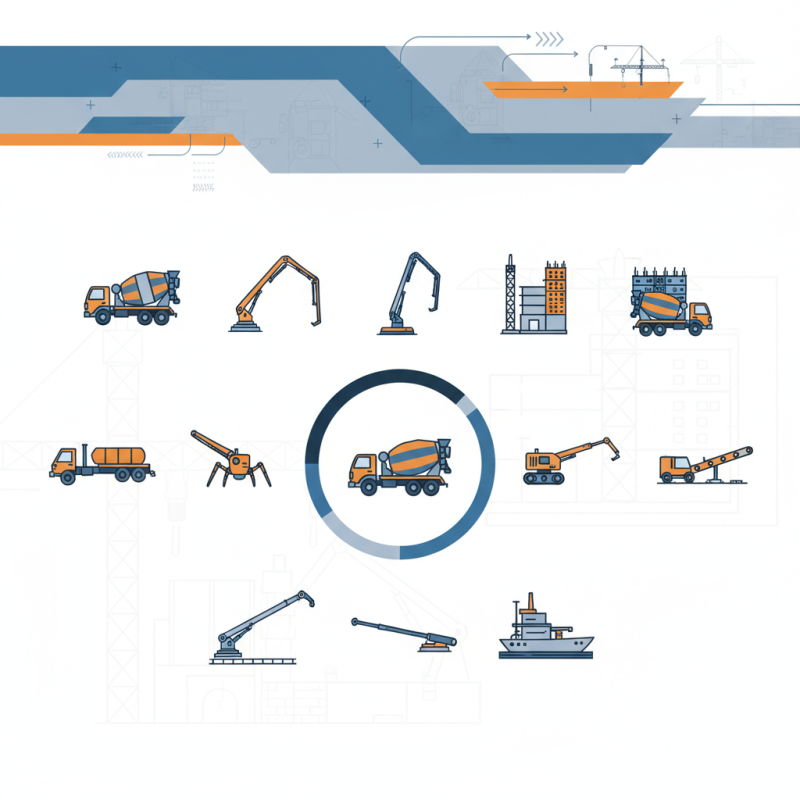
Types of Concrete Placing Booms: An Overview
Concrete placing booms play a crucial role in construction, especially for large projects. They ensure precise placement of concrete, which optimizes workflow and enhances structural integrity. There are several types of concrete placing booms that cater to different job site requirements.
One common type is the stationary boom. This option is prevalent for projects like high-rise buildings. According to industry reports, stationary booms can achieve heights of up to 200 feet. They are trusted due to their stability and load-bearing capacity. Another popular type is the mobile boom. These units provide incredible flexibility. They can easily navigate various terrains, making them ideal for diverse site conditions. Recent statistics indicate that mobile booms can reduce concrete delivery times by 30%.
Despite their clear advantages, challenges exist. For example, operators need extensive training to ensure safety and efficiency. Additionally, the equipment requires ongoing maintenance to prevent breakdowns. Neglecting this can lead to costly delays. Understanding the different types of concrete placing booms helps contractors make informed decisions. A thorough risk assessment is also essential to optimize performance and minimize potential hazards.
Mobile Concrete Placing Booms: Features and Advantages
Mobile concrete placing booms have revolutionized the construction industry. These booms offer flexibility and efficiency in placing concrete accurately. They can easily maneuver around job sites, allowing for better access in confined spaces. This feature is essential for tall structures and complex designs.
Many mobile booms come with hydraulic controls. This allows for smooth adjustments in height and distance. Workers can place concrete in challenging locations without needing extensive scaffolding. The setup reduces labor costs and time, making projects more efficient. However, it's crucial to ensure proper training for operators to maximize safety and efficiency.
Tip: Always conduct regular maintenance checks. Ensure that all hydraulic systems are functioning correctly. Neglecting small issues can lead to significant problems later.
Another advantage of mobile concrete placing booms is their adaptability. They can work in various weather conditions, which is essential for uninterrupted construction projects. This adaptability often means that teams can keep projects on schedule. However, it's important to monitor job site conditions closely. Wet or excessively windy days can cause unforeseen challenges when operating equipment.
Tip: Consider the site layout before deploying the boom. A well-planned approach leads to better efficiency and safety on-site.
Stationary Concrete Placing Booms: Benefits for Construction Sites
Stationary concrete placing booms offer numerous advantages on construction sites. They provide a stable platform for concrete delivery, ensuring precision in pouring. This stability minimizes the risk of spills and wastage. With enhanced accuracy, workers can focus on the overall project, rather than cleanup.
These booms can reach high elevations and cover substantial distances. This capability is vital for skyscrapers and large infrastructure projects. The ability to easily direct the flow of concrete speeds up the construction process significantly. Additionally, operators can control the pouring from a safe distance, reducing risks associated with manual handling.
However, there are challenges that require attention. For instance, setup time can be lengthy. Proper training for operators is essential to maximize efficiency. Occasionally, material clogs may occur in the system, leading to interruptions. Addressing these concerns is critical for maintaining the flow of work on-site. With thoughtful planning, the benefits can outweigh the downsides.
Top 10 Concrete Placing Boom Types You Need to Know
| Boom Type | Reach (m) | Lift Capacity (kg) | Control Type | Best For |
| Stationary Boom | 30 | 1000 | Remote Control | High-rise buildings |
| Roller Boom | 25 | 1200 | Manual Control | Large foundations |
| Luffing Boom | 28 | 800 | Remote Control | Steep sites |
| Telescopic Boom | 35 | 900 | Semi-automatic | Versatile sites |
| Z-Shape Boom | 20 | 600 | Remote Control | Narrow spaces |
| Articulating Boom | 22 | 750 | Manual Control | Complex layouts |
| Mast Climbing Boom | 40 | 1100 | Remote Control | High-rise projects |
| Hydraulic Boom | 33 | 950 | Automatic | Heavy loads |
| Stationary Arm Boom | 26 | 800 | Manual Control | Fixed locations |
| Self-Climbing Boom | 45 | 1300 | Automatic | Dynamic sites |
High-Rise Concrete Placing Booms: Innovations for Tall Structures
High-rise concrete placing booms have transformed the construction landscape, particularly for tall structures. These machines enhance efficiency by providing precise placement of concrete at great heights. They are designed to cater to the unique challenges posed by skyscrapers and large buildings. This innovation not only improves construction speed but also ensures safety and structural integrity.
When working with high-rise booms, consider the weight load. Overloading can jeopardize safety and project timelines. Operators must be trained and certified to efficiently handle these machines. Regular maintenance is crucial; even minor issues can lead to significant delays or accidents.
Planning is essential during the early stages. Evaluate the site conditions thoroughly. Each boom has specific operational limits. Misjudging these can lead to costly mistakes. Understanding the booms' capabilities helps in selecting the right type for your project. Lastly, embrace feedback from your team. Learning from past experiences can enhance future projects significantly.
Truck-Mounted vs. Trailer-Mounted Placing Booms: Key Differences
When comparing truck-mounted and trailer-mounted placing booms, the differences become apparent. Truck-mounted booms are usually more compact and can maneuver through tight job sites. They can easily transport concrete to high-rise projects, saving time and labor. However, their weight can limit the types of trucks that can effectively carry them. This may lead to potential oversights in planning and execution.
Trailer-mounted booms offer greater flexibility. They can be detached and moved independently of a truck, making them suitable for various sites. This type of boom can be towed by different vehicles, increasing overall utility. Yet, their setup can take longer than truck-mounted options. Some operators may underestimate the time required for proper positioning, resulting in delays.
Both options have unique advantages and challenges. Ultimately, the choice between the two should consider project specifics, including site accessibility and logistical constraints. It's essential to reflect on the long-term impact of each decision. A thorough assessment can lead to better efficiency and avoid unforeseen setbacks in concrete placement.