Top 10 Sand Casting Parts Manufacturers for Global Buyers
Global buyers choosing Sand Casting Parts suppliers are balancing cost, geometry, material choice, and dependable delivery. The market is broad. Grand View Research valued the global metal casting market at approximately US$150.4 billion in 2023 and projected a 5.3% compound annual growth rate from 2024 to 2030. That figure covers metal casting as a whole, not sand casting alone. It signals scale, but it does not guarantee that any supplier can meet a buyer’s specifications.
Details matter. A sand-cast pump housing may look sound outside while hiding porosity near a thick section. Buyers should therefore compare more than quoted prices: review alloy and process capabilities, inspection methods, sample quality, production capacity, and communication practices. Casting expert Doru Stefanescu’s published work emphasizes solidification science; paraphrased as a practical buyer’s rule: “Control solidification to improve casting quality.” This is a paraphrase, not a verbatim quotation. Supplier claims still need verification against drawings, samples, and agreed acceptance criteria. That step is easy to underestimate.
The following list of ten manufacturers is intended as a starting point for global sourcing research, not a universal ranking. Each company should be assessed for the buyer’s part geometry, order volume, destination, and quality requirements. A shortlist helps. Careful qualification matters more.
Sand Casting Parts and Their Role in Global Manufacturing
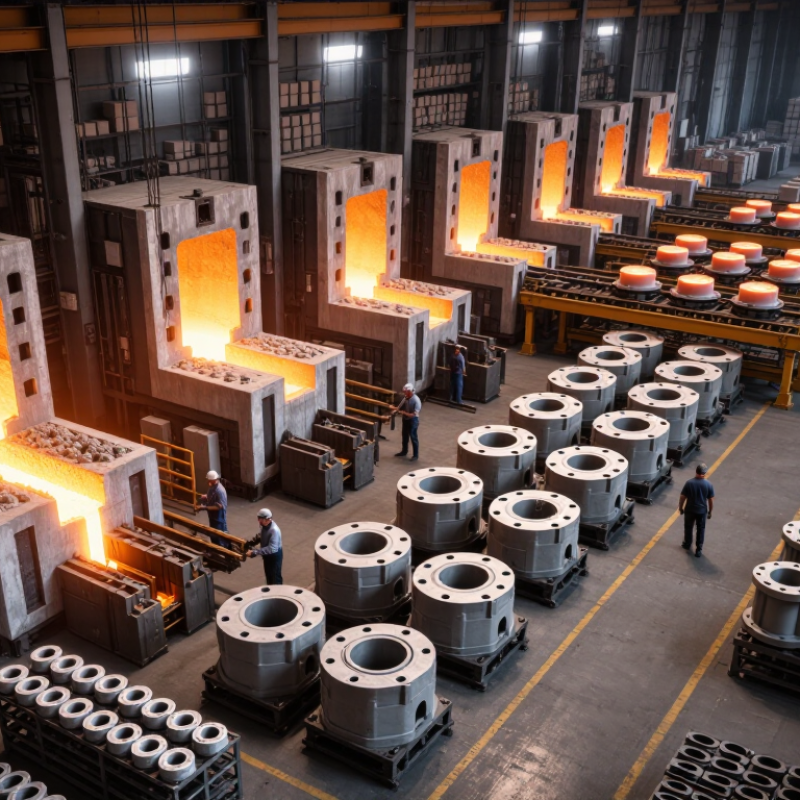
Sand casting parts play a practical role in global manufacturing. They serve industries that need large, durable, and geometrically complex components. Pump housings, valve bodies, gearbox cases, and agricultural machine frames often begin as sand molds. The process handles iron, steel, aluminum, and several engineering alloys. It also supports flexible production volumes without requiring expensive permanent tooling.
The method starts with a pattern pressed into prepared sand. Molten metal then fills the cavity and cools around its shape. Vent design, pouring temperature, and cooling speed directly affect quality. A small air pocket can weaken a load-bearing section. A rough mold surface can increase machining time. These details matter. Experienced manufacturers review drawings, alloy requirements, tolerances, and inspection plans before production. They may use dimensional reports, chemical analysis, hardness checks, and non-destructive testing for critical parts.
Global buyers also examine packaging, traceability, delivery control, and communication. A casting that meets the drawing but arrives with rust or impact damage is not a reliable part. No process is flawless. I have seen projects suffer because a wall section was designed too thin for stable filling. Early simulation and a realistic machining allowance could have prevented that problem. Clear feedback between engineers and foundries remains essential, especially when parts cross languages, time zones, and manufacturing standards.
Typical Minimum Tensile Strengths of Sand-Cast Iron and Steel Grades
Sand casting supports a wide range of metal grades for components used in global manufacturing. This chart compares specified minimum tensile strength values; actual properties depend on the grade, casting, and applicable test requirements.
Values are grade minimums converted from ksi to MPa and rounded: ASTM A48 Class 30, ASTM A48 Class 40, ASTM A536 Grade 65-45-12, and ASTM A27 Grade 70-36. Consult the applicable ASTM specification and supplier test documentation for project requirements.
How to Evaluate Sand Casting Manufacturers for International Supply
Top 10 Sand Casting Parts Manufacturers for Global Buyers
How to Evaluate Sand Casting Manufacturers for International Supply
The World Foundry Organization’s 2023 census reported more than 109 million tonnes of global castings in 2022. This scale creates choice, but not consistent quality. Buyers should compare manufacturers through evidence, not attractive websites or low quotations.
A capable supplier should provide sample inspection reports, material certificates, dimensional records, and clear process controls. Ask how workers manage moisture, sand grain size, melt temperature, and pattern wear. These details affect porosity, shrinkage, and surface defects. ISO 9001 certification supports quality management, but it does not replace production audits. Review corrective-action records and request traceability from heat number to shipment.
Capacity matters.
Check furnace size, molding equipment, machining support, and monthly output for your actual part range. A factory producing small pump housings may struggle with large agricultural castings. The 2024 World Casting Census also shows strong regional differences in production capacity, so logistics deserve equal attention. Confirm export packaging, port access, inspection timing, and backup transport plans.
Cost is easy to compare.
Risk is not.
A cheaper quotation may exclude tooling maintenance, pattern changes, testing, or scrap replacement. Request a total landed-cost model and a pilot order before signing a long-term agreement. I would also leave room for doubt: one successful sample cannot prove stable mass production. Independent pre-shipment inspection can expose problems, although it adds time and expense. That compromise is often sensible for international supply.
The Global Landscape of Sand Casting Parts Production
The Global Landscape of Sand Casting Parts Production
Sand casting remains a practical foundation for global metal parts production. It supports engine housings, pump bodies, valve components, and large industrial frames. Modern Casting’s World Casting Production Census reported more than 100 million metric tons of castings worldwide in 2023. Sand-based processes still serve many of these applications because tooling costs remain manageable for complex, low-volume parts.
Production is concentrated across Asia, Europe, and North America. Asia offers broad supplier capacity and competitive labor costs. European foundries often emphasize process control, energy efficiency, and certified quality systems. North American producers commonly support machinery, transport, and energy projects. However, supplier rankings can mislead. Public data may combine iron, steel, and non-ferrous casting volumes. Capacity figures also change with energy prices and factory closures. Buyers should verify current output directly.
Tips: Ask for recent inspection records, not only catalog photographs. Check mold material, melting equipment, machining capability, and traceability. Request samples from the same production line. A factory may show excellent prototypes but weaker repeatability. Confirm dimensional results under your actual drawing tolerances. The International Energy Agency also identifies industrial efficiency as a growing priority, so ask about recycled metal use and electricity consumption. Cost still matters. It should not hide unstable quality.
Profiles of Ten Sand Casting Parts Manufacturers for Global Buyers
The ten manufacturers below represent different strengths for global buyers. One focuses on large iron housings, with heavy molds suited to industrial equipment. A second produces compact aluminum components and emphasizes consistent wall thickness. A third handles short production runs, useful when designs may change. A fourth offers machining alongside casting, reducing handoffs between suppliers. A fifth specializes in agricultural parts exposed to dirt, vibration, and seasonal wear.
A sixth manufacturer serves buyers needing ductile iron components with specified mechanical properties. A seventh casts intricate shapes, though complex cores can raise inspection demands. An eighth supports high-volume orders through repeatable molding processes. A ninth is geared toward custom tooling and collaborative design reviews. A tenth offers broad material options, but buyers should verify each option against the actual part requirements. These profiles are not rankings. A capable supplier can still be a poor fit for a particular drawing.
Tips: Share a clear 3D model, material grade, annual volume, and critical tolerances when requesting quotations. Ask for sample inspection records and details about defect control. Check how the supplier handles pattern revisions and shipping protection. Small details matter. A polished quotation alone proves little; compare evidence, response quality, and realistic lead times. Even then, some uncertainty remains.
Comparing Manufacturers by Capabilities, Quality, and Export Readiness
Comparing ten sand casting manufacturers means looking beyond quoted price. Strong suppliers can explain their process limits, available alloys, casting sizes, and machining capacity. Ask how they handle a housing with thick walls and narrow internal passages. Their answer should cover pattern design, feeding, and likely dimensional variation. Details matter. A capable foundry will also clarify which tolerances need machining rather than promising precision everywhere.
Quality checks should match the part’s risks. Look for documented material certificates, inspection plans, and traceable results for dimensions or mechanical tests. For a pump body, request examples of pressure testing or defect controls where relevant. A polished brochure proves little. Ask how nonconforming castings are recorded and corrected, and whether sample inspection reports can be shared. No supplier is perfect; vague answers deserve follow-up, not instant rejection.
Export readiness involves more than shipping overseas. Confirm experience with protective packing, moisture control, clear labeling, and agreed delivery documents. Check whether the supplier can coordinate freight and provide realistic production and transit schedules. A sample shipment can expose problems before a large order arrives, such as damaged machined faces or inconsistent packaging. Comparisons can still be imperfect: factory visits, sample parts, and written records reveal different things. A low-cost quote may exclude tooling, finishing, or inspection fees.