What is Self Drilling Screws and How to Choose Them?
Self Drilling Screws are essential components in construction and manufacturing. They simplify the fastening process by eliminating the need for pre-drilling. Industry expert Dr. Alice Thompson emphasizes their importance by stating, “The efficiency of Self Drilling Screws revolutionizes the way we think about assembly.”
Choosing the right Self Drilling Screws can be confusing. The market offers various types, sizes, and materials. A screw’s thread design, point type, and coating can significantly impact its performance. However, many users overlook these details, leading to potential failures in their projects. It’s crucial to understand these factors and their implications.
Selecting the appropriate screw requires careful consideration. Users may find it easy to choose a familiar type, but this could limit the project’s success. The perfect choice often balances specifications, such as load capacity and environmental conditions. Thus, knowing how to choose Self Drilling Screws can lead to better results and enhanced durability.
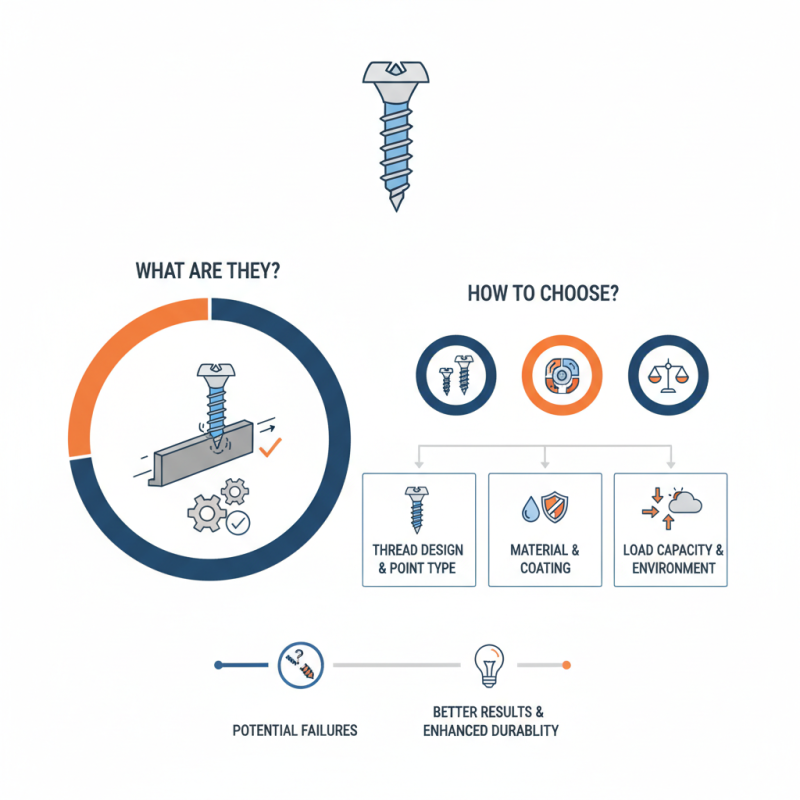
What are Self Drilling Screws?
Self-drilling screws have revolutionized fastening in construction and manufacturing. These screws feature a drill bit tip that allows them to create their own holes in materials, eliminating the need for pre-drilling. According to industry data, approximately 75% of construction professionals now prefer self-drilling screws for metal-to-metal applications due to their efficiency and strong holding power.
The versatility of self-drilling screws makes them suitable for various materials, including wood, plastic, and metal. They come in different sizes, lengths, and head styles, each tailored for specific tasks. For instance, a screw with a flat head may be ideal for flush surface applications, while a hex head provides a better grip for power tools. Proper selection is essential. Misalignment can lead to structural weaknesses, with studies indicating that incorrect screw types account for up to 30% of fastening failures.
Understanding the specifications is crucial for optimal use. Material compatibility and thread design impact performance. Professionals often overlook these factors, resulting in unnecessary rework. Aimed at reducing installation time, self-drilling screws can lead to project delays if not chosen wisely. Balancing speed with accuracy is vital for achieving durable results in any project.
The Mechanism Behind Self Drilling Screws
Self-drilling screws are unique fasteners designed to create their own holes in the material. They feature a pointed tip that drills into materials like metal and wood. This capability eliminates pre-drilling, making installations quicker and more efficient. Their mechanism relies on a sharp drill point, which helps penetrate the substrate effectively. The spiral flutes cut through the material and form a tight bond, ensuring strong connections.
Understanding the mechanism behind self-drilling screws is essential when selecting the right type. Factors such as material thickness, drill point design, and desired thread type are important. A screw that works well in one situation may not perform in another. The screw’s diameter also plays a role; smaller screws may not hold as securely in thick materials.
Proper installation can sometimes be overlooked. If a screw is driven too deep, it can strip the material. Too shallow may lead to weak joins. Experimentation can yield valuable insights for different applications. Adjusting your approach based on previous installations often leads to better outcomes. It’s crucial to learn from past experiences and refine the selection and installation process.
What is Self Drilling Screws and How to Choose Them? - The Mechanism Behind Self Drilling Screws
| Specification | Detail |
| Material | Steel, Stainless Steel, Aluminum |
| Head Types | Pan Head, Flat Head, Hex Head |
| Drive Types | Philips, Slotted, Torx, Hex |
| Sizes | #6 to #14, Various Lengths |
| Coating Options | Zinc Plated, Black Oxide, Hot-Dip Galvanized |
| Applications | Metal to Metal, Wood to Metal, Plastic to Metal |
| Advantages | No pre-drilling required, Quick assembly, Strong hold |
| Disadvantages | Potential over-tightening, Not suitable for all materials |
Types of Self Drilling Screws and Their Applications
Self-drilling screws are essential for many construction and DIY projects. They come in various types, each suited for specific applications. Understanding these types helps ensure you choose the right one for your needs.
The most common types include metal self-drilling screws, wood screws, and masonry screws. Metal self-drilling screws are ideal for joining metal parts. They have a drill point, allowing them to penetrate metal without a pre-drilled hole. Wood screws are designed for wooden surfaces. Their sharp threads grip the wood firmly, providing solid connections. Masonry screws, on the other hand, are perfect for concrete and brick. They require a pilot hole but offer a strong hold.
When choosing self-drilling screws, consider the materials you'll work with. Think about the thickness of the materials, the environment, and the load they will bear. Not all screws are created equal. Using the wrong type can lead to failure in your project. It's crucial to reflect on your choices and understand the specific requirements of your task.
Different Types of Self-Drilling Screws and Their Applications
This chart illustrates the various types of self-drilling screws, highlighting their common applications and the percentage of use in different industries.
Factors to Consider When Choosing Self Drilling Screws
When choosing self drilling screws, several factors play a crucial role. One key aspect is the screw material. Steel, stainless steel, and galvanized options are available. The choice of material directly affects corrosion resistance, strength, and durability. For instance, a report from the Fastener Quality Act states that stainless steel screws show an increased lifespan in harsh environments. Consider the environment where the screws will be used to avoid premature failures.
Another vital factor is screw type. Different applications require different types of self drilling screws. The thread design influences the holding power and performance. A study by the Industrial Fasteners Institute found that fine threads provide better holding in softer materials while coarse threads excel in harder substrates. Be aware of the thickness of the material you are fastening. Not every screw is suitable for every thickness.
Lastly, consider the screw head style. Options include hex, pan, and flat. Each style offers unique benefits based on the tools available and the installation method. Using the wrong head style can complicate installation and compromise the connection's strength. The choice of a screw may seem simple, yet it requires careful thought and consideration of all these elements to achieve a durable solution. Remember to assess the entire assembly, as poor choices can lead to structural failures.
Installation Tips for Self Drilling Screws
Self drilling screws are essential for various construction projects. They offer a unique advantage by eliminating the need for pre-drilling, saving time. Proper installation is crucial to ensure they perform effectively and securely.
When using self drilling screws, consider the material you work with. Soft metals require different screws than hardwood or concrete. An incorrect choice may lead to material damage. Ensure you use the right size and type of screw for the application, as this affects stability.
Tip:
Always use a power drill with the appropriate speed settings. A high-speed drill can cause over-tightening, damaging the screw and material.
Start the screw slowly, allowing it to bite into the material properly.
Another important aspect is the angle. Maintain a consistent angle while driving the screw. This helps in achieving a secure fit and prevents stripping.
Take your time; rushing may result in issues later on.
Patience can save you from future repairs.