How to Choose the Best Well Control Box for Your Needs?
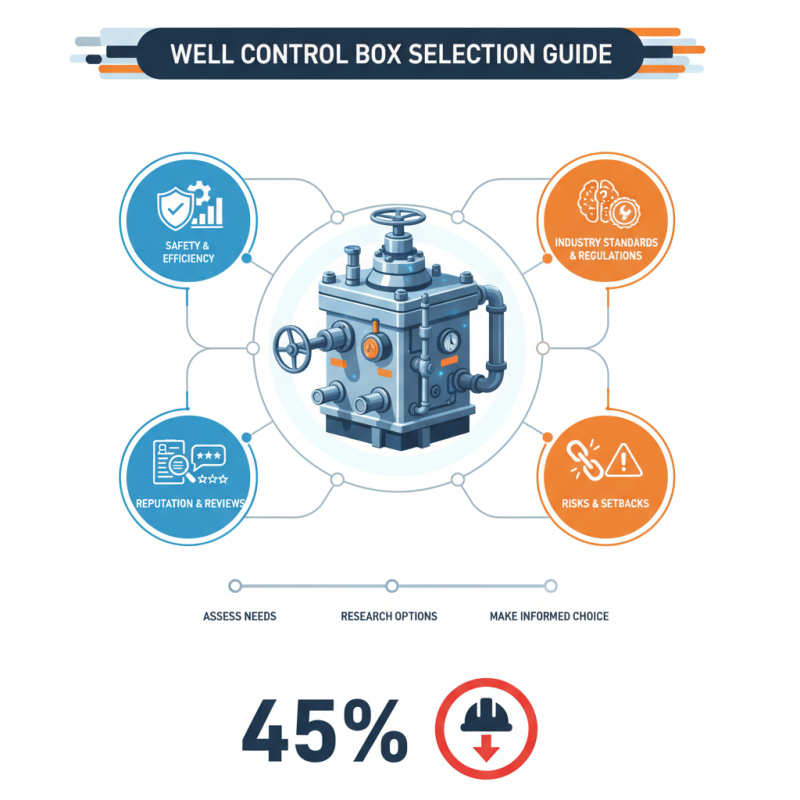
Choosing the right Well Control Box is crucial for safety and efficiency in drilling operations. According to a report by the International Association of Drilling Contractors, approximately 45% of drilling incidents are linked to ineffective well control. This statistic highlights the importance of selecting a reliable well control solution.
Dr. Jane Smith, a renowned expert in well control systems, emphasizes, “The right Well Control Box can be the difference between a successful operation and a catastrophic failure.” Her insights remind us that understanding our specific needs is essential. Different projects may require varied features, which can complicate the selection process.
Investigating the options available in the market can be overwhelming. Many products claim to provide the best safety features, yet not all meet industry standards. It's vital to evaluate the reputation of the manufacturers, customer reviews, and compliance with regulations. Selecting the wrong Well Control Box can lead to significant setbacks and safety risks. Careful consideration is key to making an informed choice.
Understanding Well Control Boxes and Their Importance in Drilling
Understanding well control boxes is crucial for safe drilling operations. These devices are essential for managing well pressure during drilling. They help prevent blowouts, which can lead to catastrophic accidents. A reliable well control box monitors pressure and fluid levels in real time. Operators must choose the right box to match their specific needs.
Tips: Consider the type of drilling being conducted. Different operations require different functionalities. Ensure the box you select has the necessary sensors and alarms for your setup. Familiarize yourself with the specifications of each option. Choosing the wrong device can lead to unexpected challenges on-site.
Maintenance is critical for well control boxes. Regular checks ensure optimal performance. Any malfunction could compromise safety and project timelines. Inspect connectors and calibration frequently. Document any issues that arise during operations. This can enhance future decision-making regarding equipment.
Keeping training programs up-to-date is vital. Operators must be familiar with the technology. Engaging in hands-on training can reveal potential gaps in understanding. A well-informed team will operate with greater efficiency and safety, leading to more successful drilling experiences.
Key Features to Consider When Choosing a Well Control Box
When selecting a well control box, consider key features that suit your operational needs. One important aspect is the display. A clear, intuitive interface can make a significant difference in high-pressure situations. Look for screens that are easy to read in different lighting conditions. This allows for quick decision-making when every second counts.
Sensors and alarms are also crucial. High-quality sensors provide real-time data on pressure and flow rates. Alarms should be loud and easily distinguishable. This ensures you are alerted immediately to any potential issues. Proper functioning of these features can prevent accidents.
**Tip:** Regularly test your well control box to ensure all features are operational. Even a small glitch can lead to serious consequences.
Durability is another feature to evaluate. The environment at well sites can be harsh. Equipment must withstand extreme temperatures and exposure to chemicals. Consider boxes made from robust materials that meet industry standards.
**Tip:** Research the maintenance requirements of the well control box. A high-maintenance unit may disrupt operations.
While it's essential to have advanced features, user experience should not be overlooked. A complex system can lead to confusion. Ensure that your team is trained to use the equipment effectively. This balance of sophistication and usability is key to successful operations.
Well Control Box Key Features Comparison
Assessing Your Operational Needs for Effective Well Control Solutions
Choosing the right well control box hinges on understanding specific operational needs. A comprehensive assessment can steer you toward effective solutions. According to a report by the International Association of Drilling Contractors, nearly 50% of drilling incidents are linked to inadequate well control measures. This highlights the significance of selecting equipment that aligns closely with operational requirements.
Evaluating factors such as the type of well, depth, and environmental conditions is crucial. Each project has unique demands. For example, offshore operations may require more advanced technology due to unpredictable conditions. A generic well control box may not suffice in such scenarios. Research indicates that custom solutions enhance safety and efficiency, reducing operational downtime by up to 30%.
While it is essential to prioritize advanced features, being overly reliant on technology can pose risks. It's vital to balance technology with hands-on training for personnel. Only qualified operators can leverage complex machinery to its full potential. Failing to address this training aspect often leads to failures in emergencies. Therefore, investment in training should accompany equipment selection for optimal outcomes.
Comparing Different Types of Well Control Boxes Available on the Market
When considering well control boxes, understanding the available types is crucial. There are several categories, including manual, automatic, and digital systems. Each system has distinct features and operational efficiencies. According to industry reports, the choice of well control box can impact safety and performance significantly. Recent studies indicate that automated systems can reduce human error by up to 30%.
Digital well control boxes offer advanced monitoring capabilities. They provide real-time data on pressure and flow rates, which is critical for effective management. However, while digital systems are praised for their precision, they are also complex. In some cases, operators may struggle with the technology. In contrast, manual systems, while user-friendly, might not adapt quickly to sudden changes in drilling conditions.
Experts suggest evaluating your operational environment before making a decision. Certain types may perform better under specific conditions. Acknowledging the limitations of each system is important for a balanced approach. Consequently, gathering feedback from field operators can provide valuable insights. Their experiences often reveal practical challenges that reports do not cover.
How to Choose the Best Well Control Box for Your Needs?
| Type of Well Control Box | Key Features | Suitable Applications | Price Range ($) | Pros | Cons |
| Electromechanical Box | Reliable performance, Easy to operate | Land drilling, Offshore platforms | 5000 - 7000 | Durable, Low maintenance | Heavyweight, Limited portability |
| Digital Control Box | Enhanced monitoring, Data logging | Deepwater drilling, Geothermal operations | 8000 - 12000 | Advanced features, Real-time feedback | Higher cost, More complex to operate |
| Hydraulic Control Box | High pressure capabilities, Quick response | Oil rigs, High-pressure wells | 6000 - 9000 | Powerful, Reliable in harsh conditions | Maintenance required, Potential for leaks |
| Portable Well Control Box | Compact design, Easy transport | Workover operations, Remote sites | 3000 - 5000 | Lightweight, User-friendly | Lower capacity, Less rugged |
Budget Considerations and Long-term Value of Well Control Equipment
When considering the best well control box for your needs, budget plays a crucial role. Investing in high-quality well control equipment may seem expensive initially, but it can save you money in the long run. Reliable systems reduce downtime and lower the risk of costly incidents. A well-designed box often has lower maintenance costs. Look for reliable suppliers with good track records.
Tips for budgeting: Analyze your actual needs. Assess the risks associated with your operation. Sometimes, cheaper options can lead to bigger expenses later. Factor in not just the purchase price, but also maintenance, operation expenses, and the potential for future upgrades.
Long-term value should be a priority. The right well control box can enhance safety and efficiency. Consider the technology and features that offer better performance over time. Remember, safety must not be compromised for cost savings. A sound investment ensures peace of mind and operational stability.