
How to Choose the Best Chocolate Bar Production Line?

Choosing the right Chocolate Bar Production Line is a practical decision, not a simple equipment purchase. It affects product quality, labor costs, energy use, and production stability. A reliable line should match your chocolate recipe, bar size, daily output, and available factory space.

Start with the production details. Will the line handle dark, milk, or white chocolate? Can it manage inclusions such as almonds, crisped rice, or caramel pieces without blocking the depositor? Check the tempering machine, moulding unit, cooling tunnel, demoulding system, and packaging equipment as one connected process. A strong cooling tunnel may prevent surface bloom, while accurate temperature control protects the bar’s snap and shine. Small differences matter.

Look beyond the brochure. Ask manufacturers for factory references, maintenance records, testing procedures, and real production samples. Experienced suppliers should explain cleaning time, spare-part access, operator training, and expected waste levels. Their answers should be specific, not promotional. Details matter.

Consider automation carefully. Fully automated systems can reduce labor and improve consistency, but they may demand higher technical skills and greater investment. A semi-automatic line could be more sensible for a growing business. That assumption requires testing, however. Production forecasts are often too optimistic. A line designed for maximum capacity may perform poorly when recipes change or orders fluctuate.

The best choice combines engineering evidence with your operating reality. Compare total ownership cost, not only the purchase price. With careful trials, documented inspections, and honest supplier communication, your Chocolate Bar Production Line can support consistent quality and dependable growth.
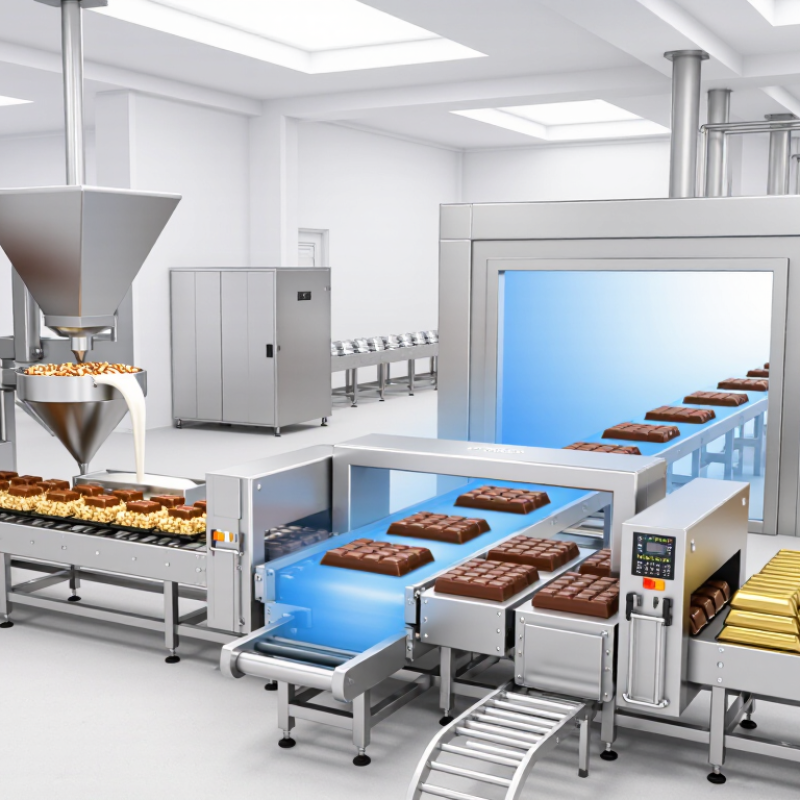
How to Choose the Best Chocolate Bar Production Line?

Chocolate Bar Production Line Basics and Manufacturing Goals

How to Choose the Best Chocolate Bar Production Line?

Chocolate Bar Production Line Basics and Manufacturing Goals

Choosing a chocolate bar production line starts with clear manufacturing goals. Capacity matters, but output alone can mislead. A line rated for 1,000 kilograms per hour may need large storage tanks, skilled operators, and steady ingredient supply. Define the target bar weight, daily volume, recipe range, and available floor space before comparing equipment.

The core process usually includes mixing, refining, conching, tempering, molding, cooling, and packaging. Tempering control is especially important because it affects shine, snap, and shelf stability. Cooling tunnels need stable airflow and temperature control. Small changes can create dull surfaces or uneven release. During factory trials, check temperature readings at several points, not only on the control screen.

Think about product flexibility too. Some factories make solid bars, while others add nuts, wafers, fillings, or inclusions. A flexible depositor may support growth, but extra features can increase cleaning time and maintenance costs. Sanitation access should be practical, with smooth contact surfaces and easy-to-remove parts. Traceability records, operator training, guarding, and documented cleaning procedures also support reliable production. A faster machine is not always better. I have seen planning assumptions fail when actual changeover time was ignored. Leave room for testing, waste control, and future adjustments.


Key Factors for Assessing Production Capacity and Product Range

How to Choose the Best Chocolate Bar Production Line?

Key Factors for Assessing Production Capacity and Product Range

Choosing a chocolate bar production line starts with realistic capacity planning. A machine rated at 1,000 kilograms per hour may deliver less during daily operation. Cooling time, product thickness, filling levels, and cleaning schedules affect output. Calculate capacity from actual working hours, not factory brochures. Include planned downtime and seasonal demand. Allow room for variation. The first estimate is often wrong.

Product range also determines the line configuration. Standard molded bars need tempering, depositing, molding, cooling, and wrapping equipment. Filled bars may require precise pumps and controlled filling systems. Bars with nuts, crisp pieces, or layered textures need suitable dosing units. Check whether the line handles several mold sizes without lengthy changeovers. A ten-minute adjustment can matter when producing many short runs. Ask for documented changeover times, not optimistic promises.

Before purchasing, request production trials with your chocolate recipe, inclusions, and target bar weight. Measure hourly output, temperature stability, weight accuracy, and surface quality. Inspect the cooling tunnel carefully. Uneven cooling can create dull surfaces or broken edges. Review cleaning access, spare-part availability, operator training, and recorded maintenance procedures. These details support reliable production and consistent food safety practices. A larger line is not automatically better. An oversized system may increase waste, labor, and unused capacity. Trial results should guide the final decision, even when they challenge the original plan.

How to Choose the Best Chocolate Bar Production Line? - Key Factors for Assessing Production Capacity and Product Range

Assessment Dimension Entry-Level Line Standard Commercial Line High-Capacity Flexible Line What to Check Before Purchasing
Nominal chocolate output 50–150 kg/h 200–500 kg/h 600–1,500 kg/h Compare the rated capacity with the expected average demand. Plan for practical output of approximately 70–85% of the nominal rating after changeovers, cleaning, and minor stoppages.
Target annual production Up to 300 tonnes/year 300–1,200 tonnes/year 1,200–4,000+ tonnes/year Use operating hours, planned maintenance, product mix, and seasonal demand rather than multiplying rated capacity by 24 hours and 365 days.
Chocolate bar weight range 10–100 g 20–200 g 20–300 g or more with tooling changes Confirm mould compatibility, depositor accuracy, cooling time, and packaging equipment settings for every planned bar size.
Mould format and cavity count 1–4 mould lanes; 4–12 cavities per mould 4–8 mould lanes; 12–30 cavities per mould 6–12 mould lanes; 24–60 cavities per mould More cavities can increase output, but they also increase tooling cost, mould-change time, and the impact of filling or demoulding problems.
Chocolate types supported Dark, milk, and standard white chocolate Dark, milk, white, compound, and selected filled products Multiple chocolate types, filled bars, layered bars, inclusions, and speciality recipes Check tempering control, viscosity range, allergen separation, recipe management, and whether the system supports real chocolate and compound coatings.
Tempering capacity 50–150 kg/h 200–600 kg/h 700–2,000 kg/h The tempering unit should match the depositor and enrober demand while maintaining stable temperature control during start-up and product changes.
Cooling tunnel length 6–12 m 12–24 m 24–45 m Required length depends on bar thickness, recipe, belt speed, cooling temperature, humidity, and the required demoulding strength.
Cooling residence time 10–20 minutes 15–30 minutes 20–40 minutes for thicker or filled products Validate the cooling profile through production trials. Excessive cooling can cause condensation, while insufficient cooling may create sticking or deformation.
Product range flexibility 1–5 core products 5–20 products 20+ products with modular tooling List all planned products, including plain, filled, layered, nut-containing, crisp-containing, and seasonal formats before selecting the machine layout.
Inclusion handling Limited or manual addition Dried fruit, nuts, cereal, and crisp inclusions Multiple inclusion feeders and controlled distribution Check particle-size limits, feeder accuracy, blockage prevention, cleaning access, and whether fragile inclusions remain intact.
Changeover time 1–3 hours 45–120 minutes 30–90 minutes with quick-change tooling Ask for a documented changeover procedure covering moulds, recipes, colour or allergen cleaning, packaging film, and verification checks.
Packaging speed 30–100 bars/minute 100–300 bars/minute 300–800 bars/minute Packaging capacity should exceed the expected forming-line output and support the required wrapper style, multipacks, date coding, and inspection systems.
Typical line footprint 15–35 m² 40–100 m² 100–250+ m² Include space for operator access, raw-material staging, cleaning, maintenance, electrical panels, ventilation, and finished-product transfer.
Installed electrical load 15–40 kW 40–120 kW 120–300 kW Request a complete utility schedule covering electrical power, compressed air, chilled water, ambient temperature, humidity, and drainage requirements.
Compressed-air demand 0.3–0.8 m³/min at 6–8 bar 0.8–2.0 m³/min at 6–8 bar 2.0–5.0 m³/min at 6–8 bar Use clean, dry, oil-free compressed air where it may contact food or packaging components, and size the compressor for peak demand.
Expected operational availability 70–80% 75–85% 80–90% after process stabilization Evaluate preventive maintenance, spare-parts availability, operator training, remote support, and the supplier’s commissioning plan.
Best-fit application Pilot production, local sales, limited SKUs, and market testing Growing businesses with regular production and a medium product portfolio Large-volume production, multiple markets, contract manufacturing, and frequent product launches Select the smallest line that meets the next three to five years of realistic demand while leaving room for modular expansion.

Note: The figures are practical planning ranges for preliminary comparison. Final capacity depends on recipe viscosity, bar dimensions, mould design, cooling conditions, operating schedule, packaging format, and required quality standards.

Essential Equipment from Chocolate Melting to Bar Packaging

Choosing the best chocolate bar production line starts with the product, not the machine catalogue. A practical line should connect melting, filtering, tempering, molding, cooling, demolding, and packaging without unstable transfers. The ICCO Cocoa Market Report for 2023/24 estimated global cocoa bean grindings at about 4.855 million tonnes. That volume reflects a demanding industry, but it does not justify buying the fastest line. Product thickness, inclusions, daily output, and cleaning time matter more.

Melting tanks need accurate temperature control and gentle agitation. Tempering equipment must hold chocolate within a narrow working range, or bars may develop dull surfaces and weak snap. Molds should release cleanly after the cooling tunnel, even during humid production days. Small details matter. A few degrees can change the finish.

Packaging deserves equal attention. The line may require foil wrapping, flow wrapping, label inspection, date coding, metal detection, and case packing. PMMI industry reports repeatedly identify labor pressure and flexible automation as major packaging investment drivers. However, automation is not automatically efficient. A complicated changeover can waste more time than it saves. I would test real recipes, packaging materials, and cleaning routines before signing a purchase contract. Factory trials should measure temper stability, rejects, changeover minutes, and energy use. Peak speed is only one number. Sometimes, it is the least useful one. Temperature sensors, accessible contact parts, and documented sanitation procedures also support reliable operation and food-safety verification.

How to Choose the Best Chocolate Bar Production Line?

Essential equipment from chocolate melting to bar packaging

The chart shows indicative industrial throughput ranges commonly specified for key chocolate bar production stages. A balanced production line should match the capacity of each stage, while allowing for recipe type, bar size, cooling time, automation level, and packaging format.

How to Compare Quality, Automation, Energy Use, and Maintenance

How to Choose the Best Chocolate Bar Production Line?

How to Compare Quality, Automation, Energy Use, and Maintenance

A reliable chocolate line should protect flavor, shape, and texture at every stage. During production trials, check tempering stability rather than trusting brochure specifications. Chocolate leaving the tempering unit should maintain a consistent temperature, often within a narrow working range. Inspect molded bars for dull surfaces, fat bloom, air pockets, and uneven weight. Small defects become expensive when production reaches several thousand bars per hour.

Automation should reduce variation, not remove practical judgment. Recipe storage, automatic dosing, temperature sensors, and production alarms improve repeatability. However, operators still need clear access to settings and manual inspection points. Too much automation can create confusion during changeovers. Test the control interface with real recipes, not only a demonstration program. Ask how quickly staff can identify a blocked nozzle or unstable cooling zone.

Energy use deserves measurement over assumptions. Compare heating loads, cooling capacity, motor efficiency, and standby consumption. A shorter cooling tunnel may save space but increase refrigeration demand. Request hourly energy data from a production trial. Maintenance details also matter. Look for tool-free access, washable surfaces, diagnostic messages, and common replacement parts. Check whether technicians can reach pumps, belts, and sensors without dismantling major sections. Service response promises can sound excellent, yet written procedures and training records offer stronger evidence. No line is perfect. A careful comparison should expose its weak points before installation.

Installation, Safety Standards, Supplier Support, and Total Cost

How to Choose the Best Chocolate Bar Production Line?

Choosing a chocolate bar production line starts with the factory floor, not the sales brochure. Measure ceiling height, doorway width, drainage points, and electrical capacity before signing. During installation, technicians should align conveyors, test tempering zones, and record every calibration setting. A reliable supplier provides layout drawings, operator training, spare-part lists, and a clear service schedule. Ask who comes when production stops. Installation rarely runs perfectly.

Safety requirements deserve careful verification. Food-contact surfaces should be suitable for hygienic production and easy to clean. Guards, emergency stops, temperature controls, and electrical protection must be tested before operation. Request documented procedures for sanitation, allergen management, and preventive maintenance. These documents should match local regulations and recognized food-safety practices. A polished certificate alone proves little if operators cannot explain the daily checks.

Total cost includes more than the purchase price. Compare energy use, labor needs, cooling demand, packaging compatibility, spare parts, maintenance, and expected downtime. Ask for a realistic commissioning timeline and written support terms. Supplier response time matters, especially during tempering faults or cooling failures. Hidden costs matter. A cheaper line may consume more power or create uneven bars, increasing waste. My own caution is simple: projected output often looks better than factory reality. Request trial samples using your recipe, then inspect weight accuracy, gloss, snap, and cleaning time before making the final decision.

Start WhatsApp Chat Start WhatsApp Chat
Valves

Valves

Water Meters

MS Forged Pipe Fittings

Fittings

Water Meters

Valves

DI Grooved Fittings (UL/FM)

Water Meters

DI Screwed Fittings (UL/FM)

Fittings

Composite Pipes & Fittings

Site Credits : Seigospace