Car Park Access System How to Choose the Best Solution?
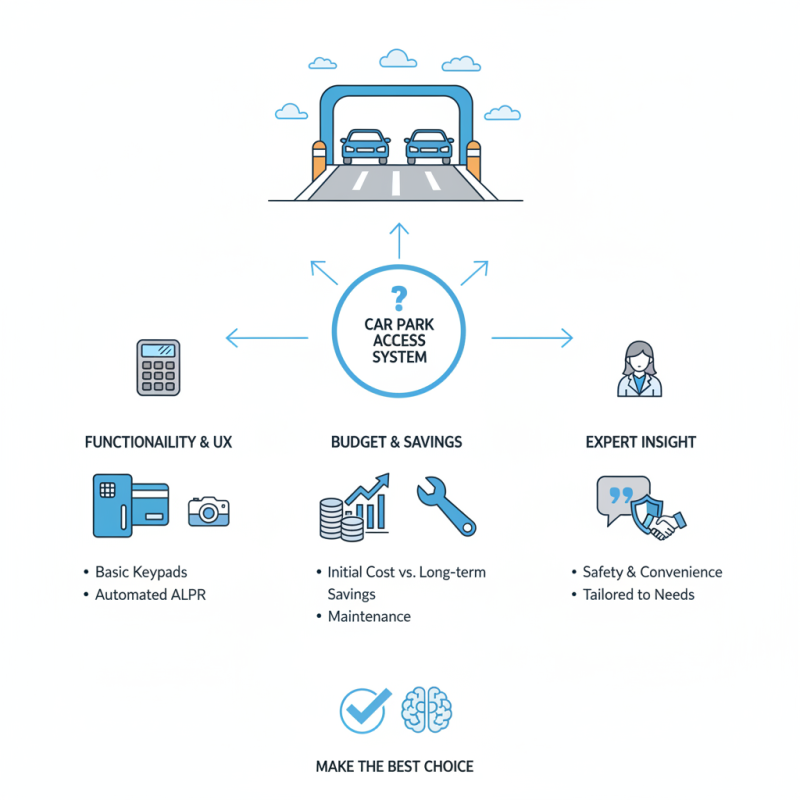
Choosing the right Car Park Access System is crucial for effective traffic management and user satisfaction. Industry expert, Dr. Emily Carter, emphasizes, “A well-designed access system enhances safety and convenience.” Her insight underscores the importance of selecting a system tailored to specific needs.
When evaluating Car Park Access Systems, consider functionality and user experience. Systems range from basic keypads to advanced automated solutions. Each option comes with its pros and cons. It’s vital to assess the specific requirements of your facility. For instance, high-traffic locations may benefit from automatic license plate recognition to expedite entry and exit.
Budget plays a significant role in decision-making. While advanced systems may be more expensive initially, they often yield long-term savings. Maintenance costs can add up. Thus, investing in a reliable, user-friendly solution may pay off in the long run. Reflect on these factors carefully to ensure you make the best choice for your needs.
Understanding Car Park Access Systems: An Overview
Understanding Car Park Access Systems: An Overview
Car park access systems are critical for managing vehicle entry and enhancing safety. A recent industry report noted that over 60% of new parking installations are now incorporating advanced access control solutions. These systems not only streamline operations but also improve user experience. They can range from simple barrier gates to sophisticated RFID technology, offering varied levels of security and convenience.
A key factor in choosing a car park access system is understanding its features. Many systems today come equipped with license plate recognition and mobile app controls. According to industry analysts, these features can reduce congestion at entry points by up to 30%. However, not every feature may align with your specific needs. Assessing the required level of security is essential, as overly complex systems can lead to operational difficulties and user frustration.
Integrating a car park access system requires careful planning. Often, organizations underestimate the importance of ease of use. Inadequate user interfaces can lead to errors and delays, impacting overall efficiency. Reflecting on the existing infrastructure is vital. Solutions that do not integrate well with current setups may require additional investment, which could outweigh their benefits. The right choice depends on a balance between features, user experience, and future scalability.
Key Features to Consider When Choosing a Car Park Access System
When selecting a car park access system, several key features should be at the forefront of your decision-making process. Security is critical. Look for systems that offer real-time monitoring and alert features. This ensures that any unauthorized access attempts are detected promptly. A robust encryption protocol is also essential to protect user data.
User experience matters too. The system should provide easy access for both visitors and staff. Consider features like mobile access, touchless entry, or license plate recognition for convenience. These functionalities can greatly enhance the flow of traffic in and out of the parking area.
Tips: Always involve your team in the selection process. Their insights can reveal necessary functionalities specific to your operation. Test different systems through demos or trial periods. This hands-on experience can highlight limitations. Reflect on your current challenges. Ask, "What problems do we want to solve?" Prioritizing these concerns will guide you to an appropriate system.
Evaluating Different Types of Car Park Access Solutions
Choosing the right car park access solution is crucial for any facility. Various options exist, each with its benefits and drawbacks. According to a report by MarketsandMarkets, the global parking management market is expected to reach $4.4 billion by 2027. This growth highlights the importance of assessing different access solutions carefully.
Traditional methods like gate arms are cost-effective, yet they lack flexibility. They can lead to congestion, especially during peak hours. In contrast, advanced systems such as RFID and mobile payment options offer streamlined operations. Data from the International Parking Institute indicates that these systems can reduce wait times by up to 50%. However, the initial investment in technology can be substantial and may not suit all budgets.
While convenience is essential, user experience must also be considered. Solutions should include clear signage and easy payment methods. Yet, implementing high-tech options might confuse some users. Regular feedback from visitors can guide improvements. It's essential to find a balance between innovation and usability for a truly effective car park access system.
Assessing Cost-Effectiveness and Budget Constraints
When choosing a car park access system, cost-effectiveness and budget constraints play a critical role. Understanding the full scope of expenses is essential. Initial costs often include hardware, software, and installation. However, ongoing maintenance and operation costs can add up over time. Evaluating both immediate and long-term expenses provides a clearer picture.
Another aspect to consider is the scalability of the system. A solution may fit your current budget, but can it adapt as your needs grow? Choosing a flexible solution allows for adjustments without substantial reinvestment. This flexibility can sometimes be overlooked, resulting in higher costs later.
It's also important to conduct thorough research. Gather feedback from users and industry experts about different systems. Not all solutions are created equal – some may seem affordable but lack critical features. If you don't invest time upfront, you might face significant issues down the line.
Ensuring Compatibility and Integration with Existing Infrastructure
When choosing a car park access system, compatibility is crucial. Many facilities have existing infrastructure that cannot be easily replaced. This means any new system must integrate seamlessly with what's already in place. Consider existing cameras, payment systems, and software. A mismatched component can create operational headaches.
Assess how each solution fits with current technology. Look for systems that support widely used protocols. Consult with technicians or engineers who understand both the current setup and potential upgrades. Testing your new system in a controlled environment can highlight any integration issues before full implementation.
It's also vital to consider scalability. As technology evolves, your system should adapt without major overhauls. Anticipating future needs can save costs and reduce disruptions. Be ready to revisit your choices if the selected solution causes complications. Integration shouldn't feel overwhelming, but it often does. Taking small, informed steps can lead to smoother transitions.
Car Park Access System: Compatibility and Integration Assessment