How to Choose the Best Power Phase Converter for Your Needs?
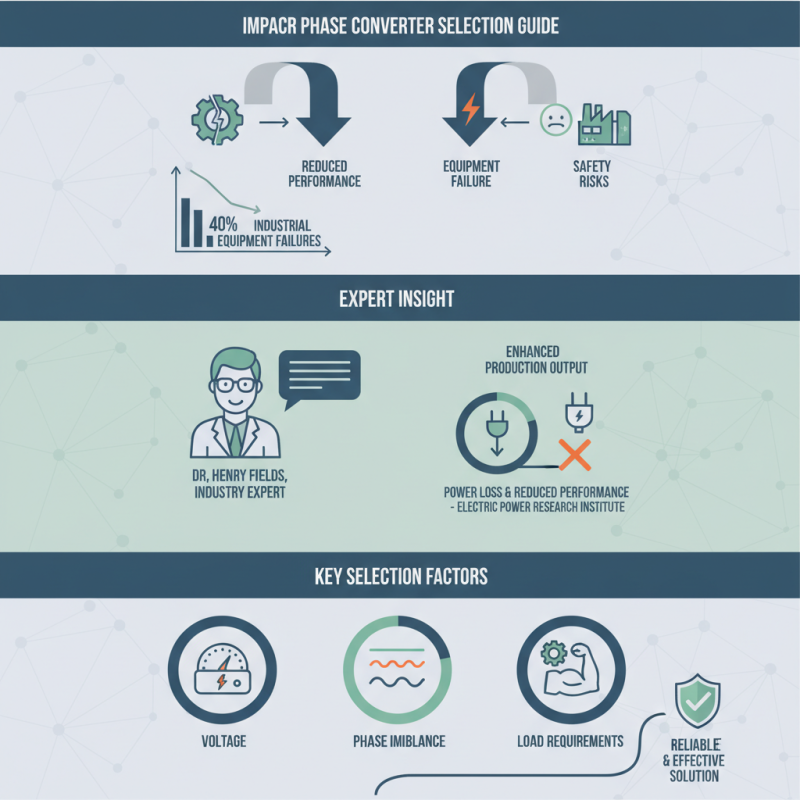
Choosing the right Power Phase Converter can be a daunting task. This decision profoundly affects operational efficiency and equipment compatibility. Industry expert Dr. Henry Fields emphasizes, "A well-chosen power phase converter can significantly enhance production output." According to the Electric Power Research Institute, improper selections often lead to power loss and reduced performance.
The need for reliable electricity drives many businesses to seek suited solutions. With the growing demand for high-performance machinery, the role of Power Phase Converters has become more critical. A recent market analysis notes that around 40% of industrial equipment failures stem from power quality issues. This statistic underscores the importance of finding a converter that meets unique requirements.
When selecting a Power Phase Converter, one must consider various factors, including voltage, phase imbalance, and load requirements. It’s easy to overlook specific needs amid numerous options. Poor choices can lead to inefficiencies or even safety risks. Ultimately, understanding these elements will guide businesses toward a reliable and effective solution.
Understanding the Basics of Power Phase Converters
When considering power phase converters, understanding their basics is essential for making informed decisions. A power phase converter is critical for businesses needing three-phase power from a single-phase source. According to recent industry reports, approximately 30% of small to medium-sized manufacturers operate on single-phase power. This often limits their equipment options, but phase converters help bridge that gap.
These devices come in different types, including rotary and static converters. Rotary converters are more efficient for heavy equipment, while static converters suit lighter loads. The choice often depends on operational needs and the specific machinery being used. According to the Electrical Engineering Trade Association, proper sizing of the converter is crucial. Under-sizing can lead to operational inefficiency and equipment damage. On the flip side, over-sizing can unnecessarily inflate costs without corresponding benefits.
Understanding where these converters fit in your operation can reveal gaps in productivity. Many users report struggles with integrating them into existing systems. Feedback shows that proper installation is often overlooked, leading to performance issues. A poorly installed converter may not deliver the expected power quality, ultimately hindering production. Therefore, consulting an expert to assess your unique needs is vital.
Types of Power Phase Converters Available in the Market
When selecting a power phase converter, understanding the types available is essential. The main categories include rotary phase converters, static phase converters, and digital phase converters. Each type has unique benefits and limitations. Rotary converters are preferred for their efficiency and ability to handle large loads. Static converters, while less costly, are often limited to smaller loads. Digital converters offer advanced features but with a higher price tag.
In a recent industry report, around 70% of users favor rotary phase converters for their reliability. However, only 30% of users fully understand their operational requirements. This gap indicates a need for further education in the market.
Tips: Always assess your specific power needs before making a decision. Consider the type of machinery you will power. Evaluate the converter's capacity carefully. Failing to match a converter to your load can result in equipment damage. Awareness of your actual power requirements is crucial. Don't hesitate to consult with professionals to gain insights.
Factors to Consider When Selecting a Power Phase Converter
When selecting a power phase converter, several key factors come into play. Understanding your specific power needs is crucial. For instance, a report by the Electric Power Research Institute indicates that around 40% of industrial machinery operates on three-phase power. Thus, knowing the type of machinery you use can significantly influence your choice.
The converter's capacity is another essential aspect. Overrating or under-rating can lead to inefficient operations. According to the National Electrical Manufacturers Association, an incorrectly sized converter could reduce efficiency by up to 25%. This inefficiency not only costs more in energy bills but can also shorten the lifespan of your equipment.
Finally, the ease of installation and maintenance should be considered. Complex installation requirements can lead to extended downtime. Maintenance needs that are difficult or costly can detract from overall reliability. Regular evaluations of performance and condition are vital. Relying solely on the purchase data without regular assessments may lead to unforeseen issues down the line. Balancing these aspects ensures that your choice aligns with both current and future demands.
Assessing Your Power Requirements for Optimal Performance
Choosing the right power phase converter involves a good understanding of your specific power needs. Start by evaluating your equipment's voltage and phase requirements. Identify how much power each motor or machine consumes. Consider if you will run multiple devices simultaneously. Take note of the amperage, as it impacts your converter choice.
Another crucial aspect is the nature of your application. Are you using the equipment for heavy-duty tasks or light operations? Different applications may require unique converters. Explore the efficiency ratings of potential converters. A more efficient model can save you money over time.
Reflect on the environment where the converter will be used. Harsh conditions demand more robust solutions.
Ultimately, make a list of your specific power requirements. Compare several converters side by side. Seek feedback from experienced users if possible. Their insights can highlight potential pitfalls. Be prepared for the possibility that what works for one application may not suit another. Knowing your needs can steer you in the right direction.
Maintaining and Troubleshooting Your Power Phase Converter
Maintaining a power phase converter requires regular checks to ensure optimal performance. First, inspect all electrical connections. Loose wires can cause voltage issues. Check for signs of wear or corrosion. Keeping components clean prevents overheating. Dust and debris can impede airflow and lead to failures.
Troubleshooting is essential when problems arise. If your machines are underperforming, it could be due to the converter. Start by examining the input voltage. Use a multimeter for accuracy. Fluctuations may indicate deeper issues. If the converter is making unusual noises, it might signal internal damage. Listen carefully and assess its operation.
Reflection on your maintenance routine is vital. It's common to overlook the importance of regular checks. Learning from past mistakes can improve your approach. Keeping a detailed log of maintenance activities helps track issues over time. Consider factors like operating environment, which can affect your converter's longevity.