Why Choose Forged Fittings for Your Piping Needs?
In today's industrial landscape, choosing the right materials is crucial. Forged fittings stand out due to their strength and reliability. Jeremy Roberts, a leading expert in piping solutions, once stated, "Forged fittings provide unmatched durability for high-pressure applications." This statement reflects the essential role these components play in ensuring safe and efficient operations.
Forged fittings excel in applications where strength is paramount. They are made by deforming solid steel, which enhances their structural integrity. This process creates a product that offers better resistance to high-pressure systems. Many industries rely on them for essential connections. However, not all forged fittings are created equal, and choosing the right quality is imperative.
There are companies that overpromise but deliver subpar products. This inconsistency can lead to failures, causing delays and extra costs. In an industry where safety cannot be compromised, such issues demand attention. Investing time to understand forged fittings is vital. Recognizing the nuances in materials and manufacturing processes can make all the difference.
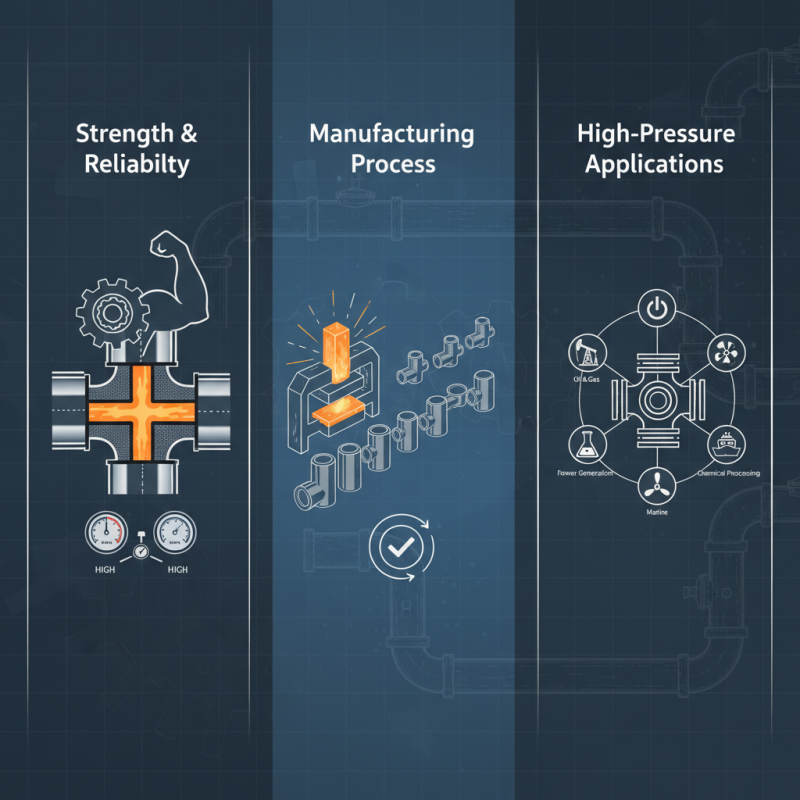
Benefits of Forged Fittings in Piping Applications
Forged fittings offer significant advantages in piping applications due to their strength and reliability. These fittings undergo a specialized manufacturing process that creates a dense structure. According to a report by the American Society for Testing and Materials (ASTM), forged fittings can withstand higher pressures compared to cast fittings. This is crucial in high-stress environments, such as oil and gas sectors, where failures can have catastrophic consequences.
Moreover, forged fittings promote enhanced performance in harsh conditions. Their resistance to stress corrosion cracking is a key benefit. A study published by the International Journal of Pressure Vessels and Piping shows that systems using forged fittings experience lower maintenance costs. However, fitting selection should consider specific operational parameters. Failing to assess these could lead to suboptimal choices.
Another point of reflection is the initial cost. Forged fittings are generally more expensive upfront but provide long-term savings. A balance must be found between immediate budget constraints and future operational efficiency. The durability of forged fittings often justifies the investment. Choosing the right material for each application is critical.
Comparison of Forged Fittings vs. Other Fitting Types
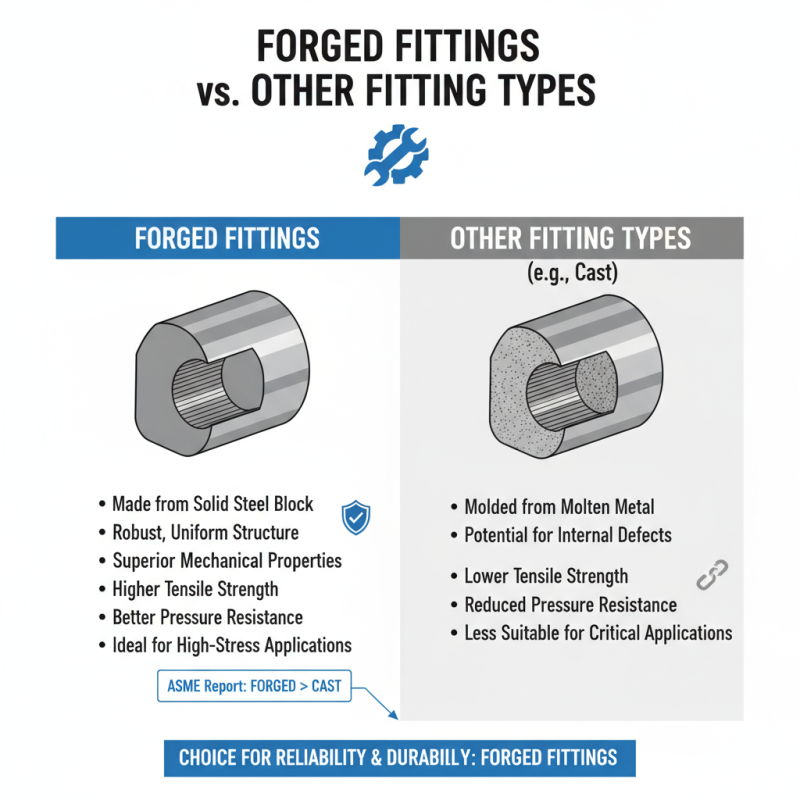
When choosing fittings for piping needs, many professionals consider forged fittings. These fittings are made from a solid block of steel, which gives them a robust structure. According to a report by the American Society of Mechanical Engineers (ASME), forged fittings typically exhibit better mechanical properties than cast fittings. This includes higher tensile strength and resistance to pressure, essential in high-stress applications.
In contrast, cast fittings often have imperfections. They may contain voids or inclusions that compromise their integrity. Some studies indicate that up to 10% of cast fittings can fail due to these defects. Moreover, the manufacturing process for forged fittings ensures a finer grain structure, enhancing durability. This can result in a significantly lower failure rate in critical systems.
Another crucial factor is corrosion resistance. Forged fittings often provide superior protection against corrosive substances. In industries like oil and gas, corrosion can lead to catastrophic failures. Studies have shown that the life span of forged fittings can be estimated at 15-20 years longer than their cast counterparts in such environments. Overall, while forged fittings may come at a higher initial cost, they offer long-term reliability that cannot be ignored.
Key Manufacturing Processes for Forged Fittings
Forged fittings are becoming a popular choice for piping due to their strength and durability. The manufacturing process plays a critical role in ensuring quality. Forging involves shaping metal under high pressure. This method improves the metal's grain structure, which leads to enhanced physical properties.
The key processes start with heating metal billets to a specific temperature. Then, they are placed in a forge and shaped. This process requires skilled labor to maintain precision. Soon after forming, fittings undergo heat treatment. This step further increases their strength and resistance to wear.
However, precision is challenging. Not every piece can be perfect. Some fittings may not meet specifications. This variability in quality can lead to potential issues in the field. Regular inspections and testing are essential to minimize risks. Ensuring consistent quality is a continuous effort. Each batch must be monitored closely.
Comparison of Manufacturing Processes for Forged Fittings
This bar chart illustrates the time efficiency and material yield of different manufacturing processes for forged fittings, highlighting why forged fittings are often chosen for piping needs.
Applications of Forged Fittings in Various Industries
Forged fittings are integral to various industries. They offer strength and reliability in piping systems. In the oil and gas sector, these fittings withstand high pressures and extreme temperatures. Operators rely on them for safe and efficient fluid transport.
In the construction industry, forged fittings contribute to the integrity of structures. They are often used in heavy-duty applications. This ensures that pipelines and connections can handle the demands of everyday use. However, not all applications benefit equally. Sometimes, other materials may better suit specific conditions.
The chemical industry also leverages the durability of forged fittings. These fittings resist corrosion, making them ideal for harsh environments. However, engineers must evaluate their use carefully. In certain cases, alternative options might be more beneficial. Balancing cost, performance, and safety is crucial.
Common Materials Used in Forged Fittings and Their Durability
When selecting forged fittings, it's vital to consider the materials used. Forged fittings are often made from carbon steel, stainless steel, or alloys. Each material presents unique strengths and weaknesses that can impact their performance in various environments.
Carbon steel is a common choice. It's strong and cost-effective, making it popular in many industries. However, it can be susceptible to corrosion if not properly coated. This means that regular maintenance is necessary to ensure longevity. Stainless steel, while more expensive, offers higher resistance to rust and harsh chemicals. It can withstand high temperatures and pressures, but can also be less malleable.
Alloy fittings utilize a mix of metals to enhance performance. They can combine durability with lightweight properties. Yet, manufacturing these fittings can lead to inconsistencies, especially if quality control isn't strict. Understanding the strengths and limitations of each material is essential in making an informed decision. It's about finding the right fit for your specific needs, even if some aspects might require extra attention or care.
Why Choose Forged Fittings for Your Piping Needs?
| Material |
Common Uses |
Advantages |
Durability |
| Carbon Steel |
Oil & Gas, Water Lines |
High strength, Cost-effective |
Good, withstands pressure |
| Stainless Steel |
Food Processing, Chemical Industries |
Corrosion resistance, Aesthetic |
Excellent, long lifespan |
| Alloy Steel |
High-Temperature Applications |
Enhanced strength, Heat resistant |
Very good, suitable for extreme conditions |
| Copper |
Heating & Cooling Systems |
Excellent thermal conductivity |
Good, but can corrode |
| PVC |
Plumbing, Drainage |
Lightweight, Easy to install |
Moderate, susceptible to UV |