China has become a major sourcing base for Welded Stainless Steel Pipe, serving construction, food processing, chemical, water, and energy projects. Yet factory scale alone does not prove consistent quality. A reliable manufacturer must control the full chain, from coil selection and forming to welding, heat treatment, testing, and packing.
John C. Lippold, a respected welding-metallurgy authority, has emphasized this practical principle: “Welding is not merely joining; it changes material structure and performance.” That warning matters when comparing Chinese suppliers. A strong producer should explain its welding method, grade control, dimensional tolerances, and inspection records without vague promises. Buyers should look for traceable mill certificates, PMI testing, hydrostatic or ultrasonic inspection, and clear compliance with applicable ASTM, ASME, EN, or GB requirements.
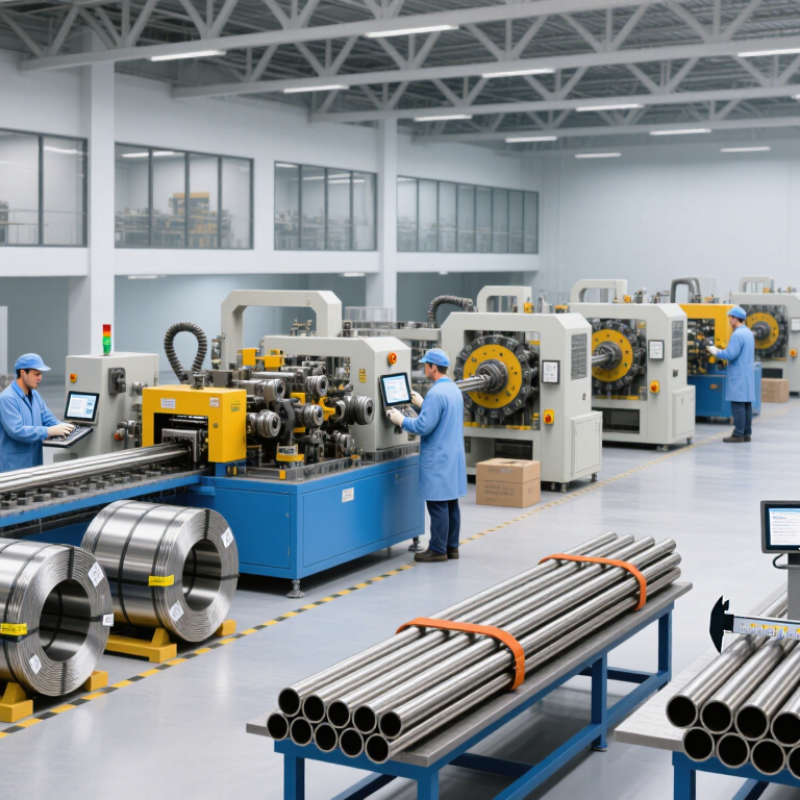
The best manufacturers also show their process openly. Imagine walking through a clean workshop: stainless coils are marked, weld seams are monitored, pipes are measured with calibrated tools, and each bundle carries a traceable label. This evidence is more useful than a polished website. Production experience matters, but it can become a blind spot. Some factories repeat familiar orders and overlook new service conditions, especially chloride exposure or high-temperature operation.
This guide examines China’s leading Welded Stainless Steel Pipe manufacturers through capability, certification, export experience, product range, and customer support. No ranking is perfect. Supplier performance can vary by project, batch, and inspection discipline. Careful technical review remains essential.
What Defines a Top Welded Stainless Steel Pipe Manufacturer in China?
A dependable manufacturer demonstrates control at every production stage, not just a polished product catalog. Ask how incoming stainless steel is identified and traceable to its material records. Consistent chemistry, wall thickness, and surface condition matter, especially when pipes must fit existing equipment. Details matter. A clear explanation of welding parameters, seam inspection, and dimensional checks can reveal more than broad quality claims. Request sample inspection reports and confirm that testing matches your drawings and service requirements. Pressure testing or non-destructive examination may be appropriate, depending on the specification.
Tips: Compare written tolerances, inspection methods, and delivery records—not price alone. Ask to see how rejected pipes are documented and corrected. A factory visit can help, but it is not proof by itself. Check a sample’s seam, ends, and finish under good lighting; small inconsistencies deserve a question, not an assumption.
Communication is another useful measure. Strong suppliers clarify grade, diameter, schedule, length, finish, packaging, and inspection expectations before production begins. They should explain limitations plainly and provide records that connect the finished pipe to its stated material and checks. No supplier is perfect, and one sample cannot predict every batch. Verify the details that matter for your application, then keep agreed acceptance criteria in writing.
| China Top Welded Stainless Steel Pipe Manufacturers? - What Defines a Top Welded Stainless Steel Pipe Manufacturer in China? | |||
|---|---|---|---|
| Evaluation Dimension | What Strong Capability Looks Like | Useful Evidence to Request | Why It Matters |
| Applicable product standards | Can manufacture and inspect products to the standards specified for the order, such as ASTM A312/A312M for austenitic stainless steel pipe or EN 10217-7 for welded stainless steel tubes for pressure purposes. | Standard and grade stated on the quotation, purchase order, inspection plan, and material test certificate. | Requirements differ by standard, product form, application, and order; a clear specification helps prevent mismatched supply. |
| Material and grade control | Can process specified grades such as 304/304L and 316/316L, with material identification maintained through production. | Mill test certificates, heat or lot numbers, positive material identification records where required, and documented segregation of grades. | Grade mix-ups can affect corrosion resistance, service suitability, and compliance with the purchase specification. |
| Welding process and procedure control | Uses a welding process suitable for the product and application, with controlled procedures, qualified personnel where required, and monitored production parameters. | Welding procedure documentation, welder or operator qualification records where applicable, and production inspection records. | Consistent weld preparation and execution support dependable seam quality and repeatable production. |
| Dimensional accuracy | Checks outside diameter, wall thickness, length, ovality, straightness, and end condition against the applicable standard and agreed order requirements. | Inspection reports showing measured values, inspection equipment calibration status, and the relevant acceptance criteria. | Dimensions and tolerances vary by specification and size, so results should be assessed against the actual contract requirements. |
| Inspection and testing | Applies the tests required by the governing product standard and purchase order. Depending on the specification, these may include chemical analysis, mechanical tests, hydrostatic testing, or nondestructive examination. | Test reports linked to the supplied heat, lot, or pipe identification, plus a clearly defined inspection and test plan. | Testing requirements are application- and standard-dependent; traceable results make conformity easier to verify. |
| Surface finish and post-weld treatment | Can supply the specified finish and manage weld cleaning or other agreed post-weld treatment appropriate to the product and end use. | Finish description or agreed roughness requirement, sample inspection records, and documented cleaning or treatment details when specified. | Finish requirements depend on the application; a defined specification avoids subjective acceptance decisions. |
| Quality management and corrective action | Maintains documented controls for production, nonconforming product, corrective action, and ongoing process review. ISO 9001 certification can indicate a quality management system, but does not by itself certify every product. | Current certificate scope and validity, audit information where available, and examples of inspection and corrective-action records. | A functioning system supports consistent controls; product conformity still needs to be verified against the order. |
| Traceability and documentation | Can link finished pipes to relevant material and inspection records and provide the documentation agreed for the shipment. | Sample material test certificate, packing list, inspection reports, product markings, and a documented traceability example. | Complete records help buyers confirm product identity and satisfy receiving, project, or regulatory checks. |
| Order planning and delivery control | Confirms production scope, inspection stages, packaging, and delivery schedule against the order, and communicates changes promptly. | Order-specific production schedule, shipment plan, packaging details, and a clear process for handling schedule changes. | Reliable delivery depends on order planning and communication as well as manufacturing capability. |
Note: Product standards, testing, tolerances, finish, and documentation should be confirmed in the purchase specification. The criteria above are an evaluation framework, not a ranking of individual manufacturers.