China Best Sealing Rings Manufacturers for Global Buyers
Sealing Rings rarely attract attention until a leak, pressure loss, or unplanned shutdown brings them into focus. Their performance depends on more than material choice. Temperature, pressure, fluid compatibility, surface finish, and installation conditions all matter. Small parts. Large consequences.
The market context is substantial, though broad. Grand View Research estimated the global industrial seals market at USD 14.39 billion in 2023 and projected a 4.7% compound annual growth rate from 2024 to 2030. This category includes products beyond sealing rings, so the figure should not be mistaken for ring-market revenue. Still, it signals sustained demand across industrial equipment and manufacturing.
For global buyers evaluating China’s manufacturers, this guide focuses on practical evidence: material and dimensional control, application experience, inspection processes, customization capability, and communication during sampling. Ask for relevant test records and clarify tolerances before comparing quotations. A polished catalogue is useful, but it cannot replace production evidence. Nor does a low price prove long-term value. Supplier rankings can help narrow a search, yet they are not guarantees; even a capable factory may not suit every operating condition. The right choice depends on the application, and sometimes the first specification needs revisiting.
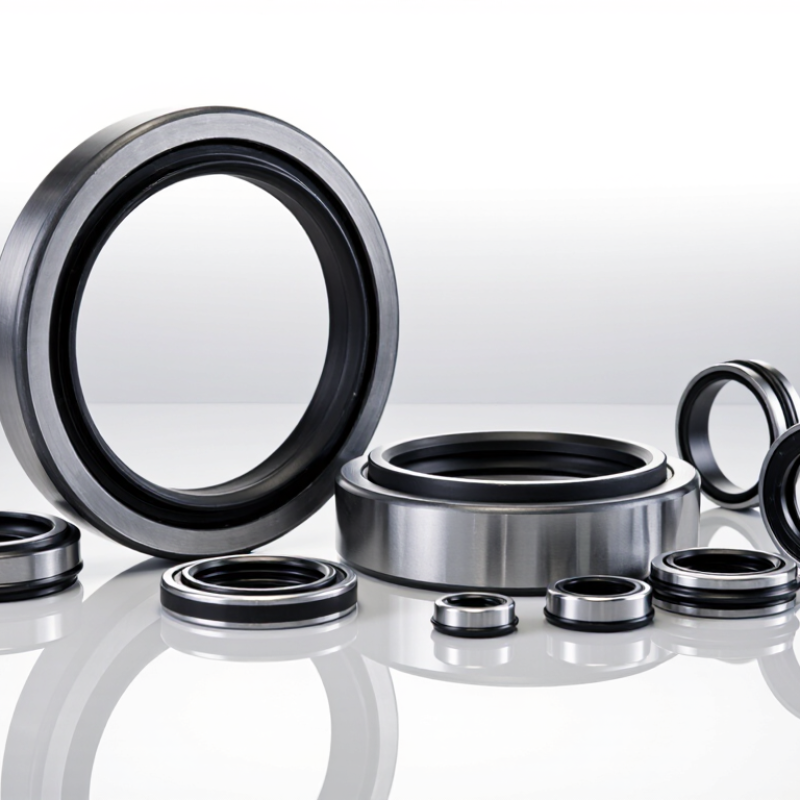
Understanding Sealing Rings and Their Industrial Applications
A sealing ring is a small component with a demanding job. It blocks fluid or gas between joined surfaces, or around a moving shaft. In hydraulic cylinders, pumps, and valves, ring performance depends on pressure, temperature, motion, and the fluid involved. A material that works well in a cool static joint may wear quickly in a hot, fast-moving assembly.
The U.S. Department of Energy’s compressed-air sourcebook reports that leaks can waste 20–30% of compressor output in poorly maintained systems. The report is titled Improving Compressed Air System Performance: A Sourcebook for Industry. This figure shows why seal condition matters in pneumatic equipment, not just in large machines. A technician may spot a hiss near a fitting, but wear inside a valve can be less obvious. Small parts matter.
Selection should account for groove dimensions, surface finish, pressure spikes, and expected service life. Elastomers often suit flexible sealing, while PTFE-based materials can help where chemical resistance or low friction is needed. Yet material charts cannot predict every real operating condition. Assembly damage, grit, and uneven compression can still cause leakage. That part is easy to overlook. Regular inspection and clear maintenance records help buyers compare rings on more than price alone.
Materials, Designs, and Manufacturing Methods for Sealing Rings
Sealing rings succeed when material, geometry, and service conditions agree. Nitrile rubber suits many oil-based applications; EPDM handles water and weathering, while FKM tolerates higher heat and aggressive fluids. PTFE offers low friction, but needs careful support under pressure. There is no universal winner. Small details matter.
Design starts with groove dimensions, squeeze, surface finish, and pressure direction. ISO 3601 sets dimensional and tolerance requirements for O-rings, giving buyers a shared basis for inspection. MarketsandMarkets’ 2023 Mechanical Seals Market report projected growth from USD 3.7 billion in 2023 to USD 4.8 billion by 2028. That figure concerns mechanical seals, not sealing rings alone, but signals wider demand for dependable sealing components.
Manufacturing choices affect consistency. Compression molding suits many rubber parts; injection molding supports higher-volume production, while transfer molding can help with complex shapes. After curing, rings may need flash trimming and careful dimensional checks. Inspectors commonly verify hardness, diameter, and visual defects; application-specific leak tests add useful evidence. A harder compound is not automatically better. A tidy drawing can still miss heat cycling, installation damage, or chemical changes in service. That part deserves more testing.
How to Evaluate Sealing Ring Manufacturers in China
China Best Sealing Rings Manufacturers for Global Buyers
How to Evaluate Sealing Ring Manufacturers in China
A 2023 MarketsandMarkets industry report estimated the global industrial seals market at USD 12.3 billion. It projected growth to USD 16.5 billion by 2028. For buyers, this growth makes supplier selection more important, not simpler. Check whether a manufacturer can explain material choice, dimensional control, and test conditions in plain terms. Ask for batch-level inspection records, not only a polished certificate. Ask for evidence.
Technical references help make comparisons concrete. ISO 3601-1 specifies O-ring dimensions and tolerances, while ISO 815-1 describes how to measure rubber compression set. Request test reports that state the material, temperature, duration, and measured result. A number without its test conditions tells little. Also inspect sample rings for flash, uneven edges, and surface marks; then compare measurements against the drawing using calibrated tools. Confirm how the supplier traces raw material lots to finished batches, and whether production samples match the approved sample.
A factory audit can reveal clean molding areas and orderly records, but one visit cannot prove stable output. A sample can still mislead. Ask for repeat tests across more than one batch, and document any limits in writing. Even careful buyers may miss a small process change. Keep a first-order inspection plan, especially for rings exposed to heat, pressure, or repeated movement.
Leading Chinese Manufacturers and Their Product Specialties
Chinese sealing-ring manufacturers often focus on distinct production needs rather than every material and application. Some specialize in molded NBR, EPDM, or silicone rings for pumps, valves, and general equipment. Others produce polyurethane seals for hydraulic cylinders, where abrasion resistance and dimensional stability matter. Small details count: a ring’s hardness, cross-section, and surface finish can affect how it performs under pressure.
Manufacturers using CNC machining may suit low-volume prototypes or unusual dimensions. Compression and injection molding are more common for repeat orders and larger batches. For high-temperature or chemical applications, some factories offer PTFE-based components or material blends. Buyers should request material data, tolerance ranges, and inspection records, then compare them with actual operating conditions. Ask about tooling ownership, too. It can affect future order costs.
A catalog can make every supplier look capable. That is not enough. Request samples and check fit, recovery, and visible defects before approving production. If possible, test rings in the real assembly, not only on a bench. One weakness in supplier comparisons is assuming identical material names mean identical performance. They may not. Clear drawings and written acceptance criteria help, though buyers sometimes discover gaps only after the first shipment. Good communication matters. So does a realistic lead-time estimate.
Quality Standards, Export Capabilities, and Supplier Selection Factors
For global buyers, a sealing ring is only as dependable as its material control and inspection records. ISO 3601 defines key dimensions and tolerances for O-rings, while ASTM D2000 classifies rubber compounds by properties such as hardness and heat resistance. Ask suppliers for batch-specific test reports, not only a general certificate. Check sample rings for clean mould lines, consistent cross-sections, and visible surface defects. Small details matter.
Quality systems also need careful interpretation. The ISO Survey 2022 recorded about 1.27 million ISO 9001 certificates worldwide, showing how widely quality management systems are used. However, certification alone does not prove that every ring meets a buyer’s operating conditions. A certificate can still hide weak batch control. Request material identification, inspection criteria, and records linking samples to production lots. Export readiness matters too: confirm protective packaging, clear labels, agreed lead times, and prompt document sharing. For long-distance shipments, ask how the supplier prevents deformation or contamination during storage and transit. A useful audit may reveal gaps on both sides. Buyer drawings, temperature ranges, and fluid exposure details must be precise before production begins.