Best Pipe Valves and Fittings for 2026 What Should You Choose?
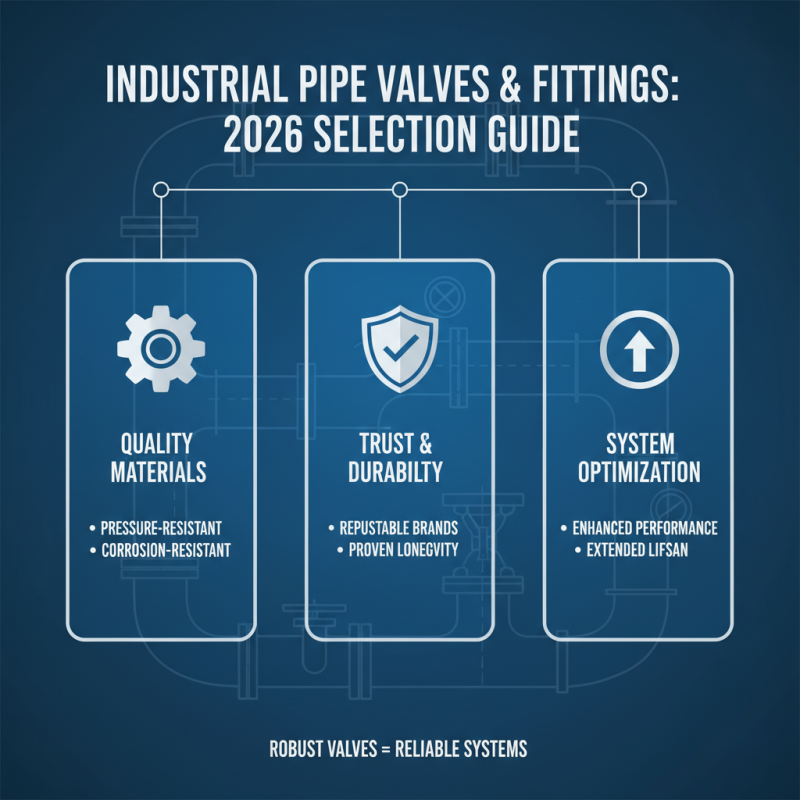
As we look ahead to 2026, the importance of choosing the right pipe valves and fittings cannot be overstated. According to a recent report by Global Market Insights, the pipe valves and fittings market is expected to reach $95 billion by 2026, indicating a robust growth trajectory. Industry expert John Smith noted, "Selecting high-quality pipe valves and fittings is crucial for ensuring system efficiency and longevity."
In many industries, from oil and gas to construction, the reliability of pipe valves and fittings directly impacts operational success. Companies face challenges in balancing cost, quality, and performance. A common issue arises with subpar valving solutions. These can lead to leaks and costly downtime.
The diversity of materials, designs, and standards complicates decision-making. While innovative products flood the market, not all are created equal. Users must reflect on their specific needs. Understanding how different configurations affect performance is essential in this evolving landscape. Investing in the right solutions can deliver direct benefits. But making poor choices can lead to long-term consequences in both performance and safety.

Best Pipe Valves Overview: Types and Functions Explained
When considering the best pipe valves and fittings for 2026, understanding the types and functions of these components is essential. Valves are pivotal in controlling the flow of liquids and gases. They can be divided into categories like gate, globe, ball, and check valves. A 2022 industry report indicated that the valve market is expected to grow by over 6% annually. This growth highlights their importance in various sectors, including construction and water management.
Fittings, on the other hand, connect pipes and are just as crucial. They include elbows, tees, and couplings, each serving specific functions. Projections show that the global pipe fittings market is set to reach approximately $190 billion by 2025. Despite these positive trends, selecting the right components can be challenging. Factors like material compatibility and pressure ratings often become overlooked. This can lead to costly repairs or even project delays.
The right choice requires reflection on long-term needs and environmental conditions. Installation standards must not be ignored. Simple mistakes can result in leaks or inefficiencies. Engineers must continuously adapt, ensuring that their knowledge of materials aligns with industry standards and innovations. This attention to detail is vital in maintaining system integrity and longevity.
Key Materials for Pipe Valves and Fittings: A Comparative Analysis
When selecting pipe valves and fittings, material choice drastically impacts performance. Common materials include brass, stainless steel, and PVC. Each has unique properties that affect durability, corrosion resistance, and cost. According to a recent industry report, stainless steel is gaining popularity for its high resistance to corrosion, with a market share projected to reach 30% by 2025.
Brass offers good durability and is often chosen for water systems. However, it may not be the best option for environments with high humidity. PVC, on the other hand, is lightweight and resistant to chemical corrosion. Yet, it can be brittle under extreme temperatures. Studies show that nearly 15% of failures in piping systems are linked to inappropriate material selection.
These insights suggest careful consideration of materials is essential. Future trends indicate a shift towards composite materials, promising better performance. However, many professionals still overlook proper material evaluation. The industry must address this gap to improve system reliability across various applications.
Best Pipe Valves and Fittings for 2026
Installation Tips for Pipe Valves and Fittings: Ensuring Efficiency and Safety
When installing pipe valves and fittings, focus on efficiency and safety. Proper installation can prevent leaks and costly repairs. Choose components that fit well. Measure the pipe diameter accurately before selecting fittings. Incorrect sizes lead to issues down the line.
Tips for installation include ensuring clean surfaces. Dirt or debris can hinder the seal, causing leaks. Use a proper sealant to enhance reliability. Tighten all fittings uniformly to avoid uneven stress. Remember to check for leaks after installation. This simple step can save you hassle in the future.
During the process, take your time. Rushing can lead to mistakes. Don’t overlook small details like alignment. A misaligned valve can cause serious problems. Regularly review your installation techniques. Reflect on what worked and what didn’t. Learning from each project refines your skills.
Best Pipe Valves and Fittings for 2026: What Should You Choose?
| Type |
Material |
Diameter (inches) |
Pressure Rating (psi) |
Installation Tips |
| Gate Valve |
Brass |
2 |
150 |
Ensure proper sealing and alignment during installation. |
| Ball Valve |
PVC |
1 |
200 |
Use Teflon tape for leak prevention and check for tightness. |
| Check Valve |
Stainless Steel |
3 |
250 |
Install in the correct direction as indicated by the flow markings. |
| Butterfly Valve |
Cast Iron |
4 |
150 |
Ensure that the valve is fully closed or open during installation. |
| Union Fitting |
Copper |
1/2 |
300 |
Use a wrench to ensure a tight connection without over-tightening. |
Future Trends in Pipe Valves Technology: Innovations to Watch in 2026
As we look toward 2026, innovations in pipe valve technology are set to reshape the industry. One significant area is smart valves. These devices integrate sensors to monitor pressure and flow in real time. They offer predictive maintenance insights, which could reduce failure rates. However, their reliance on technology raises questions about cybersecurity. Ensuring data security will be crucial as industries adopt smarter systems.
Another trend to watch is the use of advanced materials. Lightweight composites and corrosion-resistant alloys are gaining popularity. These materials enhance durability and reduce maintenance costs. However, not all manufacturers have mastered these materials yet. Production challenges still exist that could delay their widespread use.
The push for sustainability drives many innovations in the pipe valve sector. Eco-friendly processes are becoming necessary. Manufacturers are exploring how to reduce their carbon footprints. But implementing these changes can be slow and costly. The transition may not be smooth for all companies involved, and many will need to adapt their operations accordingly.