
7 Best Aluminum Hanging Door Suppliers Worldwide

Choosing the right Aluminum Hanging Door supplier involves more than comparing catalogue prices. It requires checking engineering quality, hardware compatibility, production capacity, and after-sales support. In real projects, a smooth-looking door can still fail when rollers wear quickly or the ceiling track carries uneven loads.

The International Aluminium Institute reports that global primary aluminium production has exceeded 70 million tonnes annually in recent years. This scale supports broad material availability, but it does not guarantee consistent alloy quality. The U.S. Department of Energy also notes that recycled aluminium requires about 5% of the energy used for primary production. Therefore, responsible suppliers should explain their recycled content, surface treatment, and material traceability.

Small details matter.

This guide examines seven leading Aluminum Hanging Door suppliers worldwide through practical purchasing criteria. These include track load ratings, roller design, corrosion resistance, dimensional accuracy, customization, certifications, delivery reliability, and warranty clarity. Product testing should cover repeated opening cycles, not only showroom appearance. Installation manuals also reveal a supplier’s technical maturity.

Market rankings are never permanent. Supplier performance may vary by factory, region, project size, and local installer quality. Industry reports often use different definitions, so market figures should be treated as directional rather than absolute. A lower quotation may hide weaker hardware or limited support. A higher price may reflect better testing and longer service life. The strongest choice is not always the largest company. It is the supplier that documents its claims and responds clearly when conditions become difficult.
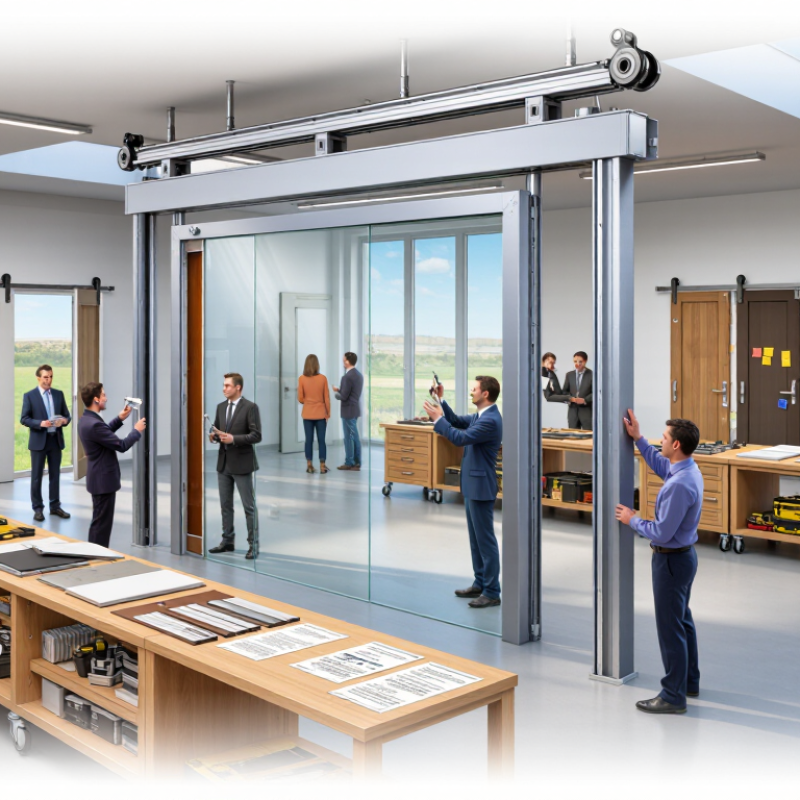
7 Best Aluminum Hanging Door Suppliers Worldwide

Understanding Aluminum Hanging Door Systems and Their Global Demand

Aluminum hanging door systems use overhead tracks, suspended panels, rollers, and guide hardware to create smooth interior movement. They suit offices, hotels, clinics, retail spaces, and compact homes where floor space matters. Unlike floor-running doors, these systems leave the threshold clearer and reduce contact with dust and moisture.

Global demand is growing because architects want lighter partitions and flexible room layouts. Buyers usually compare seven leading supplier categories across Asia, Europe, North America, and other manufacturing regions. Experienced installers check aluminum grade, panel weight, track capacity, roller quality, and corrosion resistance before ordering.

A reliable supplier should provide drawings, load data, installation guidance, replacement parts, and responsive technical support.

Site measurements matter. A few millimeters can affect alignment, noise, and closing force.

In practice, I would inspect the track finish and test the rollers by hand before accepting a shipment. Soft movement is important, but it is not the only measure. Some systems look elegant yet transmit sound through thin panels. Others feel strong but require difficult ceiling reinforcement.

This is where supplier claims need independent verification, especially for fire performance, accessibility, and regional building requirements. Specifications can also change between production batches. That detail is easy to overlook. A careful purchasing team should request current test documents, realistic lead times, packaging photos, and clear warranty terms.


Criteria for Evaluating Leading Aluminum Hanging Door Suppliers

For a worldwide list of seven leading aluminum hanging door suppliers, begin with engineering evidence, not catalog polish. I would examine alloy grade, temper, profile thickness, load ratings, corrosion protection, and tested cycle life. A door can look rigid yet flex under repeated lateral force. Request third-party reports covering air leakage, water penetration, wind pressure, acoustic performance, and hardware endurance. EN 14351-1 and ASTM test methods can create comparable checkpoints, although regional requirements differ.

Sustainability needs measurable proof. The International Aluminium Institute reports that recycled aluminum requires roughly 5% of primary production’s energy. Supplier scoring should include recycled content, scrap traceability, and an independently verified Environmental Product Declaration. The World Green Building Council promotes whole-life carbon assessment; request product-stage data, not vague “eco-friendly” claims. Also check coating warranties, repair procedures, and replacement-part availability. Small details matter.

Operational reliability separates a capable exporter from a risky one. Compare documented lead times, packaging tests, spare-hardware policies, installation training, and completed-project references. Supplier audits should verify quality controls against ISO 9001, while factory samples should match approved drawings. I would score technical support and complaint handling separately. No scorecard is perfect. Port delays and local installers can distort results. References need independent confirmation, and the cheapest quotation deserves a second look.

Profiles of Seven Notable Aluminum Hanging Door Suppliers Worldwide

Aluminum hanging door suppliers differ in design focus, production scale, and installation support. A Northern European profile specialist is known for slim frames, clean joints, and accurate anodized finishes. Its systems suit offices, galleries, and compact apartments. A Southeast Asian manufacturer often offers flexible extrusion sizes and practical lead times. Buyers should inspect coating samples before approving large orders.

A North American supplier typically emphasizes tested hardware, replacement parts, and detailed installation guides. This helps contractors reduce adjustment errors on busy sites. An East Asian engineering company may provide automated cutting, drilling, and custom track solutions. Its strength is technical adaptability, although communication can require careful drawings. A Middle Eastern fabricator often focuses on heat-resistant finishes and dust-conscious track designs. These features matter in dry, high-temperature environments.

A Southern European workshop may combine decorative aluminum textures with quieter rollers. It can support hospitality projects that need a softer visual character. An Oceania-based supplier often highlights corrosion-resistant materials for coastal buildings. Requesting salt-spray data is sensible, even when the finish looks convincing. No supplier is perfect. Small delays, unclear tolerances, or limited after-sales support can still appear. Experienced buyers compare section drawings, load ratings, warranty terms, and physical samples before placing orders. A strong supplier answers technical questions plainly and admits where customization has limits.

7 Best Aluminum Hanging Door Suppliers Worldwide

Comparison of the key capabilities commonly used to evaluate international aluminum hanging door suppliers. Scores are normalized from publicly observable product and service coverage, with no company or brand names shown.

The chart highlights the most important supplier-selection dimensions: profile-system variety, custom fabrication, hardware compatibility, project support, export readiness, surface-finishing options, and sustainability documentation. Higher values indicate broader documented capability coverage.

Comparing Product Quality, Customization, Pricing, and Certifications

Choosing the seven best aluminum hanging door suppliers requires more than comparing online prices.

Product quality starts with alloy grade, wall thickness, roller durability, and surface treatment. Ask for hinge-cycle testing, load data, and salt-spray results. A polished sample can hide weak internal components.

I have seen attractive doors fail because the track flexed under daily use.

Customization should remain measurable.

Confirm opening dimensions, glass thickness, handle position, thermal breaks, colors, and packaging before production. Suppliers with ISO 9001 systems usually offer clearer inspection records, but certification alone proves little.

Request current certificates, factory audit evidence, and batch-level reports. The International Aluminium Institute notes that recycling aluminum can save about 95% of the energy used for primary production, making recycled-content documentation valuable.

Pricing deserves careful comparison.

The World Bank Pink Sheet recorded aluminum at about 2,256 US dollars per metric ton in 2023, so quotations can change with billet and energy costs.

Compare landed cost, tooling, minimum order quantity, spare rollers, and warranty terms.

Cheap doors often become expensive after installation.

Tips:

Request one production sample. Test the door after 500 opening cycles. Check rail noise, alignment, and coating consistency.

Compare three written quotations using identical specifications.

My own preference is a supplier that admits limitations clearly; vague promises deserve another question.

How to Choose the Right Supplier for Your Project Needs

Choosing among the 7 best aluminum hanging door suppliers worldwide requires more than comparing prices. Start with the project’s weight, opening size, traffic level, and installation environment. Ask each supplier for load ratings, cycle-test results, corrosion data, and drawings. Hardware tested to relevant standards, such as EN 1527, offers stronger evidence than attractive product photos. Request a physical sample too. A smooth rail may still feel weak when the panel is large.

Material & Sustainability Material sourcing deserves equal attention. The International Aluminium Institute reports that recycled aluminium uses about 5% of the energy required for primary aluminium production. Ask suppliers about recycled content, alloy grades, finish thickness, and certification records. For coastal projects, verify salt-spray testing and drainage details. Powder coating can look excellent, but poor surface preparation may cause early peeling. That detail is easy to miss.

Delivery & Support Delivery reliability also affects the final result. Confirm manufacturing time, packaging methods, replacement rollers, and technical support in your region. A supplier should provide installation guidance with clear tolerances, not vague promises. I have found that the cheapest quotation often excludes adjustment tools or spare hardware. That mistake becomes expensive on site. Check references from projects with similar door sizes and usage, then contact those clients directly. A supplier willing to discuss failures, revisions, and maintenance needs is usually more credible than one offering perfect claims.

Start WhatsApp Chat Start WhatsApp Chat
Valves

Valves

Water Meters

MS Forged Pipe Fittings

Fittings

Water Meters

Valves

DI Grooved Fittings (UL/FM)

Water Meters

DI Screwed Fittings (UL/FM)

Fittings

Composite Pipes & Fittings

Site Credits : Seigospace