
2026 Best Auditorium Chairs for Sale Buying Guide

Choosing auditorium chairs for sale in 2026 requires more than comparing prices, colors, and promotional photographs. A successful chair must support long performances, frequent cleaning, safe movement, and changing audience needs. It should also protect the room’s visual character. In a 900-seat theater, small design flaws become noticeable. A narrow seat can create discomfort after one hour. Weak hinges can produce distracting noise during quiet scenes.

David Rowland, the American furniture designer and seating innovator, expressed a useful principle: “A chair should be as light as possible, as strong as necessary, and as comfortable as possible.” That idea remains practical for modern auditorium projects. Buyers should examine seat width, cushion recovery, row spacing, writing tablets, aisle visibility, and accessible seating locations. Materials matter too. High-density foam, durable upholstery, and tested automatic seat-return systems can reduce maintenance problems. Ask for test reports, warranty terms, replacement-part availability, and completed installation references.

The best auditorium chairs for sale are not always the most expensive models. A chair with premium fabric may still fail when its mechanism is poorly engineered. Think about real use. Will children spill drinks? Will staff clean the seats every evening? Will performers need quiet operation? These details deserve honest answers.

No specification sheet predicts every audience experience. A sample chair can feel comfortable for ten minutes, yet disappointing after a three-hour concert. That is the part buyers sometimes overlook. Request a physical sample and test it with different body types. Compare several rows, not one isolated seat. Careful testing may reveal an imperfect choice before it becomes an expensive installation problem.
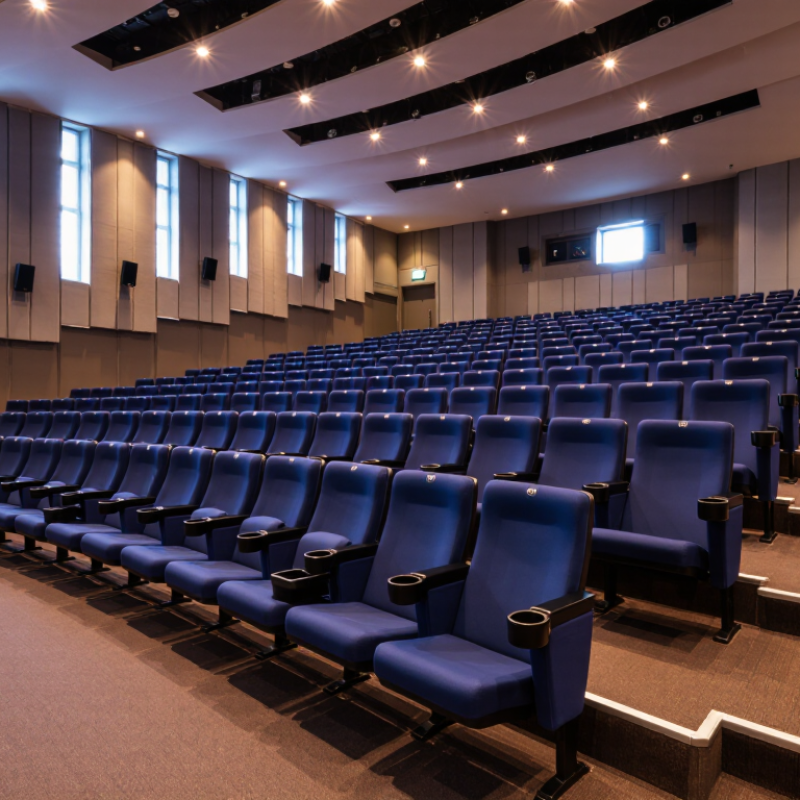
2026 Best Auditorium Chairs for Sale Buying Guide

Auditorium Chair Types and Their Main Features

2026 Best Auditorium Chairs for Sale Buying Guide

Auditorium chair types should match the room’s layout, traffic, and maintenance schedule. Fixed auditorium chairs provide stable alignment for theatres, lecture halls, and conference venues. Their tip-up seats create wider walking paths when audiences leave. Many models use molded foam, steel frames, and replaceable upholstery. These details matter after years of daily use.

Folding auditorium chairs suit multipurpose rooms with changing floor plans. They can reduce storage pressure, but hinges need regular inspection. Telescopic seating chairs support retractable platforms and compact storage. They work well in sports halls and community venues. However, uneven floors can affect smooth operation. I have seen installers overlook this detail, then spend extra time correcting alignment.

Writing tablet chairs add practical value in classrooms and training spaces. Cup holders, modesty panels, and under-seat baskets can improve user comfort. Upholstery choices also influence cleaning time and room acoustics. Fabric may feel warmer, while vinyl often handles frequent wiping better. Neither option is perfect. Check abrasion resistance, cushioning recovery, edge strength, and replacement access before buying. Seat spacing should support comfortable movement without wasting capacity. Aisles, accessible positions, sightlines, and emergency paths require careful review against applicable local requirements. Test several chairs in person. Sit for twenty minutes. Listen for frame noise, check the return mechanism, and inspect exposed fasteners. Small defects become expensive when multiplied across hundreds of seats.


How to Assess Auditorium Seating Quality and Comfort

2026 Best Auditorium Chairs for Sale Buying Guide

How to Assess Auditorium Seating Quality and Comfort

A quality auditorium chair should feel supportive before it looks impressive. Sit for at least ten minutes, not thirty seconds. Check whether your feet rest flat and your knees keep a natural angle. The seat should support your thighs without pressing behind them. Firmness matters, but excessive firmness becomes tiring during long performances.

Test the backrest with different body sizes. It should support the lower back while allowing relaxed shoulder movement. Watch how the seat returns after standing. A controlled motion feels safer and creates less noise. Inspect hinges, connecting brackets, armrests, and exposed edges by hand. Loose movement is a warning sign. Small details matter.

Do not judge comfort from fabric samples alone. Ask for a complete sample chair or visit an installed venue. Measure row spacing, aisle clearance, and writing-table movement where relevant. Verify weight capacity, foam density, fabric abrasion results, and fire-performance documents against local requirements. Request maintenance instructions and warranty terms in writing. I once trusted a beautiful sample and overlooked difficult cleaning access. That was an expensive lesson. Seat comfort also changes after months of use, so installation references can reveal more than showroom claims. A slightly imperfect finish may be acceptable; weak structure is not.

Key Materials, Safety Standards, and Installation Requirements

When buying auditorium chairs in 2026, inspect materials beyond appearance. A powder-coated steel frame supports repeated folding and frequent public use. High-density polyurethane foam preserves comfort, but it may age unevenly in warm rooms. Polyester or wool-blend upholstery should resist abrasion, stains, and ignition. EN ISO 12947 testing helps compare textile durability, although laboratory results never perfectly predict careless daily use.

Safety requirements depend on location and occupancy. NFPA’s Structure Fires report recorded about 1.5 million U.S. fires in 2023, reinforcing the need for tested flame performance. Specify upholstery tested under applicable standards, such as CAL TB 117-2013, BS 5852, or local equivalents. NFPA 101 and the International Building Code commonly address aisle width, row spacing, exit access, and seating attachment. Requirements differ by jurisdiction. Ask the authority having jurisdiction before ordering.

Installation deserves equal attention. Fixed chairs need anchors suited to the actual concrete, steel, or raised floor substrate. Installers should verify row alignment, accessible seating locations, clear aisles, and unobstructed exits. EN 12727 provides useful durability guidance for fixed seating, including strength and repeated-use testing. In practice, I would request test certificates, fixing details, and a sample installation. Small errors matter. A chair can feel stable yet fail when poorly anchored. My own caution is simple: never treat a supplier’s generic drawing as the final site plan.

How to Compare Prices, Suppliers, and Warranty Options

2026 Best Auditorium Chairs for Sale Buying Guide

Comparing auditorium chairs requires more than checking the lowest online price. A reliable buyer should request a complete quotation, including delivery, installation, taxes, aisle panels, and replacement parts. Two chairs may look similar, yet their frames, foam density, and fire-performance documentation can differ greatly. Ask suppliers for product drawings, load testing details, fabric samples, and recent project references. Speaking with an installer can reveal practical issues that brochures often miss.

Price should be measured over the chair’s working life. A cheaper seat may need earlier foam replacement or produce louder folding noise. Check the warranty carefully. Confirm its duration, coverage for hinges and writing tablets, labor responsibilities, and transport costs for defective parts. Some warranties sound generous but exclude heavy-use areas. That detail matters. I would also request a written maintenance schedule and spare-parts availability. My own comparison method is not perfect; delivery delays and installation quality can still change the final value.

Tips:

Compare at least three itemized quotations.
Sit in a sample chair for twenty minutes.
Test the automatic return mechanism repeatedly.
Check whether seat numbers remain visible under dim lighting.
Ask who handles warranty claims after installation.
Keep every promise in writing.
A supplier that answers technical questions clearly is usually easier to work with later. Still, verify the documents independently. Confidence alone is not evidence.

Steps for Choosing the Best Auditorium Chairs in 2026

Choosing auditorium chairs in 2026 starts with the room, not the catalog. Measure row spacing, aisle width, platform sightlines, and emergency access. A comfortable seat cannot fix poor circulation. Leave enough knee clearance for different body types. Watch the room during a real event, if possible. Noise, heat, and crowded aisles reveal problems that drawings hide.

Check the chair’s structure, foam density, upholstery, and attachment points. Sit for at least fifteen minutes. Short tests can feel impressive but prove little. Look for firm lumbar support, smooth seat return, and stable armrests. Ask suppliers for test reports, load ratings, flame-performance information, and maintenance instructions. These documents support safer purchasing and make future comparisons more reliable. Verify that installation follows local building and fire requirements.

Consider daily use before choosing decorative materials. Dark fabric may hide marks, but it can show dust under bright lighting. Removable panels simplify repairs. Numbered seats and clear row labels help staff manage busy entrances. I once focused too heavily on appearance and underestimated cleaning time. That mistake changed my checklist. Request a sample chair and inspect its hinges after repeated use. A cheaper model may cost more when parts are difficult to replace. Include delivery, installation, warranty terms, and spare components in the written quotation.

2026 Best Auditorium Chairs for Sale Buying Guide - Steps for Choosing the Best Auditorium Chairs in 2026

A practical comparison of common auditorium chair types, specifications, comfort features, installation requirements, and purchasing considerations.

Auditorium Chair Selection Comparison
Chair Type Typical Seat Width Typical Overall Depth Recommended Row Pitch Seat and Back Construction Seat Mechanism Typical Load Rating Best-Suited Venue Main Advantages Key Buying Check
Standard Fixed Auditorium Chair 20–22 in
(508–559 mm)
23–27 in
(584–686 mm)
34–38 in
(864–965 mm)
Molded plywood or steel frame with polyurethane foam and upholstered fabric Tip-up seat with gravity return or spring-assisted return Typically 300–500 lb
(136–227 kg)
Theaters, lecture halls, performing-arts venues, and conference rooms Balanced comfort, efficient floor use, durable construction, and easy row alignment Confirm aisle spacing, anchoring method, fire performance, and replacement-part availability
High-Back Comfort Chair 21–23 in
(533–584 mm)
25–30 in
(635–762 mm)
36–42 in
(914–1,067 mm)
Thicker foam, contoured back, reinforced frame, and fully upholstered panels Quiet assisted tip-up mechanism Typically 350–500 lb
(159–227 kg)
Premium theaters, long-duration lectures, auditoriums, and cultural venues Improved lumbar support, better pressure distribution, and reduced seating noise Measure the available legroom because the deeper back may reduce circulation space
Tablet-Arm Auditorium Chair 20–22 in
(508–559 mm)
24–29 in
(610–737 mm)
36–42 in
(914–1,067 mm)
Upholstered seat and back with steel or reinforced polymer writing tablet Tip-up seat; tablet folds or pivots beside the arm Typically 300–450 lb
(136–204 kg)
Universities, training rooms, seminar halls, and corporate learning spaces Provides an integrated writing surface without separate desks Check tablet size, left- or right-hand configuration, clearance, and hardware durability
Retractable or Telescopic Chair 19–22 in
(483–559 mm)
18–26 in
(457–660 mm)
32–38 in
(813–965 mm)
Padded seat and back mounted on a folding or telescopic platform Integrated folding system; seat may fold with the platform Typically 250–400 lb
(113–181 kg)
Multi-purpose halls, sports facilities, churches, and adaptable event spaces Allows rapid conversion between seating and open-floor layouts Verify floor structure, operating clearance, platform load limits, and maintenance access
Tip-Up Chair with Writing Tablet 20–22 in
(508–559 mm)
24–28 in
(610–711 mm)
36–40 in
(914–1,016 mm)
Foam-padded upholstery with compact folding tablet attached to the side structure Automatic seat return; manually folding tablet Typically 300–450 lb
(136–204 kg)
Classrooms, examination rooms, public hearing spaces, and training centers Supports note-taking while preserving a compact seating footprint Test tablet stability, usable writing area, hinge strength, and clearance for accessibility
Wood-Finish Auditorium Chair 20–22 in
(508–559 mm)
23–27 in
(584–686 mm)
34–38 in
(864–965 mm)
Veneered or solid-wood arm caps and panels with upholstered seat and back cushions Gravity or spring-assisted tip-up seat Typically 300–500 lb
(136–227 kg)
Concert halls, theaters, civic auditoriums, and formal assembly rooms Adds a warm architectural appearance and can complement interior woodwork Confirm finish durability, moisture resistance, scratch repair options, and cleaning procedures
Accessible Companion Chair 20–24 in
(508–610 mm)
23–30 in
(584–762 mm)
36–42 in
(914–1,067 mm)
Standard upholstered chair positioned beside a wheelchair space or accessible route Tip-up seat or fixed seat, depending on the layout Typically 300–500 lb
(136–227 kg)
Any public venue requiring accessible seating and companion locations Supports inclusive seating plans and improves flexibility for mixed groups Check local accessibility standards, clear floor space, sightlines, and companion-seat placement
Outdoor or High-Performance Chair 20–22 in
(508–559 mm)
22–27 in
(559–686 mm)
34–40 in
(864–1,016 mm)
Moisture-resistant upholstery, coated metal components, and UV-resistant polymer details Tip-up seat with corrosion-resistant hardware Typically 300–500 lb
(136–227 kg)
Covered amphitheaters, stadium-style venues, and semi-outdoor performance spaces Better resistance to humidity, spills, temperature changes, and frequent cleaning Request test data for corrosion, UV exposure, drainage, cleaning chemicals, and weather protection

2026 Auditorium Chair Buying Checklist

Evaluation Step What to Verify Before Ordering
1. Define the venue purpose Match the chair to the expected session length, audience type, frequency of use, and whether the room needs to support multiple layouts.
2. Measure the room Record room width, depth, ceiling height, platform dimensions, aisle locations, door clearances, and available row pitch.
3. Plan capacity and circulation Balance the number of seats with comfortable legroom, clear aisles, emergency egress, sightlines, and required accessible seating.
4. Compare comfort features Review seat width, foam density, lumbar contour, back height, armrest shape, upholstery breathability, and seat-return noise.
5. Check safety and compliance Request documentation for structural testing, flame performance, anchoring, aisle configuration, accessibility, and local building-code requirements.
6. Evaluate maintenance Confirm stain-resistant fabric options, cleanable surfaces, replaceable cushions, spare hardware, warranty coverage, and installation support.
7. Request a complete quotation Include chairs, row ends, standards, linking devices, anchors, aisle indicators, delivery, installation, taxes, and future replacement components.

Note: Dimensions, load ratings, and row pitches are typical planning ranges rather than universal specifications. Confirm final measurements, testing documents, and code requirements for the specific project before purchase.

Start WhatsApp Chat Start WhatsApp Chat
Valves

Valves

Water Meters

MS Forged Pipe Fittings

Fittings

Water Meters

Valves

DI Grooved Fittings (UL/FM)

Water Meters

DI Screwed Fittings (UL/FM)

Fittings

Composite Pipes & Fittings

Site Credits : Seigospace